
Title
Mannahatta: A Natural History of New York City,New
Sold by Ergodebooks, an authorized reseller.
Returns accepted within 30 days | support@ergodebooks.com
Shipping Information
- Free Standard Shipping — United States only
- Processing Time: 3–5 business days
- Estimated Delivery: 6–10 business days after dispatch
- Double-boxed, fully insured & discreetly packaged
- Tracking number sent via email once dispatched
Returns & Refund
Returns accepted within 30 days of delivery.
Damaged or Defective Item
Free return shipping + replacement or full refund
Wrong Item Received
Free return shipping + replacement or full refund
Change of Mind
Return shipping at customer's expense · 25% restocking fee applies
Payment Option

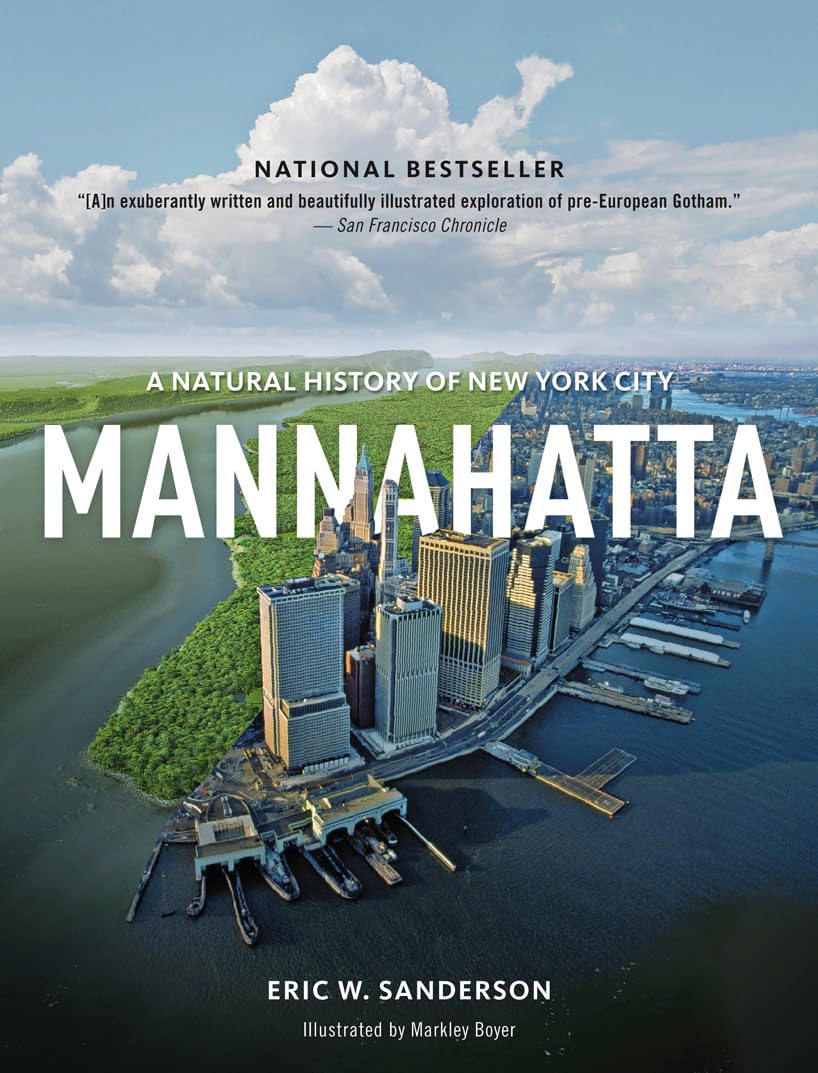
More than a history, Mannahatta: A Natural History of New York City is a book of science, natural history, and imagination, a call for us to stretch our thoughts back to 1609 when Henry Hudson first set foot on the island that would become Manhattan and ahead to 2409 to cities and a world where people and wildlife might thrive together.See the salt marsh that is now Delancey Street, the grassy plains of Harlem, the water moving slowly through what is now Times Square to the forests along the banks of the Upper West Side. . . . The factintense charts, maps and tables offered in abundance here are fascinating, and even kind of sexy. New York TimesWhat did Henry Hudson see when he first walked through the forests that would become the heart of one of the worlds greatest, most iconic cities? Its difficult for us to imagine that world, but for more than a decade, landscape ecologist Eric W. Sanderson has been working to bring that world back to us.In 1609, the island that is now Manhattan had more ecological communities per acre than Yellowstone, more native plant species per acre than Yosemite, more birds than the Great Smoky Mountains National Park. Manhattan was home to wolves, black bears, mountain lions, mink, and river otters. Whales, porpoises, seals, and the occasional sea turtle visited its harbor. Millions of birds of more than 150 different species flew over the island on their annual migration. Millions of fishshad, herring, trout, sturgeon, and eelswam past the island up the Hudson River and its stream as a rite of spring.Sandersons book is the astounding result of his efforts at reconstructing in words and images the wild island that millions now call home. By geographically matching an 18thcentury map with one of modern New York City, examining volumes of historic documents, and collecting and analyzing scientific data, Sanderson recreates the forests of Times Square, the meadows of Harlem, and the wetlands of downtown. His lively text guides readers through this abundant landscape, while Markley Boyers breathtaking illustrations transport them back in time.Mannahatta is a groundbreaking work that provides not only a window into the past but also inspiration for the future.
⚠️ WARNING (California Proposition 65):
This product may contain chemicals known to the State of California to cause cancer, birth defects, or other reproductive harm.
For more information, please visit www.P65Warnings.ca.gov.
- Q: What is 'Mannahatta: A Natural History of New York City' about? A: 'Mannahatta' explores the ecological history of Manhattan as it existed in 1609, illustrating the diverse wildlife and natural landscapes that were present before urban development.
- Q: Who is the author of this book? A: The book is authored by Eric W. Sanderson, a landscape ecologist known for his work in reconstructing the natural history of New York City.
- Q: What type of binding does this book have? A: The book is available in paperback binding, making it easy to handle and read.
- Q: How many pages are in 'Mannahatta'? A: 'Mannahatta: A Natural History of New York City' contains a total of 352 pages.
- Q: When was 'Mannahatta' published? A: 'Mannahatta' was published on May 28, 2013.
- Q: What are the main themes of the book? A: The main themes include the ecological history of Manhattan, the interplay between urban development and nature, and the vision of a future where humans and wildlife coexist.
- Q: Is this book suitable for children? A: While 'Mannahatta' is primarily aimed at adults and older readers interested in natural history, its engaging illustrations and storytelling can also appeal to younger audiences.
- Q: Does the book include illustrations? A: Yes, 'Mannahatta' features breathtaking illustrations by Markley Boyer that complement the text and help visualize the historical landscapes of Manhattan.
- Q: What condition is the book in? A: This listing describes the book as a used book in good condition, indicating it may have some wear but is still functional and readable.
- Q: What genre does 'Mannahatta' fall under? A: 'Mannahatta' is categorized under State & Local history, blending elements of science, natural history, and environmental studies.