
Title
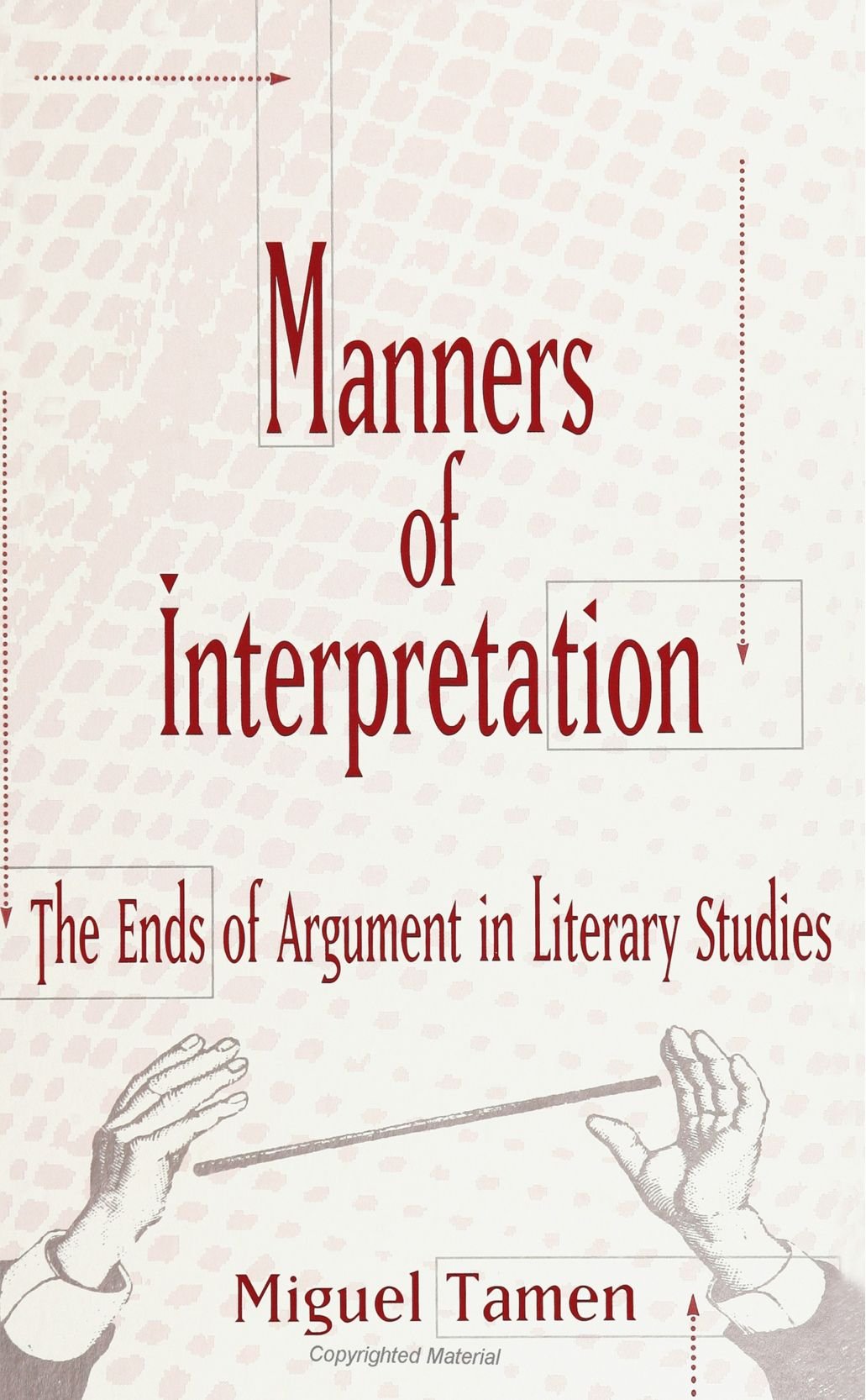
Manners of Interpretation: The Ends of Argument in Literary Studies (Suny Series, the Margins of Literature),Used
Sold by Ergodebooks, an authorized reseller.
Returns accepted within 30 days | support@ergodebooks.com
Shipping Information
- Free Standard Shipping — United States only
- Processing Time: 3–5 business days
- Estimated Delivery: 6–10 business days after dispatch
- Double-boxed, fully insured & discreetly packaged
- Tracking number sent via email once dispatched
Returns & Refund
Returns accepted within 30 days of delivery.
Damaged or Defective Item
Free return shipping + replacement or full refund
Wrong Item Received
Free return shipping + replacement or full refund
Change of Mind
Return shipping at customer's expense · 25% restocking fee applies
Payment Option

Product Description Philosophy and literary theory have devoted a great deal of their analysis to the problem of the origin and modalities of argumentation, but there has been an almost total lack of interest in the question of its procedural limits. Manners of Interpretation is an essay on ways of ending interpretations in literary studies as well as on patterns of controversy and consensus in the humanities. Tamen examines two major families of indisputable arguments in postEnlightenment literary criticism and addresses the question of how one recognizes the proper time to use a given argument, especially and specifically an indisputable argument. The former aim leads to a tentative history of the constitution of literary theory as a set of identifiable ways of using arguments. The latter, meanwhile, points to a theory of argument and controversy and to a contribution to the discussion of human activities that, in spite of not being teachable, are nevertheless learnable. Such a theory seems to be particularly relevant both to the study of the interpretive dimension of literary criticism as it is now practiced and also to the knowledge and description of an area of the humanities that has often been neglected. Review The literary and language theoreticians whom Tamen analyzes, together with the categories he devises in which to contain his discussion of hermeneutics, philology and how each attempts to limit its own potentiality for disagreement with its premises and methods, are all very apt and important to the current debates over literary theory. Over all, Tamens familiarity with his field, with the original languages of the texts he uses, and his sheer critical intelligence are, well, awesome. Mili Clark, SUNY Buffalo About the Author Miguel Tamen is Assistant Professor in the Department of Romance Literatures and Graduate Program in Literary Theory, University of Lisbon. He is the author of Hermenutica e malestar.
⚠️ WARNING (California Proposition 65):
This product may contain chemicals known to the State of California to cause cancer, birth defects, or other reproductive harm.
For more information, please visit www.P65Warnings.ca.gov.