
Title
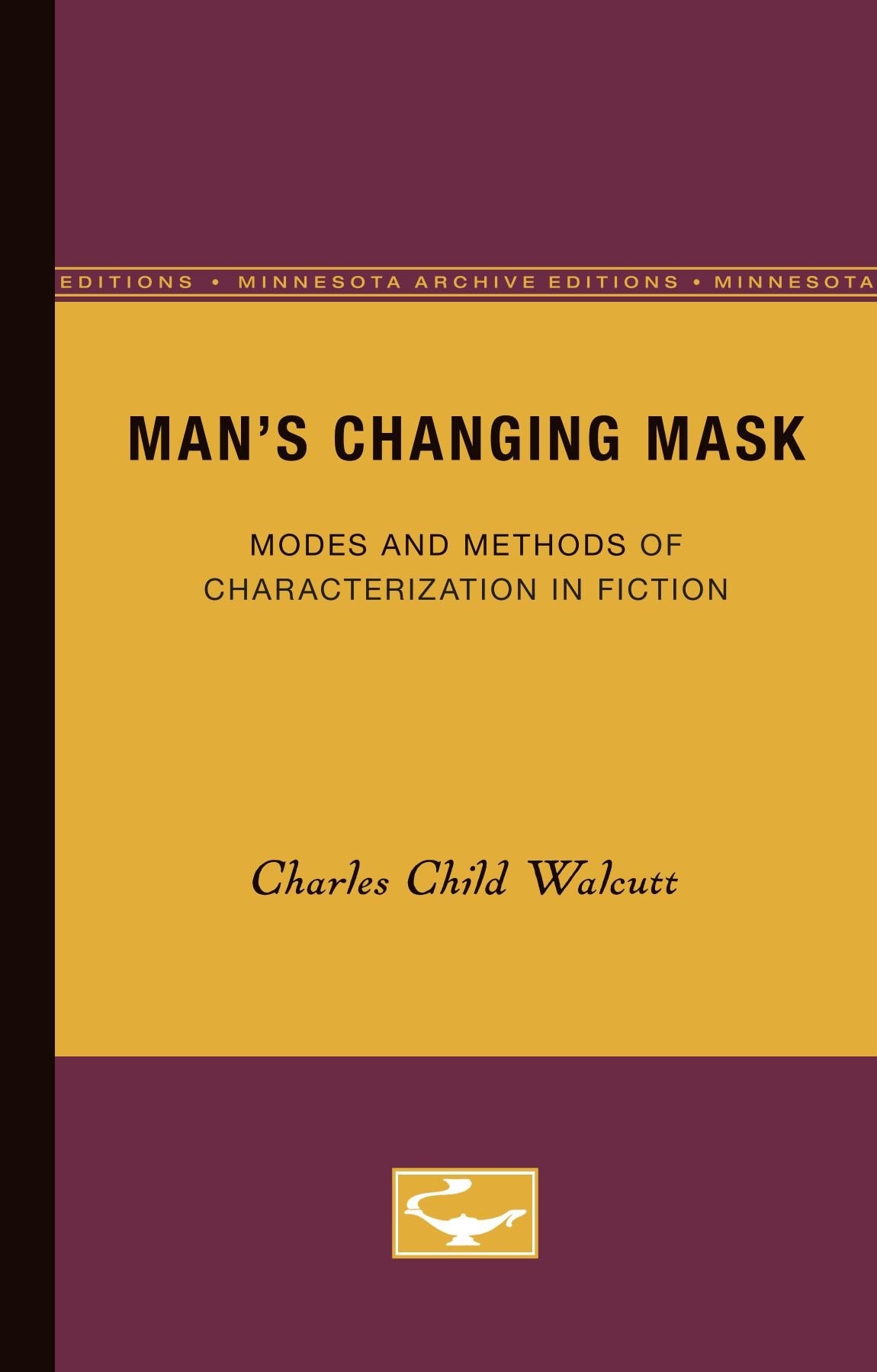
Mans Changing Mask: Modes And Methods Of Characterization In Fiction,Used
Sold by Ergodebooks, an authorized reseller.
Returns accepted within 30 days | support@ergodebooks.com
Shipping Information
- Free Standard Shipping — United States only
- Processing Time: 3–5 business days
- Estimated Delivery: 6–10 business days after dispatch
- Double-boxed, fully insured & discreetly packaged
- Tracking number sent via email once dispatched
Returns & Refund
Returns accepted within 30 days of delivery.
Damaged or Defective Item
Free return shipping + replacement or full refund
Wrong Item Received
Free return shipping + replacement or full refund
Change of Mind
Return shipping at customer's expense · 25% restocking fee applies
Payment Option

Product Description Mans Changing Mask was first published in 1966.Taking a bold new step in literary criticism, Professor Walcutt attacks the problem of characterization in fiction by going back to a neglected concept of Aristotle, namely that the action is more important than the characters, and that it generates the characters. By close examination of a wide range of works he shows how characterization is a product of the action (or plot) and demonstrates how it may be understood in that context. Most of the works he discusses are novels, although he devotes a full chapter to a brilliant analysis of Hamlet in which a new interpretation of that play appears. In the second half of the book, which deals with modern fiction, he suggests how profoundly the roles of fiction influence the images of man that prevail today.Professor Walcutt traces the growth of the characteraction relation in three stages. First only the story mattered, and the character appeared in the deed. Then came the notion of a motive apart from the deed. And third, the romantic idea of a self that could not be expressed fully by any deed leads to the contemporary mode that presents the aimless hero in the plotless novel, a character (or uncharacter) left in a void by the absence of clear, firm issues to which he can respond with significant choices. It is here that life may be copying art, rather than the reverse. About the Author Charles Child Walcutt was a professor of English at Queens College of the City University of New York. He is the author of numerous other books including two published by the University of Minnesota Press, Man's Changing Mask: Modes and Methods of Characterization in Fiction and American Literary Naturalism, a Divided Stream.
⚠️ WARNING (California Proposition 65):
This product may contain chemicals known to the State of California to cause cancer, birth defects, or other reproductive harm.
For more information, please visit www.P65Warnings.ca.gov.