
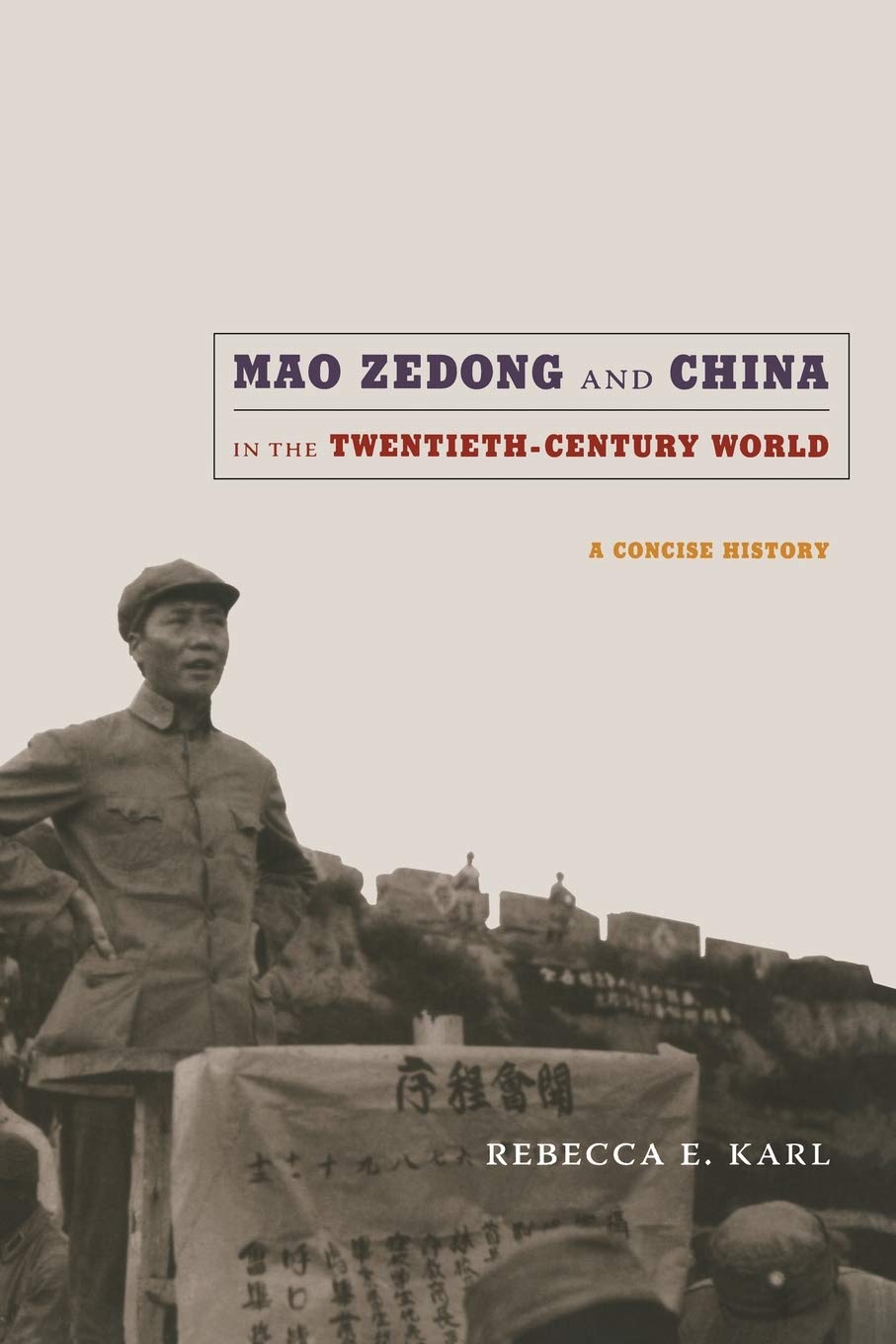
Title
Mao Zedong And China In The Twentiethcentury World: A Concise History (Asiapacific: Culture, Politics, And Society),New
Sold by Ergodebooks, an authorized reseller.
Returns accepted within 30 days | support@ergodebooks.com
Shipping Information
- Free Standard Shipping — United States only
- Processing Time: 3–5 business days
- Estimated Delivery: 6–10 business days after dispatch
- Double-boxed, fully insured & discreetly packaged
- Tracking number sent via email once dispatched
Returns & Refund
Returns accepted within 30 days of delivery.
Damaged or Defective Item
Free return shipping + replacement or full refund
Wrong Item Received
Free return shipping + replacement or full refund
Change of Mind
Return shipping at customer's expense · 25% restocking fee applies
Payment Option

Throughout This Lively And Concise Historical Account Of Mao Zedongs Life And Thought, Rebecca E. Karl Places The Revolutionary Leaders Personal Experiences, Social Visions And Theory, Military Strategies, And Developmental And Foreign Policies In A Dynamic Narrative Of The Chinese Revolution. She Situates Mao And The Revolution In A Global Setting Informed By Imperialism, Decolonization, And Third Worldism, And Discusses Worldwide Trends In Politics, The Economy, Military Power, And Territorial Sovereignty. Karl Begins With Maos Early Life In A Small Village In Hunan Province, Documenting His Relationships With His Parents, Passion For Education, And Political Awakening During The Fall Of The Qing Dynasty In Late 1911. She Traces His Transition From Liberal To Communist Over The Course Of The Next Decade, His Early Critiques Of The Subjugation Of Women, And The Gathering Force Of The May 4Th Movement For Reform And Radical Change. Describing Maos Rise To Power, She Delves Into The Dynamics Of Communist Organizing In An Overwhelmingly Agrarian Society, And Maos Confrontations With Chiang Kaishek And Other Nationalist Conservatives. She Also Considers His Marriages And Romantic Liaisons And Their Relation To Mao As The Revolutionary Founder Of Communism In China. After Analyzing Maos Stormy Tenure As Chairman Of The Peoples Republic Of China, Karl Concludes By Examining His Legacy In China From His Death In 1976 Through The Beijing Olympics In 2008.
⚠️ WARNING (California Proposition 65):
This product may contain chemicals known to the State of California to cause cancer, birth defects, or other reproductive harm.
For more information, please visit www.P65Warnings.ca.gov.
- Q: What is the page count of this book? A: This book has two hundred sixteen pages. It provides a concise history of Mao Zedong's life and the Chinese revolution.
- Q: What are the dimensions of this book? A: The dimensions are six point fourteen inches in length, zero point fifty-five inches in width, and nine point twenty-five inches in height.
- Q: What type of binding does this book have? A: This book is paperback bound. This makes it lightweight and portable for readers.
- Q: Who is the author of this book? A: The author is Rebecca E. Karl. She is known for her expertise in modern Chinese history.
- Q: What is the main topic of this book? A: The main topic is Mao Zedong's life and thought. It explores his impact on China and the world.
- Q: Is this book suitable for beginners in Chinese history? A: Yes, it is suitable for beginners. The book is concise and accessible, making it ideal for new readers.
- Q: How does this book approach Mao's legacy? A: The book examines Mao's legacy from his death in nineteen seventy-six to the Beijing Olympics in two thousand eight.
- Q: What kind of narrative style does this book use? A: The book uses a dynamic narrative style. It combines personal experiences with broader historical contexts.
- Q: Does this book include information on Mao's military strategies? A: Yes, it includes details on Mao's military strategies. This aspect is critical for understanding his leadership during the revolution.
- Q: Is this book appropriate for a high school reading level? A: Yes, it is appropriate for a high school reading level. The language is straightforward and engaging.
- Q: What should I do if the book arrives damaged? A: If the book arrives damaged, you should contact the seller for a return or exchange. Most sellers have a customer service policy for such issues.
- Q: What if I have questions about the content after reading? A: If you have questions after reading, you can look for discussion guides or join online forums. Engaging with others can enhance understanding.
- Q: Can I return this book if I change my mind? A: Yes, you can typically return the book if you change your mind. Review the return policy of the retailer for specific details.
- Q: How should I store this book to keep it in good condition? A: Store the book upright in a dry place away from direct sunlight. This helps prevent damage to the cover and pages.
- Q: Are there any safety considerations for this book? A: No specific safety considerations apply to this book. It is meant for educational purposes.
- Q: What are the main themes explored in this book? A: Main themes include revolution, imperialism, and decolonization. These themes contextualize Mao's actions within global trends.