
Title
Mapping Detroit: Land, Community, And Shaping A City (Great Lakes Books),Used
Sold by Ergodebooks, an authorized reseller.
Returns accepted within 30 days | support@ergodebooks.com
Shipping Information
- Free Standard Shipping — United States only
- Processing Time: 3–5 business days
- Estimated Delivery: 6–10 business days after dispatch
- Double-boxed, fully insured & discreetly packaged
- Tracking number sent via email once dispatched
Returns & Refund
Returns accepted within 30 days of delivery.
Damaged or Defective Item
Free return shipping + replacement or full refund
Wrong Item Received
Free return shipping + replacement or full refund
Change of Mind
Return shipping at customer's expense · 25% restocking fee applies
Payment Option

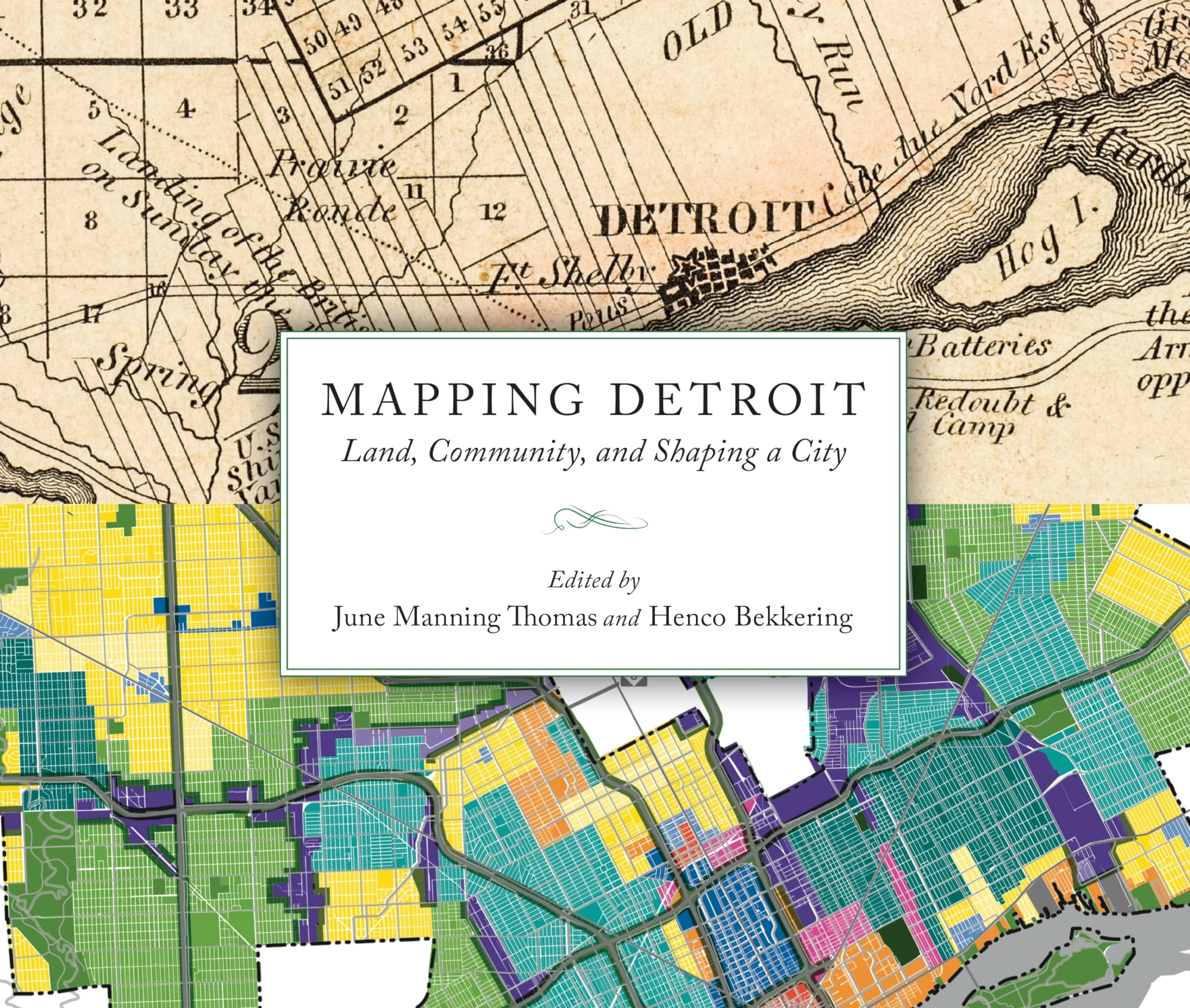
One of Detroit's most defining modern characteristicsand most pressing dilemmasis its huge amount of neglected and vacant land. In Mapping Detroit: Land, Community, and Shaping a City, editors June Manning Thomas and Henco Bekkering use chapters based on a variety of maps to shed light on how Detroit moved from frontier fort to thriving industrial metropolis to today's highvacancy city. With contributors ranging from a map archivist and a historian to architects, urban designers, and urban planners, Mapping Detroit brings a unique perspective to the historical causes, contemporary effects, and potential future of Detroit's transformed landscape.To show how Detroit arrived in its present condition, contributors in part 1, Evolving Detroit: Past to Present, trace the city's beginnings as an agricultural, military, and trade outpost and map both its depopulation and attempts at redevelopment. In part 2, Portions of the City, contributors delve into particular landrelated systems and neighborhood characteristics that encouraged modern social and economic changes. Part 2 continues by offering case studies of two city neighborhoodsthe Brightmoor area and Southwest Detroitthat are struggling to adapt to changing landscapes. In part 3, Understanding Contemporary Space and Potential, contributors consider both the city's ecological assets and its sociological fragmentation to add dimension to the current understanding of its emptiness. The volume's epilogue offers a synopsis of the major points of the 2012 Detroit Future City report, the city's own strategic blueprint for future land use.Mapping Detroit explores not only what happens when a large city loses its main industrial purpose and a major portion of its population but also what future might result from such upheaval. Containing some of the leading voices on Detroit's history and future, Mapping Detroit will be informative reading for anyone interested in urban studies, geography, and recent American history.
⚠️ WARNING (California Proposition 65):
This product may contain chemicals known to the State of California to cause cancer, birth defects, or other reproductive harm.
For more information, please visit www.P65Warnings.ca.gov.