
Title
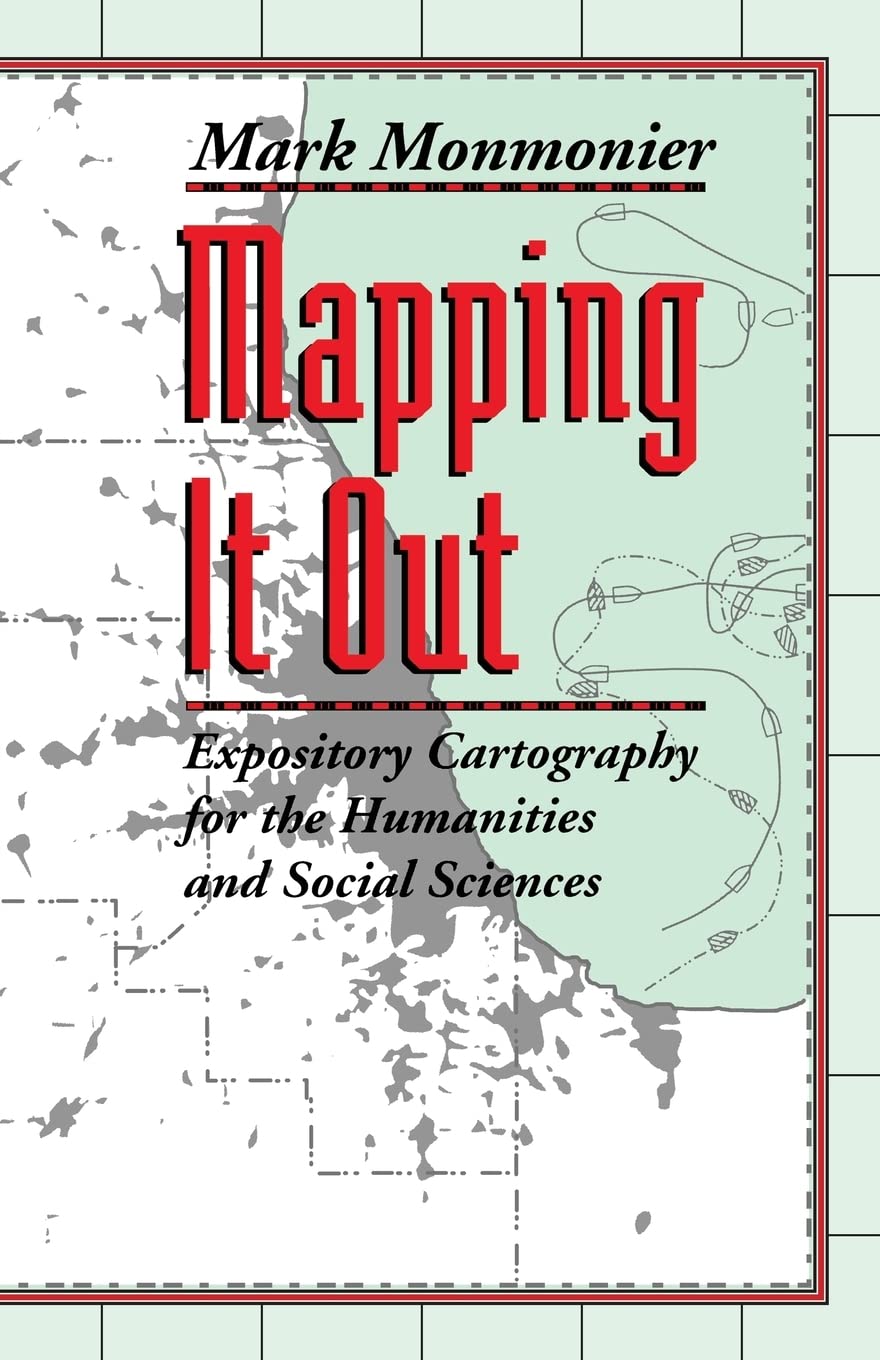
Mapping It Out: Expository Cartography for the Humanities and Social Sciences (Chicago Guides to Writing, Editing, and Publishin,New
Sold by Ergodebooks, an authorized reseller.
Returns accepted within 30 days | support@ergodebooks.com
Shipping Information
- Free Standard Shipping — United States only
- Processing Time: 3–5 business days
- Estimated Delivery: 6–10 business days after dispatch
- Double-boxed, fully insured & discreetly packaged
- Tracking number sent via email once dispatched
Returns & Refund
Returns accepted within 30 days of delivery.
Damaged or Defective Item
Free return shipping + replacement or full refund
Wrong Item Received
Free return shipping + replacement or full refund
Change of Mind
Return shipping at customer's expense · 25% restocking fee applies
Payment Option

Writers know only too well how long it can takeand how awkward it can beto describe spatial relationships with words alone. And while a map might not always be worth a thousand words, a good one can help writers communicate an argument or explanation clearly, succinctly, and effectively.In his acclaimed How to Lie with Maps, Mark Monmonier showed how maps can distort facts. In Mapping it Out: Expository Cartography for the Humanities and Social Sciences, he shows authors and scholars how they can use expository cartographythe visual, twodimensional organization of informationto heighten the impact of their books and articles.This concise, practical book is an introduction to the fundamental principles of graphic logic and design, from the basics of scale to the complex mapping of movement or change. Monmonier helps writers and researchers decide when maps are most useful and what formats work best in a wide range of subject areas, from literary criticism to sociology. He demonstrates, for example, various techniques for representing changes and patterns; different typefaces and how they can either clarify or confuse information; and the effectiveness of less traditional map forms, such as visibility base maps, framerectangle symbols, and complementary scatterplot designs for conveying complex spatial relationships.There is also a wealth of practical information on map compilation, cartobibliographies, copyright and permissions, facsimile reproduction, and the evaluation of source materials. Appendixes discuss the benefits and limitations of electronic graphics and penandink drafting, and how to work with a cartographic illustrator.Clearly written, and filled with realworld examples, Mapping it Out demystifies mapmaking for anyone writing in the humanities and social sciences.'A useful guide to a subject most people probably take too much for granted. It shows how map makers translate abstract data into eyecatching cartograms, as they are called. It combats cartographic illiteracy. It fights cartophobia. It may even teach you to find your way.'Christopher LehmannHaupt, The New York Times
⚠️ WARNING (California Proposition 65):
This product may contain chemicals known to the State of California to cause cancer, birth defects, or other reproductive harm.
For more information, please visit www.P65Warnings.ca.gov.