
Title
Mapping the End of Empire: American and British Strategic Visions in the Postwar World,Used
Sold by Ergodebooks, an authorized reseller.
Returns accepted within 30 days | support@ergodebooks.com
Shipping Information
- Free Standard Shipping — United States only
- Processing Time: 3–5 business days
- Estimated Delivery: 6–10 business days after dispatch
- Double-boxed, fully insured & discreetly packaged
- Tracking number sent via email once dispatched
Returns & Refund
Returns accepted within 30 days of delivery.
Damaged or Defective Item
Free return shipping + replacement or full refund
Wrong Item Received
Free return shipping + replacement or full refund
Change of Mind
Return shipping at customer's expense · 25% restocking fee applies
Payment Option

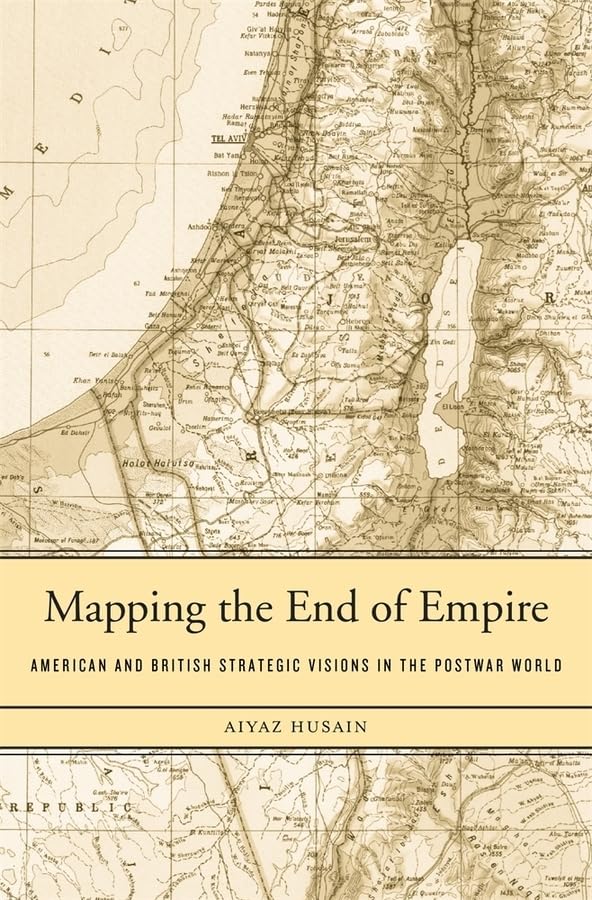
By the end of World War II, strategists in Washington and London looked ahead to a new era in which the United States shouldered global responsibilities and Britain concentrated its regional interests more narrowly. The two powers also viewed the Muslim world through very different lenses. Mapping the End of Empire reveals how AngloAmerican perceptions of geography shaped postcolonial futures from the Middle East to South Asia.Aiyaz Husain shows that American and British postwar strategy drew on popular notions of geography as well as academic and military knowledge. Once codified in maps and memoranda, these perspectives became foundations of foreign policy. In South Asia, American officials envisioned an independent Pakistan blocking Soviet influence, an objective that outweighed other considerations in the contested Kashmir region. Shoring up Pakistan meshed perfectly with British hopes for a quiescent Indian subcontinent once partition became inevitable. But serious differences with Britain arose over Americas support for the new state of Israel. Viewing the Mediterranean as a European lake of sorts, U.S. officialseven in parts of the State Departmentlinked Palestine with Europe, deeming it a perfectly logical destination for Jewish refugees. But British strategists feared that the installation of a Jewish state in Palestine could incite Muslim ire from one corner of the Islamic world to the other.As Husain makes clear, these perspectives also influenced the Dumbarton Oaks Conference and blueprints for the UN Security Council and shaped French and Dutch colonial fortunes in the Levant and the East Indies.
⚠️ WARNING (California Proposition 65):
This product may contain chemicals known to the State of California to cause cancer, birth defects, or other reproductive harm.
For more information, please visit www.P65Warnings.ca.gov.