
Title
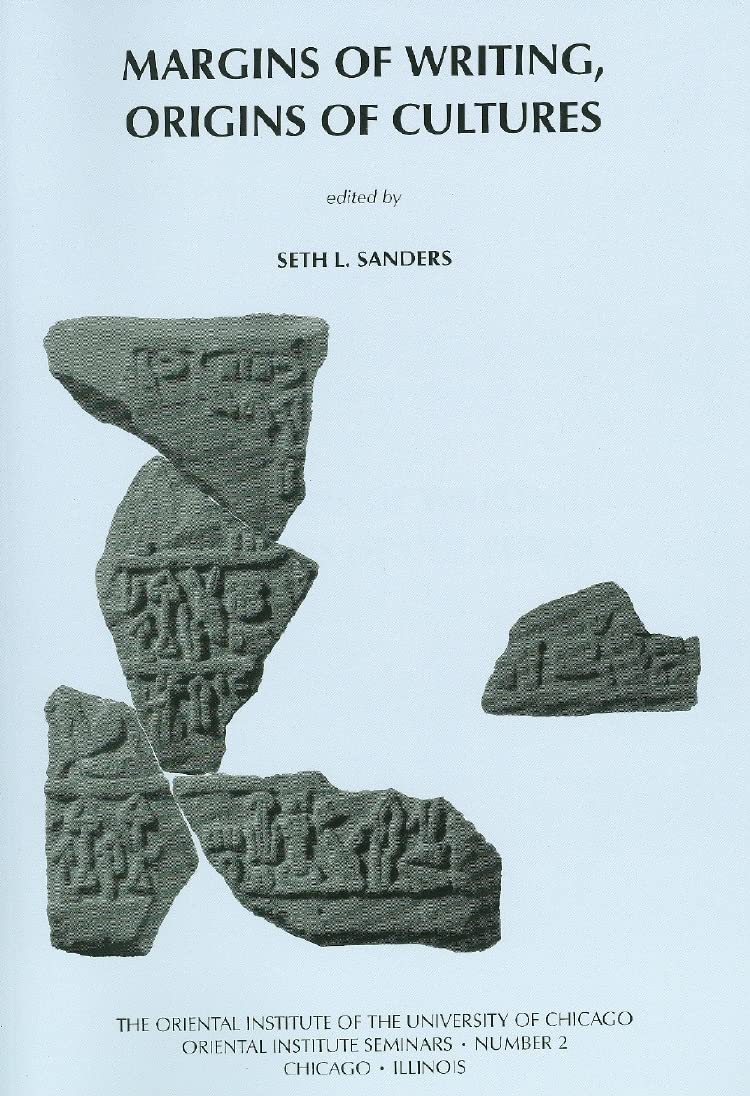
Margins of Writing, Origins of Cultures: New Approaches to Writing and Reading in the Ancient Near East. Papers from a Symposium,Used
Sold by Ergodebooks, an authorized reseller.
Returns accepted within 30 days | support@ergodebooks.com
Shipping Information
- Free Standard Shipping — United States only
- Processing Time: 3–5 business days
- Estimated Delivery: 6–10 business days after dispatch
- Double-boxed, fully insured & discreetly packaged
- Tracking number sent via email once dispatched
Returns & Refund
Returns accepted within 30 days of delivery.
Damaged or Defective Item
Free return shipping + replacement or full refund
Wrong Item Received
Free return shipping + replacement or full refund
Change of Mind
Return shipping at customer's expense · 25% restocking fee applies
Payment Option

Who invented national literature? What is the relationship between script, identity, and history? Recorded history began in the ancient Near East, but we are just beginning to explore the powerful creative relationship between writing and the political identities of the Near East's cultures. This symposium was the first to bring leading philologists together with anthropologists and historians to connect theories of writing, language, and identity with the latest results of ancient Near Eastern scholarship.Table of ContentsINTRODUCTION 1. "Margins of Writing, Origins of Cultures." Seth Sanders, University of Chicago FIRST PANEL: INSTITUTIONS 2. "Writing and the State: China, India, and General Definitions." John Kelly, University of Chicago 3. "Writing in Another Tongue: Alloglottography in the Ancient Near East." Gonzalo Rubio, Pennsylvania State University 4. "Abundance in the Margins: Multiplicity of Script in the Demotic Magical Papyri." Jacco Dieleman, University of California Los Angeles 5. "Response for First Session." Jerrold Cooper, Johns Hopkins University SECOND PANEL: PUBLICS 6. "Bilingualism, Scribal Learning, and the Death of Sumerian." Christopher Woods, University of Chicago 7. "Multilingual Inscriptions and Their Audiences: Cilicia and Lydia." Annick Payne, University of Wrzburg 8. "Aramaic, the Death of Written Hebrew, and Language Shift in the Persian Period." William Schniedewind, University of California, Los Angeles 9. "Response for Second Session: Writing at the Chronotopic Margins of Empires." Michael Silverstein, University of Chicago SUPPLEMENT 10. "The Lives of the Sumerian Language." Piotr Michalowski, University of Michigan, Ann Arbor THIRD PANEL: COSMOPOLITAN AND VERNACULAR 11. "Official and Vernacular Languages: The Shifting Sands of Imperial and Cultural Identities in First Millennium B.C. Mesopotamia." PaulAlain Beaulieu, Harvard University 12. "Institutions, Vernaculars, Publics: The Case of Second Millennium Anatolia." Theo Van den Hout, University of Chicago 13. "Writing, Writers, and Reading in the Kingdom of Van." Paul Zimansky, Boston University 14. "Response for Third Session: Power and Culture Beyond Ideology and Identity." Sheldon Pollock, University of Chicago FINAL ROUNDTABLE 15. "Final Response." Peter Machinist, Harvard University
⚠️ WARNING (California Proposition 65):
This product may contain chemicals known to the State of California to cause cancer, birth defects, or other reproductive harm.
For more information, please visit www.P65Warnings.ca.gov.