
Title
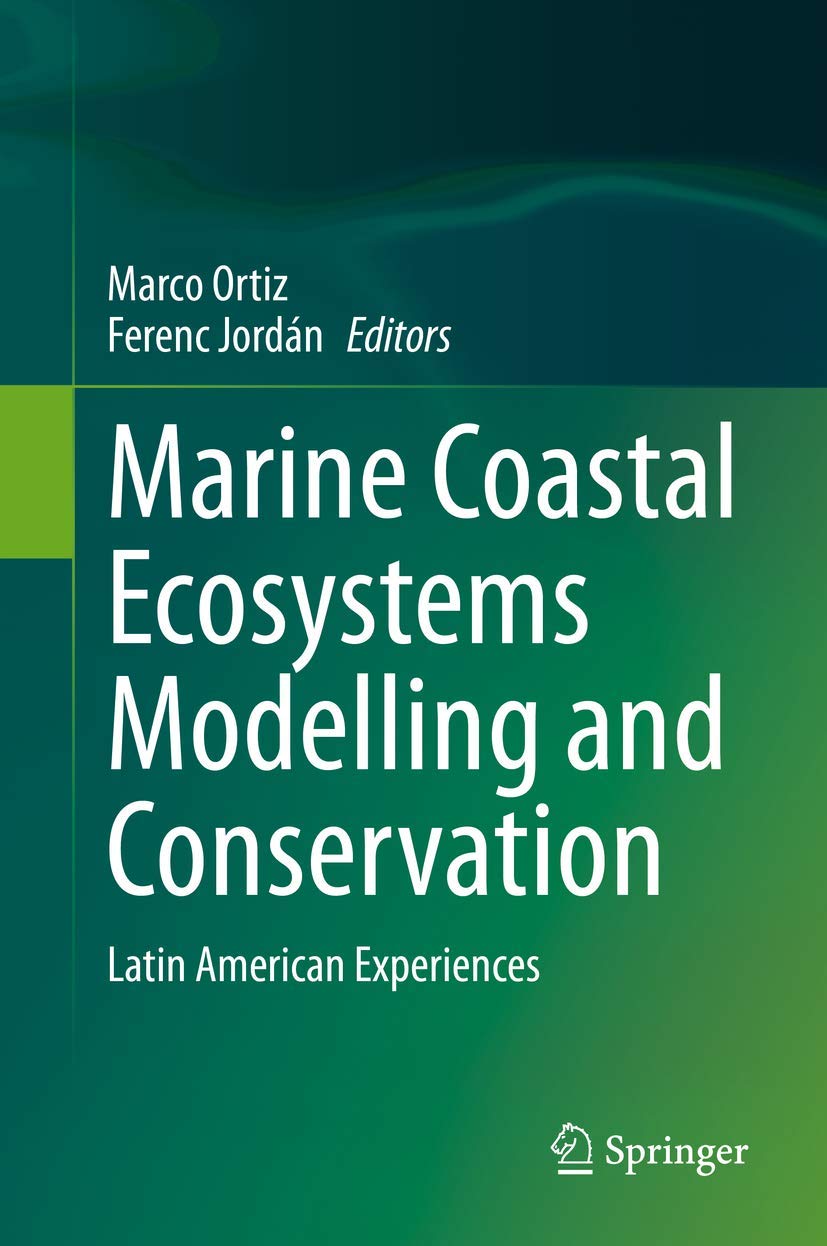
Marine Coastal Ecosystems Modelling and Conservation: Latin American Experiences,Used
Sold by Ergodebooks, an authorized reseller.
Returns accepted within 30 days | support@ergodebooks.com
Shipping Information
- Free Standard Shipping — United States only
- Processing Time: 3–5 business days
- Estimated Delivery: 6–10 business days after dispatch
- Double-boxed, fully insured & discreetly packaged
- Tracking number sent via email once dispatched
Returns & Refund
Returns accepted within 30 days of delivery.
Damaged or Defective Item
Free return shipping + replacement or full refund
Wrong Item Received
Free return shipping + replacement or full refund
Change of Mind
Return shipping at customer's expense · 25% restocking fee applies
Payment Option

The book presents a collection of largescale networkmodeling studies on coastal systems in Latin America. It includes a novel description of the functioning of coastal complex ecosystems and also predicts how natural and humanmade disturbances percolate through the networks. Coastal areas belong to the most populated ecosystems around the globe, and are massively influenced by human impacts such as shipping, mining, fisheries, tourism, pollution and human settlements. Even though many of these activities have facilitated socioeconomic development, they have also caused a significant deterioration in natural populations, communities and ecosystems worldwide. Covering coastal marine ecosystems of Latin America such as the NE and SE Pacific, NW Atlantic and Caribbean areas, it discusses the construction of quantitative (EcopathEcosimEcospace and Centrality of Node Sets) and semiquantitative (Loop Analysis) multispecies trophicnetwork models to describe and assess the impacts of natural and human interventions like pelagic and benthic fishing as well as natural events such as El Nio, and La Nia. The book also features steady state (and/or near moving equilibrium) and dynamical models to support the management of exploited organisms, and applies and quantifies macroscopic indices, based on Ascendency (Ulanowicz) and Local Stability (Levins Loop Analysis). Further, it discusses the determination of the Keystone Species Complex Index, which is a holistic extension of the classical concept of Keystone Species (Paine), offering novel strategies for conservation monitoring and management.
⚠️ WARNING (California Proposition 65):
This product may contain chemicals known to the State of California to cause cancer, birth defects, or other reproductive harm.
For more information, please visit www.P65Warnings.ca.gov.