If you have any questions, you are always welcome to contact us. We'll get back to you as soon as possible, withing 24 hours on weekdays.
Customer service
All questions about your order, return and delivery must be sent to our customer service team by e-mail at yourstore@yourdomain.com
Sale & Press
If you are interested in selling our products, need more information about our brand or wish to make a collaboration, please contact us at press@yourdomain.com
Help
If you have any questions, you are always welcome to contact us. We'll get back to you as soon as possible, withing 24 hours on weekdays.
Customer service
All questions about your order, return and delivery must be sent to our customer service team by e-mail at yourstore@yourdomain.com
Sale & Press
If you are interested in selling our products, need more information about our brand or wish to make a collaboration, please contact us at press@yourdomain.com
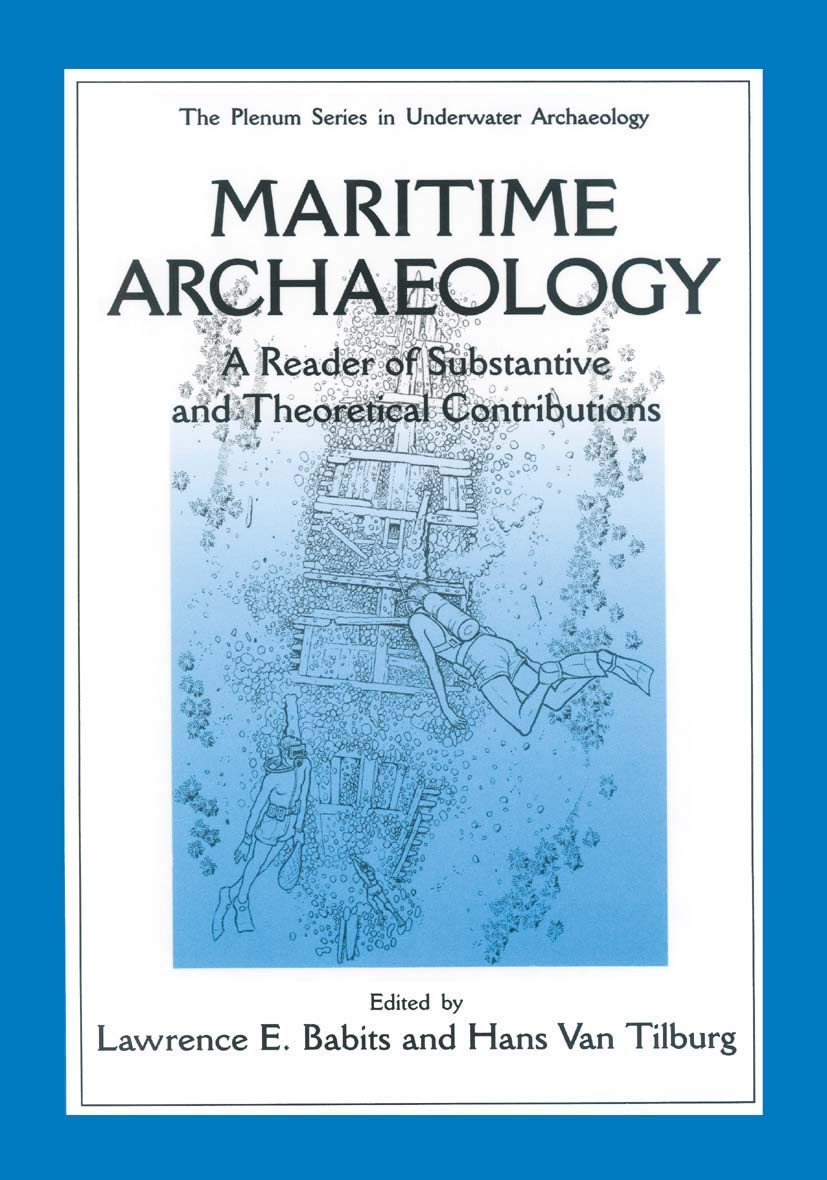
This volume initiates a new series of books on maritime or underwater archaeology, and as the editor of the series I welcome its appearance with great excitement. It is appropriate that the first book of the series is a collection of articles intended for gradu ate or undergraduate courses in underwater archaeology, since the growth in academic opportunities for students is an important sign of the vitality of this subdiscipline. The layman will enjoy the book as well. Academic and public interest in shipwrecks and other submerged archaeological sites is indicated by a number of factors. Every year there are 80 to 90 research papers presented at the Society for Historical Archaeology's Conference on Historical and Underwater Archaeology, and the Proceedings are published. Public interest is shown by extensive press coverage of shipwreck investigations. One of the most important advances in recent years has been the passage of the Abandoned Shipwreck Act of 1987, for the first time providing nationallevel law con cerning underwater archeological sites. The legislation has withstood a number of legal challenges by commercial treasure salvors, a very hopeful sign for the longterm pres ervation of this nonrenewable type of cultural resource. The underwater archaeological discoveries of 1995 were particularly noteworthy. The Texas Historical Commission discovered the Belle, one of La Salle's ships, and the CSS Hunley was found by a joint project of South Carolina and a private nonprofit organization called NUMA.
⚠️ WARNING (California Proposition 65):
This product may contain chemicals known to the State of California to cause cancer,
birth defects, or other reproductive harm.
For MAP (Minimum Advertised Price) violations and Intellectual Property (IP) or Trademark concerns, please contact:
support@ergodebooks.com
⚠️ California Proposition 65 Warning: Some products sold on this website may expose you to chemicals known to the State of California to cause cancer, birth defects, or other reproductive harm. For more information, visit www.P65Warnings.ca.gov.