If you have any questions, you are always welcome to contact us. We'll get back to you as soon as possible, withing 24 hours on weekdays.
Customer service
All questions about your order, return and delivery must be sent to our customer service team by e-mail at yourstore@yourdomain.com
Sale & Press
If you are interested in selling our products, need more information about our brand or wish to make a collaboration, please contact us at press@yourdomain.com
Help
If you have any questions, you are always welcome to contact us. We'll get back to you as soon as possible, withing 24 hours on weekdays.
Customer service
All questions about your order, return and delivery must be sent to our customer service team by e-mail at yourstore@yourdomain.com
Sale & Press
If you are interested in selling our products, need more information about our brand or wish to make a collaboration, please contact us at press@yourdomain.com
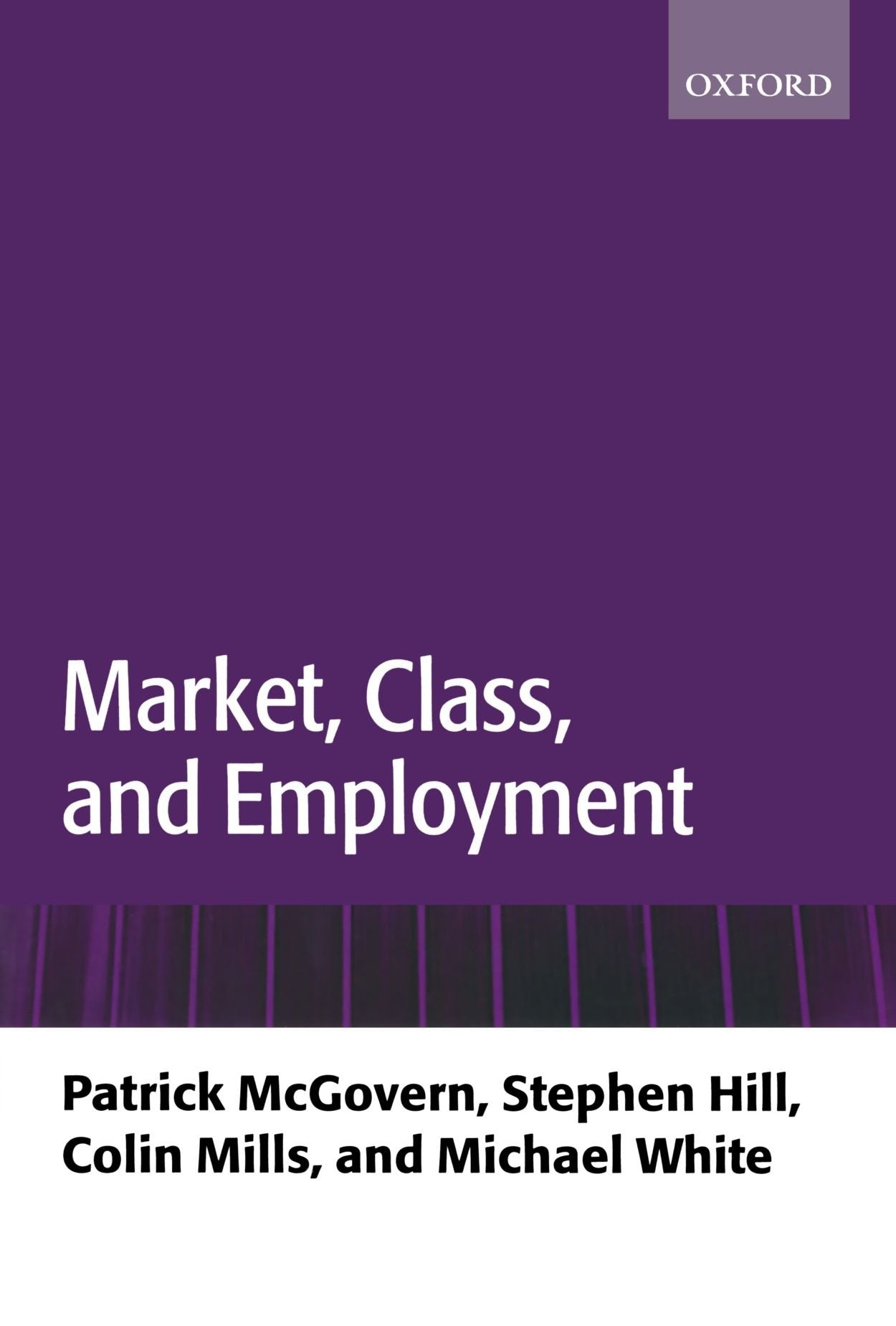
Much of the received wisdom about the world of work emphasizes the marketization of the employment relationship; the decline of classbased forms of inequality, and the individualization of employment relations. Nonstandard forms of employment, the delayering of organizational hierarchies, and the use of individual performancebased payment systems are all held up as examples of a new neoliberal order in which employers and employees no longer feel a sense of obligation to each other.Drawing on a range of employee and employer surveys, including the authors own Working in Britain 2000 survey, this ambitious study presents a comprehensive examination of the conditions, attitudes, and experiences of British employees from the mid1980s to the early years of this century. The authors' analyses provides a compelling critique of the received wisdom, while also providing an original, alternative account of recent developments in work and labour markets. Along the way, the book covers such topical issues as the changing nature of trade union membership, the consequences of Britain's 'long hours' culture', and the apparent inability of women to ask for pay rises. Significantly, the authors seek to reposition debates about the future of work by restoring the concepts of contracts and social class to the analysis of the employment relationship.Based on the ESRC funded Future of Work research programme this book is destined to shape our understanding of employment in Britain for the foreseeable future.
⚠️ WARNING (California Proposition 65):
This product may contain chemicals known to the State of California to cause cancer,
birth defects, or other reproductive harm.
For MAP (Minimum Advertised Price) violations and Intellectual Property (IP) or Trademark concerns, please contact:
support@ergodebooks.com
⚠️ California Proposition 65 Warning: Some products sold on this website may expose you to chemicals known to the State of California to cause cancer, birth defects, or other reproductive harm. For more information, visit www.P65Warnings.ca.gov.