
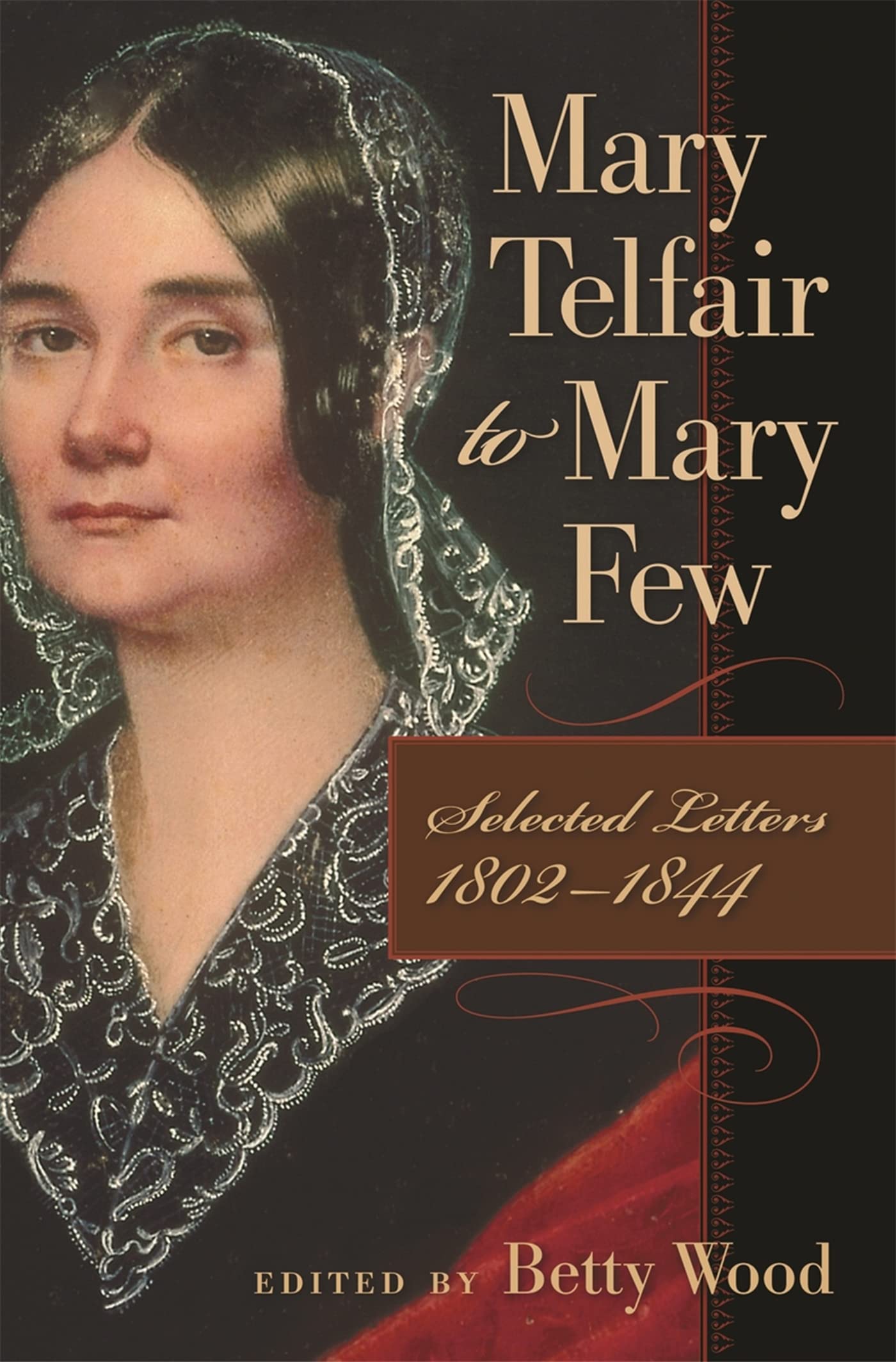
Title
Mary Telfair To Mary Few: Selected Letters, 18021844 (The Publications Of The Southern Texts Society Ser.),Used
Sold by Ergodebooks, an authorized reseller.
Returns accepted within 30 days | support@ergodebooks.com
Shipping Information
- Free Standard Shipping — United States only
- Processing Time: 3–5 business days
- Estimated Delivery: 6–10 business days after dispatch
- Double-boxed, fully insured & discreetly packaged
- Tracking number sent via email once dispatched
Returns & Refund
Returns accepted within 30 days of delivery.
Damaged or Defective Item
Free return shipping + replacement or full refund
Wrong Item Received
Free return shipping + replacement or full refund
Change of Mind
Return shipping at customer's expense · 25% restocking fee applies
Payment Option

This volume gathers nearly half of some 300 letters written by Mary Telfair of Savannah to her best friend, Mary Few of New York. Telfair was born in 1790 to a wealthy, prominent, slaveholding Savannah family. Few, born in 1790 into equally affluent circumstances, moved with her family from Savannah to New York in 1799. Selfexiled because of their strong antislavery views, the Fews never returned to Georgia, yet they remained close to the Telfairs.The close friendship between Telfair and Few ended only with their deaths in the 1870s. Regular travelers, they met on many occasions. Chiefly, however, they kept in touch through frequent correspondence (Few's letters to Telfair remain undiscovered, and may not have not survived). Wherever Telfair happened to bein Savannah, the northern states, or Europeshe wrote to her friend at least two or three times a month.Telfair's letters offer unique insights into the daily life of her family and the changes wrought by the deaths of so many of its members. The letters also reveal the shared interests and imperatives at the base of her various relationships with elite women, but especially with Mary Few, whom Telfair memorably described as her 'Siamese Twin.' The two women, neither of whom ever wed, nonetheless discussed the rights and obligations of marriage as well as their own state of 'single blessedness.' They also conversed about shared intellectual interestsliterature, lecture topics, women's educationas well as the foibles of common acquaintances. Here is a fascinating, unfamiliar world as revealed in what editor Betty Wood calls 'one of the most remarkable literary exchanges between women of high social rank in the early national and antebellum United States.'
⚠️ WARNING (California Proposition 65):
This product may contain chemicals known to the State of California to cause cancer, birth defects, or other reproductive harm.
For more information, please visit www.P65Warnings.ca.gov.