If you have any questions, you are always welcome to contact us. We'll get back to you as soon as possible, withing 24 hours on weekdays.
Customer service
All questions about your order, return and delivery must be sent to our customer service team by e-mail at yourstore@yourdomain.com
Sale & Press
If you are interested in selling our products, need more information about our brand or wish to make a collaboration, please contact us at press@yourdomain.com
Help
If you have any questions, you are always welcome to contact us. We'll get back to you as soon as possible, withing 24 hours on weekdays.
Customer service
All questions about your order, return and delivery must be sent to our customer service team by e-mail at yourstore@yourdomain.com
Sale & Press
If you are interested in selling our products, need more information about our brand or wish to make a collaboration, please contact us at press@yourdomain.com
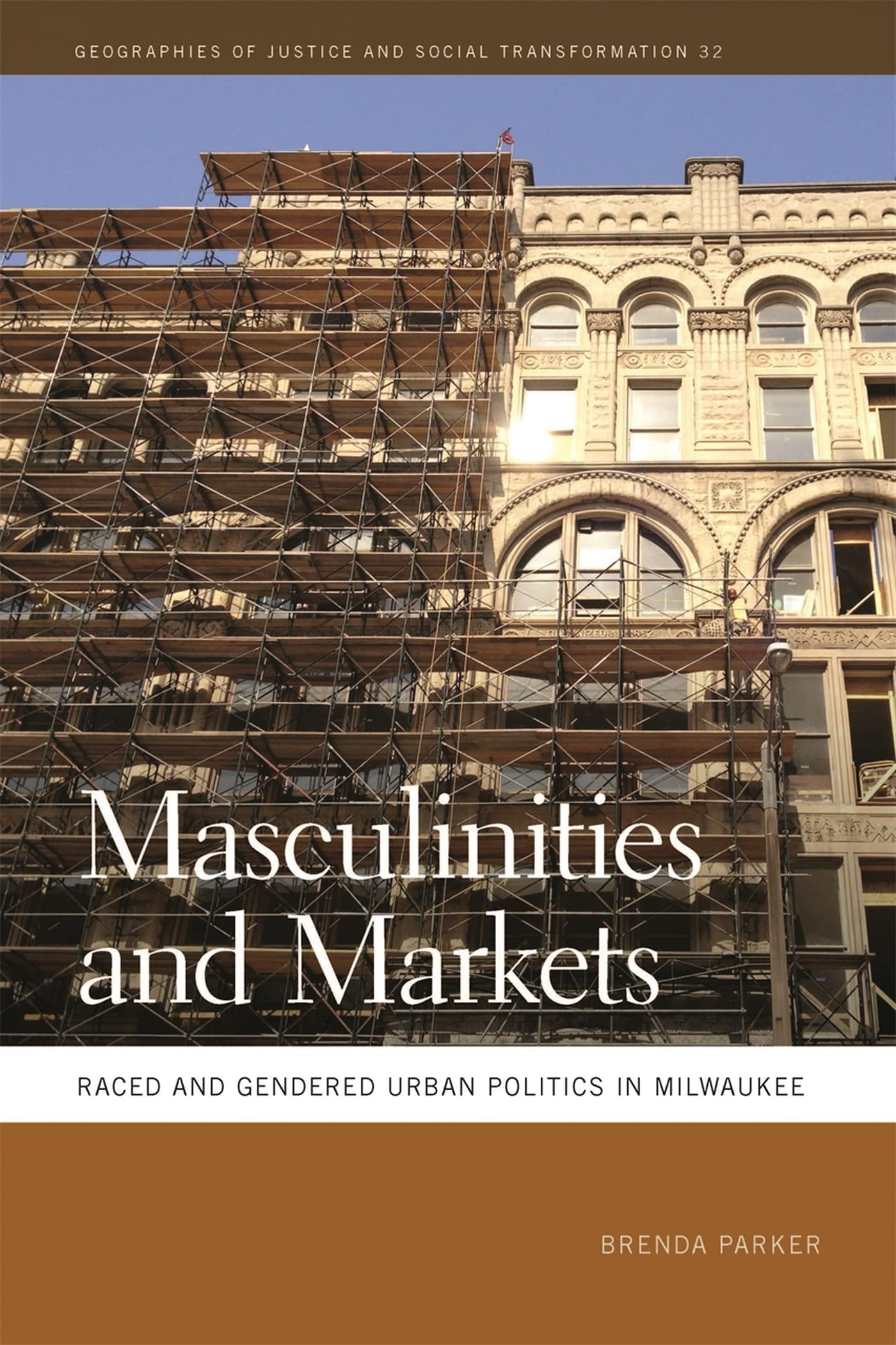
Studies of urban neoliberalism have been surprisingly inattentive to gender. Brenda Parker begins to remedy this by looking at the effect of new urbanism, creative class, and welfare reform discourses on women in Milwaukee, a traditionally progressive city with a strong history of political organizing. Through a feminist partial political economy of place (FPEP) approach, Parker conducts an intersectional analysis of urban politics that simultaneously pays attention to a number of power relations. She argues that in the 1990s and 2000s, the citys businessfriendly agendaalthough couched in uplifting rhetoricstrengthened existing hierarchies not only in class and race but also in gender.Taking on municipal elites adoption of Richard Floridas creative class thesis, for example, Parker looks at the group Young Professionals of Milwaukee, exposing the way that a creative careers focus advances fundamentally masculine values and interests. She concludes with a case study that shows how gender and race mattered in the design, enactment, and contestation of an uneven urban redevelopment project. At once a case study of the city and a theorization of urban neoliberalism, Masculinities and Markets highlights how urban politics and discourses in U.S. cities have changed over the years.
⚠️ WARNING (California Proposition 65):
This product may contain chemicals known to the State of California to cause cancer,
birth defects, or other reproductive harm.
For MAP (Minimum Advertised Price) violations and Intellectual Property (IP) or Trademark concerns, please contact:
support@ergodebooks.com
⚠️ California Proposition 65 Warning: Some products sold on this website may expose you to chemicals known to the State of California to cause cancer, birth defects, or other reproductive harm. For more information, visit www.P65Warnings.ca.gov.