
Title
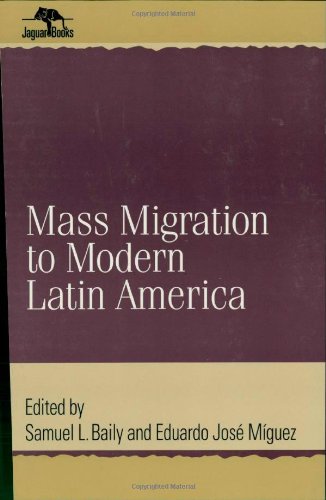
Mass Migration to Modern Latin America (Jaguar Books on Latin America),New
Sold by Ergodebooks, an authorized reseller.
Returns accepted within 30 days | support@ergodebooks.com
Shipping Information
- Free Standard Shipping — United States only
- Processing Time: 3–5 business days
- Estimated Delivery: 6–10 business days after dispatch
- Double-boxed, fully insured & discreetly packaged
- Tracking number sent via email once dispatched
Returns & Refund
Returns accepted within 30 days of delivery.
Damaged or Defective Item
Free return shipping + replacement or full refund
Wrong Item Received
Free return shipping + replacement or full refund
Change of Mind
Return shipping at customer's expense · 25% restocking fee applies
Payment Option

It is well known that large numbers of Europeans migrated overseas during the century preceding the Great Depression of 1930, and that a great many of them went to the United States. What is not well known, particularly in the United States, is that more than 20 percent of these migrants emigrated to Latin America, and that they significantly influenced the demographic, economic, and cultural evolution of many areas in the region.Individuals have migrated to Latin America since the beginning of the Conquest more than 500 years ago, but by far the largest number, 10 million, migrated from 1870 to 1930. This incredible influx was also concentrated in terms of the origins and destinations of the individuals: threequarters came from the Iberian peninsula and Italy, while 91 percent relocated to just three countriesArgentina (50 percent), Brazil (36 percent), and Uruguay (5 percent).Mass Migration to Modern Latin America includes original contributions from more than a dozen of the leading scholars of the new methodologically and theoretically innovative Latin American migration history that has emerged during the past 20 years. Although the authors focus primarily on the nature and impact of mass migration to Argentina and Brazil from 1870 to 1930, they place their analysis in broader historical and comparative contexts. They link the mass migrations at the turn of the past century to older migratory traditions and existing social networks, some of which had their roots in the colonial period.The editors begin each section of the book with personal stories of individual immigrants and their families, providing students with a glimpse into the complex process of migration and how it played out in various situations.This text will help readers understand that Latin America is more than a 'traditional society,' composed of the descendants of the Conquistadors and Native Americans. This book demonstrates the crucial impact of the mass migrations of the late nineteenth and early twentieth centuries on the formation of some Latin American societies.
⚠️ WARNING (California Proposition 65):
This product may contain chemicals known to the State of California to cause cancer, birth defects, or other reproductive harm.
For more information, please visit www.P65Warnings.ca.gov.