If you have any questions, you are always welcome to contact us. We'll get back to you as soon as possible, withing 24 hours on weekdays.
Customer service
All questions about your order, return and delivery must be sent to our customer service team by e-mail at yourstore@yourdomain.com
Sale & Press
If you are interested in selling our products, need more information about our brand or wish to make a collaboration, please contact us at press@yourdomain.com
Help
If you have any questions, you are always welcome to contact us. We'll get back to you as soon as possible, withing 24 hours on weekdays.
Customer service
All questions about your order, return and delivery must be sent to our customer service team by e-mail at yourstore@yourdomain.com
Sale & Press
If you are interested in selling our products, need more information about our brand or wish to make a collaboration, please contact us at press@yourdomain.com
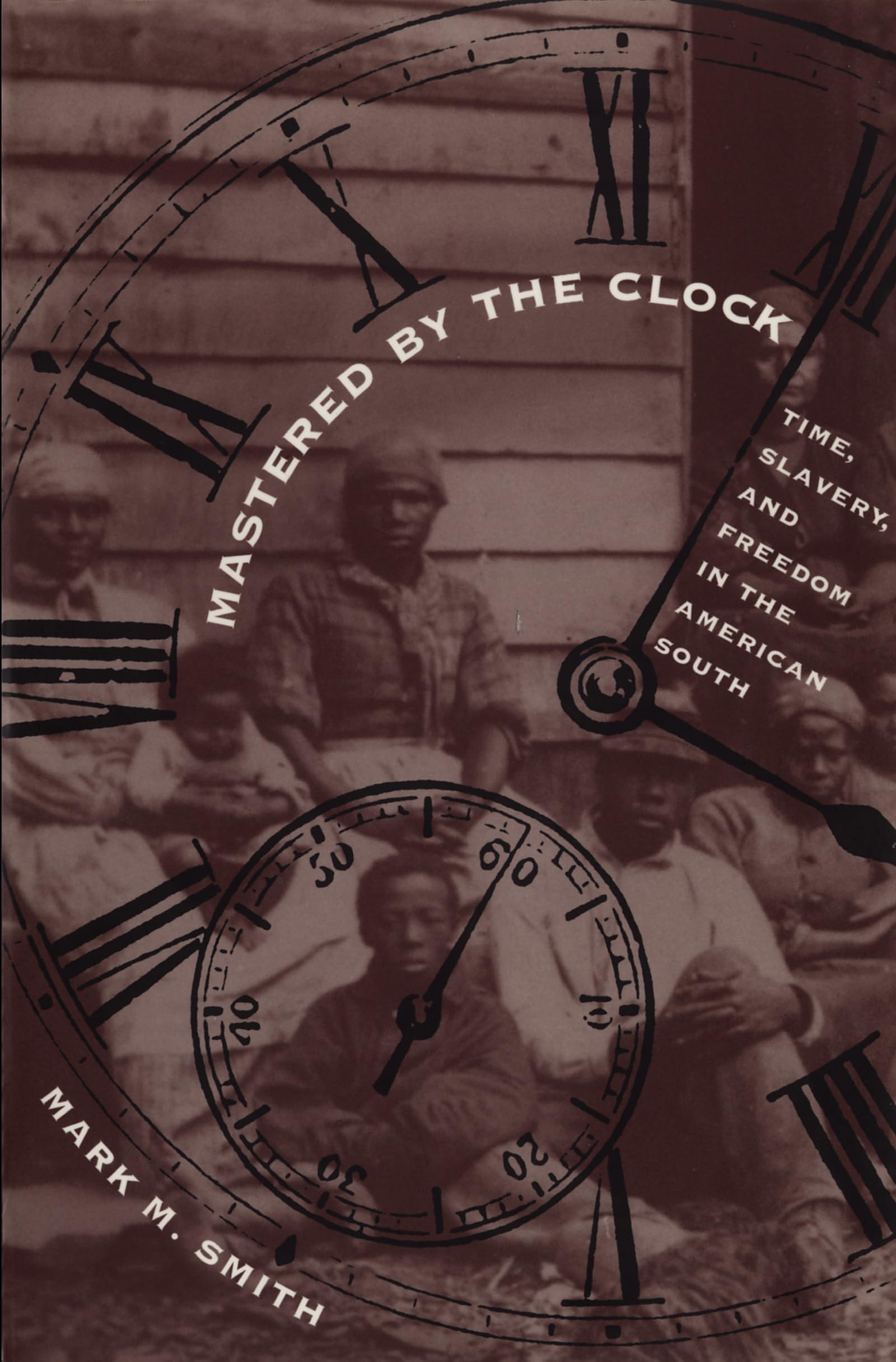
Mastered by the Clock is the first work to explore the evolution of clockbased time consciousness in the American South. Challenging traditional assumptions about the plantation economy's reliance on a premodern, naturebased conception of time, Mark M. Smith shows how and why southernersparticularly masters and their slavescame to view the clock as a legitimate arbiter of time. Drawing on an extraordinary range of eighteenth and nineteenthcentury archival sources, Smith demonstrates that white southern slaveholders began to incorporate this new sense of time in the 1830s. Influenced by colonial merchants' fascination with time thrift, by a longheld familiarity with urban, public time, by the transport and market revolution in the South, and by their own qualified embrace of modernity, slaveowners began to purchase timepieces in growing numbers, adopting a clockbased conception of time and attempting in turn to instill a similar consciousness in their slaves. But, forbidden to own watches themselves, slaves did not internalize this idea to the same degree as their masters, and slaveholders found themselves dependent as much on the whip as on the clock when enforcing slaves' obedience to time. Ironically, Smith shows, freedom largely consolidated the dependence of masters as well as freedpeople on the clock.
⚠️ WARNING (California Proposition 65):
This product may contain chemicals known to the State of California to cause cancer,
birth defects, or other reproductive harm.
For MAP (Minimum Advertised Price) violations and Intellectual Property (IP) or Trademark concerns, please contact:
support@ergodebooks.com
⚠️ California Proposition 65 Warning: Some products sold on this website may expose you to chemicals known to the State of California to cause cancer, birth defects, or other reproductive harm. For more information, visit www.P65Warnings.ca.gov.