
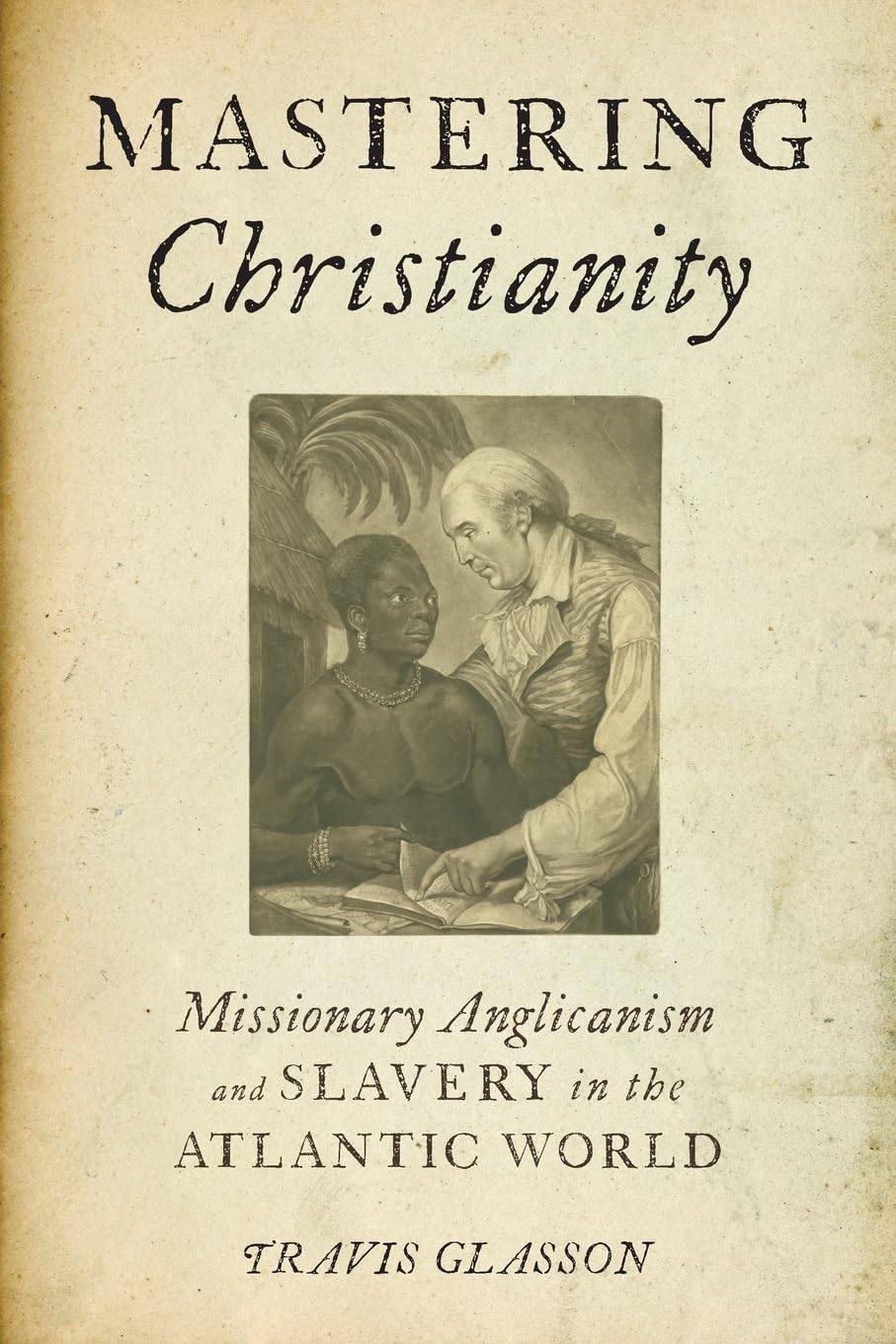
Title
Mastering Christianity: Missionary Anglicanism and Slavery in the Atlantic World,Used
Sold by Ergodebooks, an authorized reseller.
Returns accepted within 30 days | support@ergodebooks.com
Shipping Information
- Free Standard Shipping — United States only
- Processing Time: 3–5 business days
- Estimated Delivery: 6–10 business days after dispatch
- Double-boxed, fully insured & discreetly packaged
- Tracking number sent via email once dispatched
Returns & Refund
Returns accepted within 30 days of delivery.
Damaged or Defective Item
Free return shipping + replacement or full refund
Wrong Item Received
Free return shipping + replacement or full refund
Change of Mind
Return shipping at customer's expense · 25% restocking fee applies
Payment Option

Beginning in 1701, missionaryminded Anglicans launched one of the earliest and most sustained efforts to Christianize the enslaved people of Britain's colonies. Hundreds of clergy traveled to widelydispersed posts in North America, the Caribbean, and West Africa under the auspices of the Society for the Propagation of the Gospel in Foreign Parts (SPG) and undertook this work. Based on a belief in the essential unity of humankind, the Society's missionaries advocated for the conversion and better treatment of enslaved people. Yet, only a minority of enslaved people embraced Anglicanism, while a majority rejected it. Mastering Christianity closely explores these missionary encounters.The Society hoped to make slavery less cruel and more paternalistic but it came to stress the ideas that chattel slavery and Christianity were entirely compatible and could even be mutually beneficial. While important early figures saw slavery as troubling, over time the Society accommodated its message to slaveholders, advocated for laws that tightened colonial slave codes, and embraced slavery as a missionary tool. The SPG owned hundreds of enslaved people on its Codrington plantation in Barbados, where it hoped to simultaneously make profits and save souls. In Africa, the Society cooperated with English slave traders in establishing a mission at Cape Coast Castle, at the heart of the transAtlantic slave trade. The SPG helped lay the foundation for black Protestantism but pessimism about the project grew internally and black people's frequent skepticism about Anglicanism was construed as evidence of the inherent inferiority of African people and their American descendants. Through its texts and practices, the SPG provided important intellectual, political, and moral support for slaveholding around the British empire. The rise of antislavery sentiment challenged the principles that had long underpinned missionary Anglicanism's program, however, abolitionists viewed the SPG as a significant institutional opponent to their agenda.In this work, Travis Glasson provides a unique perspective on the development and entrenchment of a proslavery ideology by showing how English religious thinking furthered the development of slavery and supported the institution around the Atlantic world.
⚠️ WARNING (California Proposition 65):
This product may contain chemicals known to the State of California to cause cancer, birth defects, or other reproductive harm.
For more information, please visit www.P65Warnings.ca.gov.