If you have any questions, you are always welcome to contact us. We'll get back to you as soon as possible, withing 24 hours on weekdays.
Customer service
All questions about your order, return and delivery must be sent to our customer service team by e-mail at yourstore@yourdomain.com
Sale & Press
If you are interested in selling our products, need more information about our brand or wish to make a collaboration, please contact us at press@yourdomain.com
Help
If you have any questions, you are always welcome to contact us. We'll get back to you as soon as possible, withing 24 hours on weekdays.
Customer service
All questions about your order, return and delivery must be sent to our customer service team by e-mail at yourstore@yourdomain.com
Sale & Press
If you are interested in selling our products, need more information about our brand or wish to make a collaboration, please contact us at press@yourdomain.com
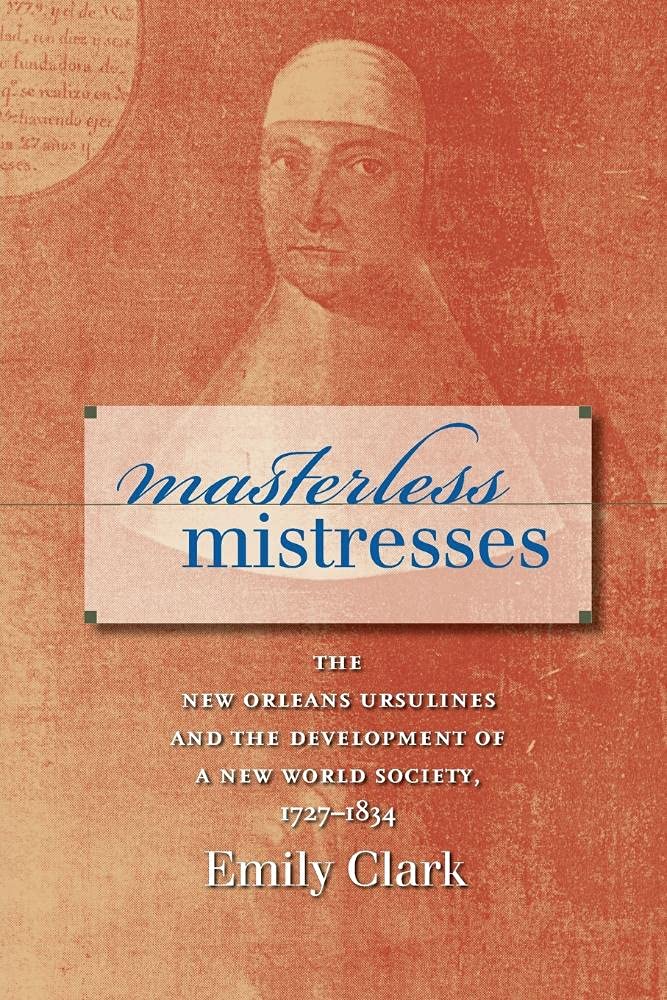
During French colonial rule in Louisiana, nuns from the French Company of Saint Ursula came to New Orleans, where they educated women and girls of European, Indian, and African descent, enslaved and free, in literacy, numeracy, and the Catholic faith. Although religious women had gained acceptance and authority in seventeenthcentury France, the New World was less welcoming. Emily Clark explores the transformations required of the Ursulines as their distinctive female piety collided with slave society, Spanish colonial rule, and Protestant hostility.The Ursulines gained prominence in New Orleans through the social services they providedschooling, an orphanage, and refuge for abused and widowed womenwhich also allowed them a selfsustaining level of corporate wealth. Clark traces the conflicts the Ursulines encountered through Spanish colonial rule (17671803) and after the Louisiana Purchase, as Protestants poured into Louisiana and were dismayed to find a powerful community of selfsupporting women and a church congregation dominated by African Americans. The unmarried nuns contravened both the patriarchal order of the slaveholding American South and the Protestant construction of femininity that supported it. By incorporating their story into the history of early America, Masterless Mistresses exposes the limits of the republican model of national unity.
⚠️ WARNING (California Proposition 65):
This product may contain chemicals known to the State of California to cause cancer,
birth defects, or other reproductive harm.
For MAP (Minimum Advertised Price) violations and Intellectual Property (IP) or Trademark concerns, please contact:
support@ergodebooks.com
⚠️ California Proposition 65 Warning: Some products sold on this website may expose you to chemicals known to the State of California to cause cancer, birth defects, or other reproductive harm. For more information, visit www.P65Warnings.ca.gov.