
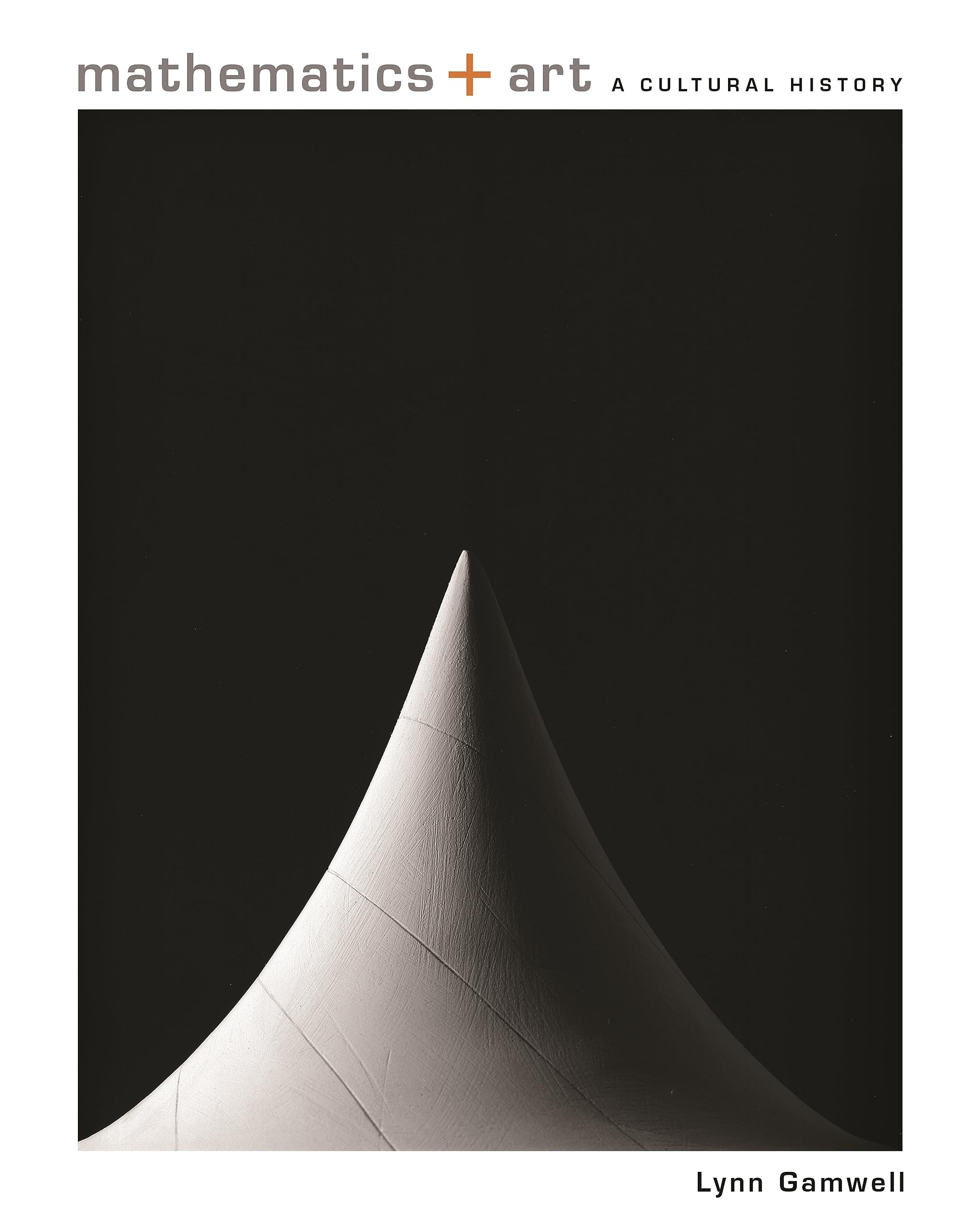
Title


Mathematics And Art: A Cultural History
Sold by Ergodebooks, an authorized reseller.
Returns accepted within 30 days | support@ergodebooks.com
Shipping Information
- Free Standard Shipping — United States only
- Processing Time: 3–5 business days
- Estimated Delivery: 6–10 business days after dispatch
- Double-boxed, fully insured & discreetly packaged
- Tracking number sent via email once dispatched
Returns & Refund
Returns accepted within 30 days of delivery.
Damaged or Defective Item
Free return shipping + replacement or full refund
Wrong Item Received
Free return shipping + replacement or full refund
Change of Mind
Return shipping at customer's expense · 25% restocking fee applies
Payment Option

A Cultural History Of The Links Between Mathematics And Art, From Antiquity To Todaythis Is A Cultural History Of Mathematics And Art, From Antiquity To The Present. Mathematicians And Artists Have Long Been On A Quest To Understand The Physical World They See Before Them And The Abstract Objects They Know By Thought Alone. Taking Readers On A Tour Of The Practice Of Mathematics And The Philosophical Ideas That Drive The Discipline, Lynn Gamwell Points Out The Important Ways Mathematical Concepts Have Been Expressed By Artists. Sumptuous Illustrations Of Artworks And Cogent Math Diagrams Are Featured In Gamwell'S Comprehensive Exploration.Gamwell Begins By Describing Mathematics From Antiquity To The Enlightenment, Including Greek, Islamic, And Asian Mathematics. Then Focusing On Modern Culture, Gamwell Traces Mathematicians' Search For The Foundations Of Their Science, Such As David Hilbert'S Conception Of Mathematics As An Arrangement Of Meaningfree Signs, As Well As Artists' Search For The Essence Of Their Craft, Such As Aleksandr Rodchenko'S Monochrome Paintings. She Shows That Selfreflection Is Inherent To The Practice Of Both Modern Mathematics And Art, And That This Introspection Points To A Deep Resonance Between The Two Fields: Kurt G?Del Posed Questions About The Nature Of Mathematics In The Language Of Mathematics And Jasper Johns Asked What Is Art? In The Vocabulary Of Art. Throughout, Gamwell Describes The Personalities And Cultural Environments Of A Multitude Of Mathematicians And Artists, From Gottlob Frege And Beno?T Mandelbrot To Max Bill And Xu Bing.Mathematics And Art Demonstrates How Mathematical Ideas Are Embodied In The Visual Arts And Will Enlighten All Who Are Interested In The Complex Intellectual Pursuits, Personalities, And Cultural Settings That Connect These Vast Disciplines.
⚠️ WARNING (California Proposition 65):
This product may contain chemicals known to the State of California to cause cancer, birth defects, or other reproductive harm.
For more information, please visit www.P65Warnings.ca.gov.
- Q: How many pages does 'Mathematics and Art: A Cultural History' have? A: This book has five hundred seventy-six pages. It provides a comprehensive exploration of the relationship between mathematics and art.
- Q: What are the dimensions of the book? A: The book measures ten inches in length, one point seventy-five inches in width, and twelve point fifty-two inches in height. These dimensions make it a substantial hardcover read.
- Q: Who is the author of this book? A: The author is Lynn Gamwell. She explores the connections between mathematical concepts and artistic expression throughout history.
- Q: What is the binding type of this book? A: This book is bound in hardcover. This binding ensures durability and longevity for readers.
- Q: What genre does this book fall under? A: The book falls under the genre of History. It delves into the cultural history linking mathematics and art.
- Q: Is 'Mathematics and Art' suitable for children? A: While there is no specific age recommendation, it is best suited for older teens and adults due to its complex themes. It explores deep intellectual pursuits that may not be appropriate for younger readers.
- Q: How does 'Mathematics and Art' approach its subject matter? A: The book takes a cultural history approach, connecting mathematical concepts with artistic expressions. It examines the philosophical ideas that drive both disciplines.
- Q: Can I use this book for academic purposes? A: Yes, this book can be utilized for academic purposes. It provides in-depth analysis and extensive references on mathematics and art.
- Q: Is there a specific audience this book targets? A: This book primarily targets readers interested in the intersection of mathematics and art, including students, educators, and enthusiasts in these fields.
- Q: Does the book include illustrations? A: Yes, the book features sumptuous illustrations of artworks and cogent math diagrams. These visuals enhance the reader's understanding of the concepts discussed.
- Q: How should I care for this hardcover book? A: To care for this hardcover book, keep it in a dry, cool place and avoid exposure to direct sunlight. This will help preserve the quality of the binding and pages.
- Q: What if the book arrives damaged? A: If the book arrives damaged, contact the seller for return or exchange options. Most retailers have policies to address damaged items.
- Q: How do I store this book to maintain its condition? A: Store the book upright on a shelf to prevent bending or warping. Ensure it is placed away from moisture and direct heat.
- Q: Is this book suitable for beginners in mathematics or art? A: This book may not be ideal for beginners. It discusses complex ideas that are better suited for those with a foundational understanding of both fields.
- Q: What themes are explored in 'Mathematics and Art'? A: The book explores themes such as the philosophical connections between mathematics and art, as well as historical perspectives from antiquity to modern culture.
- Q: Does the author include personal anecdotes in the book? A: Yes, Lynn Gamwell describes the personalities and cultural environments of various mathematicians and artists, providing a richer context for their work.