
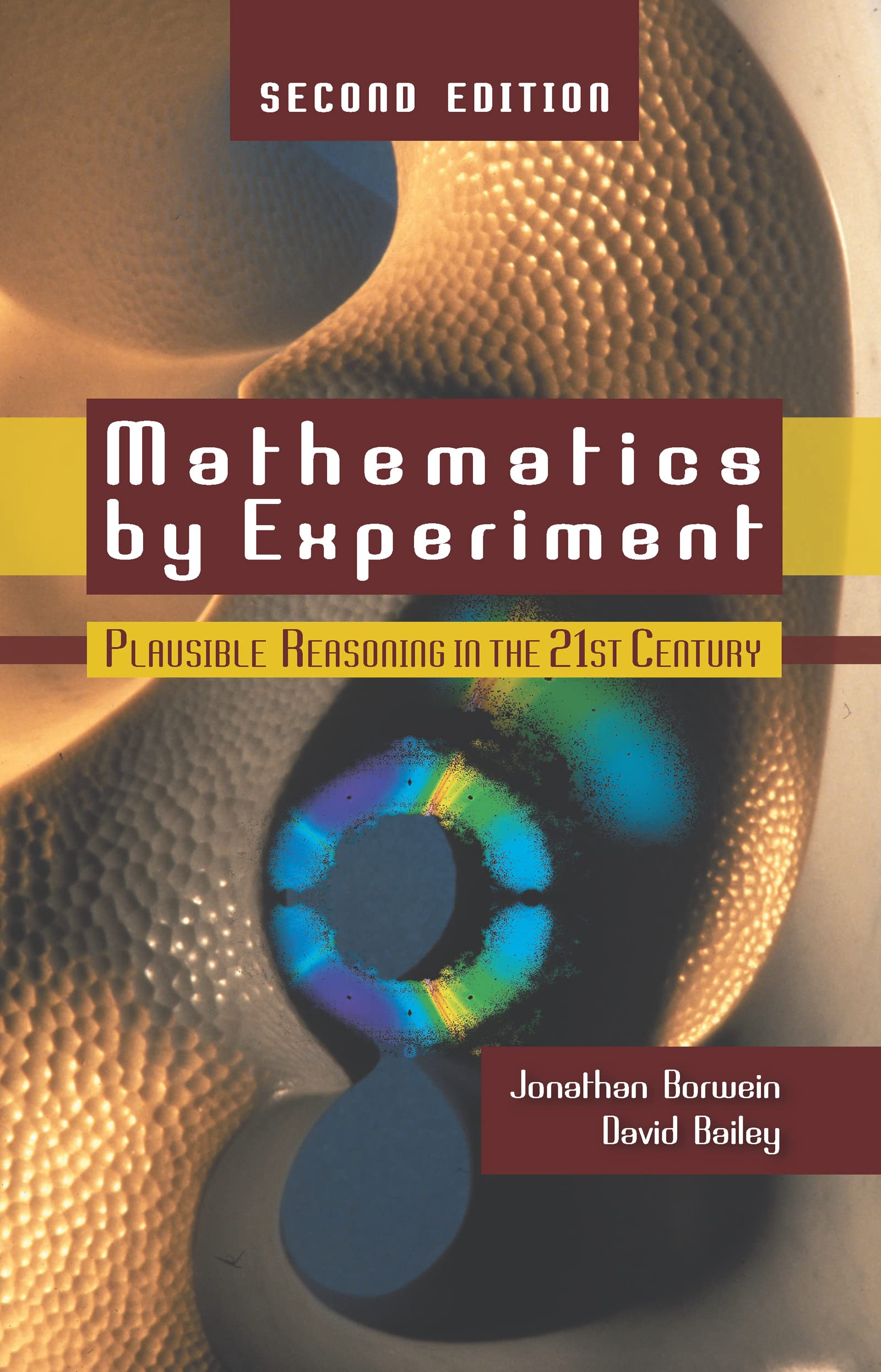
Title
Mathematics By Experiment
Sold by Ergodebooks, an authorized reseller.
Returns accepted within 30 days | support@ergodebooks.com
Shipping Information
- Free Standard Shipping — United States only
- Processing Time: 3–5 business days
- Estimated Delivery: 6–10 business days after dispatch
- Double-boxed, fully insured & discreetly packaged
- Tracking number sent via email once dispatched
Returns & Refund
Returns accepted within 30 days of delivery.
Damaged or Defective Item
Free return shipping + replacement or full refund
Wrong Item Received
Free return shipping + replacement or full refund
Change of Mind
Return shipping at customer's expense · 25% restocking fee applies
Payment Option

This Revised And Updated Second Edition Maintains The Content And Spirit Of The First Edition And Includes A New Chapter, Recent Experiences, That Provides Examples Of Experimental Mathematics That Have Come To Light Since The Publication Of The First Edition In 2003. For More Examples And Insights, Experimentation In Mathematics: Computational Paths To Discovery Is A Highly Recommended Companion.
⚠️ WARNING (California Proposition 65):
This product may contain chemicals known to the State of California to cause cancer, birth defects, or other reproductive harm.
For more information, please visit www.P65Warnings.ca.gov.
- Q: How many pages does this book have? A: This book has three hundred ninety-four pages. It provides a comprehensive look into experimental mathematics.
- Q: What are the dimensions of 'Mathematics by Experiment'? A: The book measures six inches in length, one point zero eight inches in width, and nine point zero two inches in height.
- Q: What type of binding does this book have? A: This book is bound in hardcover. Hardcover bindings are durable and ideal for long-term use.
- Q: Who is the author of this book? A: The author of 'Mathematics by Experiment' is Jonathan Borwein. He is known for his contributions to experimental mathematics.
- Q: What is the main subject of this book? A: This book focuses on experimental mathematics. It discusses various computational paths to discovery in the field.
- Q: How do I read or study this book effectively? A: To study this book, read each chapter sequentially and explore the examples provided. The new chapter on 'Recent Experiences' is particularly insightful.
- Q: Is this book suitable for beginners? A: Yes, this book is suitable for beginners. It presents concepts in an accessible manner while providing depth for advanced readers.
- Q: Can I use this book for a mathematics course? A: Yes, this book can be used for a mathematics course. It offers valuable insights and examples for coursework in experimental mathematics.
- Q: How should I store this book to keep it in good condition? A: Store this book upright on a shelf in a cool, dry place. Avoid exposure to direct sunlight to prevent fading.
- Q: What is the best way to clean the book if it gets dirty? A: To clean the book, gently wipe the cover with a soft, dry cloth. Avoid using water or cleaning solutions.
- Q: Is this book safe for young readers? A: Yes, this book is safe for young readers. However, it is best suited for those with an interest in mathematics.
- Q: What if I receive a damaged copy of the book? A: If you receive a damaged copy, contact the seller for a return or exchange. Most sellers offer customer support for such issues.
- Q: Can I return this book if I don’t like it? A: Yes, you can typically return this book if you don't like it. Check the seller's return policy for specific details.
- Q: How does this book compare to other mathematics books? A: This book offers a unique focus on experimental mathematics, differing from traditional textbooks that may emphasize theory.
- Q: Is there a companion book recommended for this one? A: Yes, 'Experimentation in Mathematics: Computational Paths to Discovery' is a highly recommended companion to this book.
- Q: Does this book include recent mathematical discoveries? A: Yes, the second edition includes a new chapter detailing recent mathematical discoveries since the first edition's publication.