
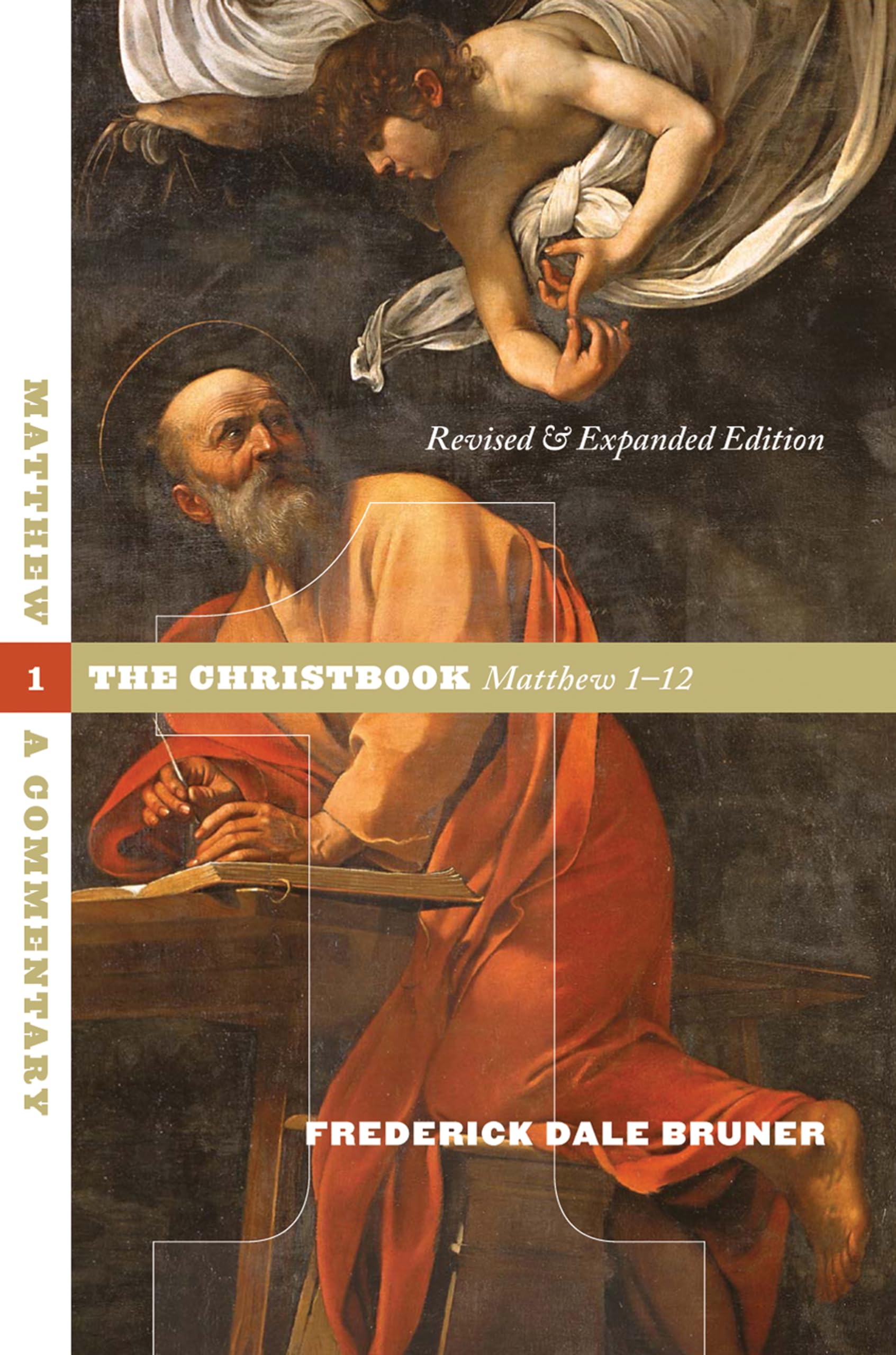
Title
Matthew: A Commentary. Volume 1: The Christbook, Matthew 112,New
Sold by Ergodebooks, an authorized reseller.
Returns accepted within 30 days | support@ergodebooks.com
Shipping Information
- Free Standard Shipping — United States only
- Processing Time: 3–5 business days
- Estimated Delivery: 6–10 business days after dispatch
- Double-boxed, fully insured & discreetly packaged
- Tracking number sent via email once dispatched
Returns & Refund
Returns accepted within 30 days of delivery.
Damaged or Defective Item
Free return shipping + replacement or full refund
Wrong Item Received
Free return shipping + replacement or full refund
Change of Mind
Return shipping at customer's expense · 25% restocking fee applies
Payment Option

Recognized As A Masterly Commentary When It First Appeared, Frederick Dale Bruner'S Study Of Matthew Is Now Available As A Greatly Revised And Expanded Twovolume Work The Result Of Seven Years Of Careful Refinement, Enrichment, And Updating.Through This Commentary, Crafted Especially For Teachers, Pastors, And Bible Students, Bruner Aims 'To Help God'S People Love What Matthew'S Gospel Says.' Bruner'S Work Is At Once Broadly Historical And Deeply Theological. It Is Historical In Drawing Extensively On Great Church Teachers Through The Centuries And On The Classical Christian Creeds And Confessions. It Is Theological In That It Unpacks The Doctrines In Each Passage, Chapter, And Section Of The Gospel. Consciously Attempting To Bridge Past And Present, Bruner Asks Both What Matthew'S Gospel Said To Its First Hearers And What It Says To Readers Today. As A Result, His Commentary Is Profoundly Relevant To Contemporary Congregations And To Those Who Guide Them.Bruner'S Commentary Is Replete With Lively, Versebyverse Discussion Of Matthew'S Text. While Each Chapter Expounds A Specific Topic Or Doctrine, The Book'S Format Consists Of A Vivid, Original Translation Of The Text Followed By Faithful Exegesis And Critical Analysis, A Survey Of Historical Commentary On The Text, And Current Applications Of The Text Or Theme Under Study. In This Revision Bruner Continues To Draw On The Best In Modern Scholarship Including Recent Work By W. D. Davies And Dale C. Allison Jr., By Ulrich Luz, And By Many Others Adding New Voices To The Reading Of Matthew. At The Same Time He Cites The Classic Commentaries Of Chrysostom, Jerome, Augustine, Luther, Calvin, Bengel, And The Rest, Who, Like Bruner Himself, Were Not Simply Doctrinal Teachers But Also Careful Exegetes Of Scripture. Such Breadth And Depth Of Learning Assure That Bruner'S Matthew Will Remain, As A Reviewer For Interpretation Wrote, 'The Most Dogeared Commentary On The Shelf.'Volume 1 Of Bruner'S Commentary Is Called The Christbook Because The First Twelve Chapters Of Matthew Are Focused On The Nature And Work Of Christ. As Bruner Proceeds Through These Chapters, He Shows How Matthew Presents, Step By Step, Central Themes Of Christology: Jesus' Coming (Chapters 14), His Teaching (57), His Miracles (89), His Sermon On Mission (10), And His Person (1112). Throughout The Book There Are Also Thoughtful Discussions Of Significant Topics Such As Baptism, Marriage, Jewishchristian Relations, And Heaven And Hell.Eminently Readable, Rich In Biblical Insight, And Ecumenical In Tone, Bruner'S Twovolume Commentary On Matthew Now Stands Among The Best In The Field.
⚠️ WARNING (California Proposition 65):
This product may contain chemicals known to the State of California to cause cancer, birth defects, or other reproductive harm.
For more information, please visit www.P65Warnings.ca.gov.
- Q: What is the page count of the book? A: The book contains six hundred fifty-two pages. This extensive length allows for in-depth exploration of Matthew's Gospel.
- Q: What are the dimensions of the book? A: The book measures six point three eight inches in length, one point three eight inches in width, and nine point one four inches in height. These dimensions make it a manageable size for reading and study.
- Q: What type of binding does this book have? A: This book is bound in paperback. Paperback bindings are lightweight and often more affordable than hardcovers.
- Q: How should I read this commentary? A: You can read this commentary as a study aid alongside your Bible. It is designed for teachers, pastors, and students to aid in understanding Matthew's Gospel.
- Q: Is this book suitable for beginners? A: Yes, this book is suitable for both beginners and experienced readers. Its accessible language and thorough explanations cater to a wide range of readers.
- Q: What themes does this book cover? A: The book covers central themes of Christology, including Jesus' coming, teachings, miracles, and person. These themes are explored in the context of Matthew's Gospel.
- Q: How do I keep this book in good condition? A: To maintain the book's condition, store it in a dry place and avoid exposing it to direct sunlight. Regularly dust the cover to keep it clean.
- Q: Is this book appropriate for children? A: Yes, this book is appropriate for older children and teenagers interested in biblical studies. It provides insights that can enrich their understanding of Christian teachings.
- Q: What should I do if the book arrives damaged? A: If the book arrives damaged, contact the seller immediately to initiate a return or replacement. Most sellers have policies in place for such situations.
- Q: Can this book be used for group study? A: Yes, this book is excellent for group study. Its comprehensive analysis makes it a valuable resource for discussions in a classroom or study group setting.
- Q: What qualifications does the author have? A: Frederick Dale Bruner is a respected theologian and scholar. His extensive knowledge of biblical texts enhances the quality of this commentary.
- Q: Does this book include historical context? A: Yes, the book includes historical context drawn from great church teachers and classical Christian creeds. This depth adds richness to the commentary.
- Q: Are there any illustrations in the book? A: No, this commentary does not feature illustrations. It focuses on text and analysis to convey its insights effectively.
- Q: What is the publication date of this book? A: The revised edition was published in two thousand and ten. It reflects updates based on modern scholarship and theological insights.
- Q: Is this book part of a series? A: Yes, this book is Volume 1 of a two-volume commentary on Matthew. The second volume continues the exploration of Matthew's Gospel.
- Q: What makes this commentary unique? A: This commentary is unique for its blend of historical and theological insights, making it relevant for both contemporary readers and traditional teachings.