
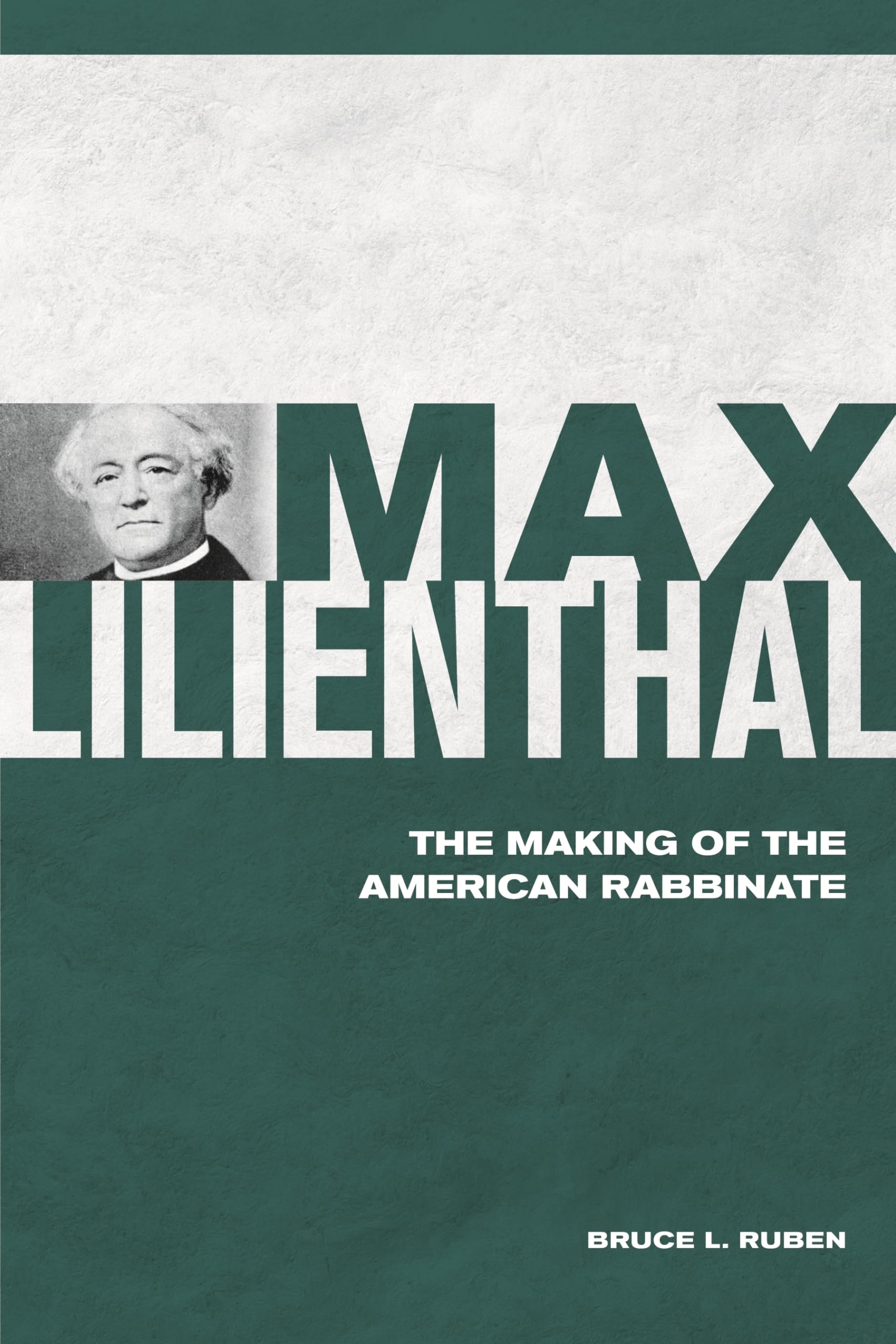
Title
Max Lilienthal: The Making Of The American Rabbinate,Used
Sold by Ergodebooks, an authorized reseller.
Returns accepted within 30 days | support@ergodebooks.com
Shipping Information
- Free Standard Shipping — United States only
- Processing Time: 3–5 business days
- Estimated Delivery: 6–10 business days after dispatch
- Double-boxed, fully insured & discreetly packaged
- Tracking number sent via email once dispatched
Returns & Refund
Returns accepted within 30 days of delivery.
Damaged or Defective Item
Free return shipping + replacement or full refund
Wrong Item Received
Free return shipping + replacement or full refund
Change of Mind
Return shipping at customer's expense · 25% restocking fee applies
Payment Option

When Congregation Bene Israel hired him to come to Cincinnati in 1854, Rabbi Max Lilienthal (181482) seized the opportunity to work with his friend Isaac M. Wise. Together, Lilienthal and Wise forged the institutional foundations for the American Reform movement: the Union of American Hebrew Congregations and Hebrew Union College. In Max Lilienthal: The Making of the American Rabbinate, author Bruce L. Ruben investigates the central role Lilienthal played in creating new institutions and leadership models to bring his immigrant community into the mainstream of American society. Ruben's biography shines a light on this prominent rabbi and educator who is treated by most American Jewish historians as, at best, Wise's collaborator.Ruben examines Lilienthal's early career, including how his fervent Haskalah ideology was shaped by tensions within early nineteenthcentury German Jewish society and how he tried to implement that ideology in his attempt to modernize Russian Jewish education. After he immigrated to America to serve three traditional New York German synagogues, he clashed with lay leadership. Ruben examines this layclergy power struggle and how Lilienthal resolved it over his long career. Max Lilienthal: The Making of the American Rabbinate also details the rabbi's many accomplishments, including his creation of a nationally recognized private Jewish school and the founding of the precursor to the Central Conference of American Rabbis. He also was the first rabbi to preach in a Christian church. Even more significantly, Ruben argues that Lilienthal created an unprecedented new American model for the rabbinate, in which the rabbi played a prominent role in civic life.More than a biography, this volume is a case study of the impact of American culture on Judaism and its leadership, as Ruben shows how Lilienthal embraced an increasingly radical Reform ideology influenced by a mixture of American and European ideas. Students of German Haskalah and historians of American Judaism and the Reform movement will appreciate this biography that fills an important gap in the history of American Jewry.
⚠️ WARNING (California Proposition 65):
This product may contain chemicals known to the State of California to cause cancer, birth defects, or other reproductive harm.
For more information, please visit www.P65Warnings.ca.gov.