If you have any questions, you are always welcome to contact us. We'll get back to you as soon as possible, withing 24 hours on weekdays.
Customer service
All questions about your order, return and delivery must be sent to our customer service team by e-mail at yourstore@yourdomain.com
Sale & Press
If you are interested in selling our products, need more information about our brand or wish to make a collaboration, please contact us at press@yourdomain.com
Help
If you have any questions, you are always welcome to contact us. We'll get back to you as soon as possible, withing 24 hours on weekdays.
Customer service
All questions about your order, return and delivery must be sent to our customer service team by e-mail at yourstore@yourdomain.com
Sale & Press
If you are interested in selling our products, need more information about our brand or wish to make a collaboration, please contact us at press@yourdomain.com
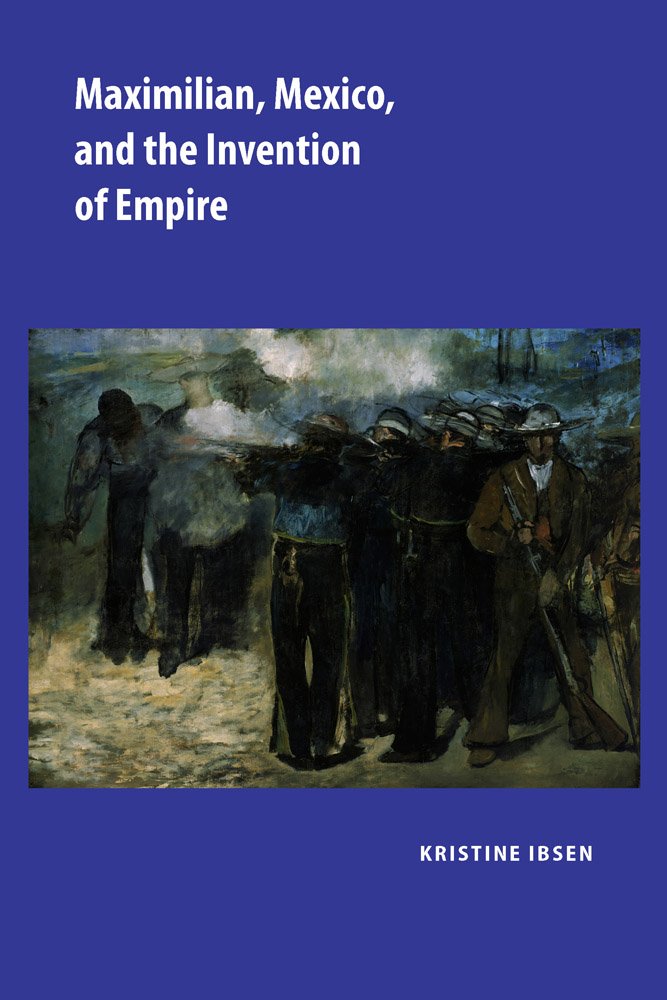
In Maximilian, Mexico, and the Invention of Empire, the cultural legacy of the Second Mexican Empire is examined as essential to modern understandings of empire and nation. The Second Empire refers to the brief period (18641867) during which Napoleon III sought to consolidate his control in Mexico by installing an Austrian archduke as Emperor Maximilian I of Mexico. Far from fading into obscurity upon Maximilian's fall and execution, however, the episode has continued to resonate in the cultural imaginary.That resonance becomes the theme in this book, as the author skillfully crafts a crossdisciplinary analysis that demonstrates how resistance to the Empire helped consolidate Mexican political and cultural identity, as well as how this episode was appropriated outside Mexico as a symbol of popular triumph over autocratic rule. The book begins with a discussion of empire and nation in visual culture and the opposition press during the occupation, and subsequent chapters are dedicated to Edouard Manet's Execution of Maximilian series (18671869), the antifascist film Juarez (USA, 1939), and Mexican Fernando del Paso's novel Noticias del Imperio (1987). By examining the multiple modes through which history may be narrated, this book elucidates how creative works create meaning and effect political change.
⚠️ WARNING (California Proposition 65):
This product may contain chemicals known to the State of California to cause cancer,
birth defects, or other reproductive harm.
For MAP (Minimum Advertised Price) violations and Intellectual Property (IP) or Trademark concerns, please contact:
support@ergodebooks.com
⚠️ California Proposition 65 Warning: Some products sold on this website may expose you to chemicals known to the State of California to cause cancer, birth defects, or other reproductive harm. For more information, visit www.P65Warnings.ca.gov.