
Title
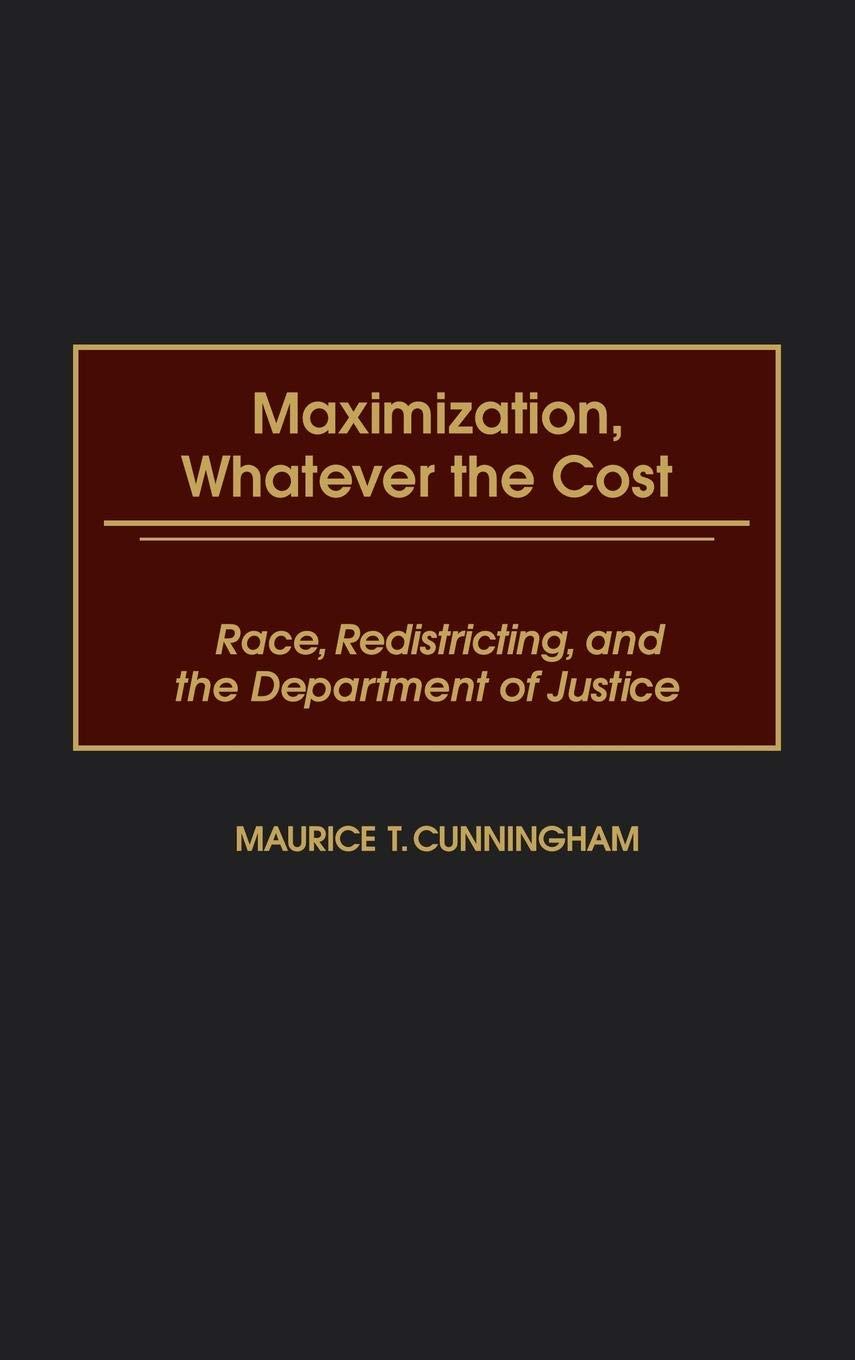
Maximization, Whatever the Cost: Race, Redistricting, and the Department of Justice,Used
Sold by Ergodebooks, an authorized reseller.
Returns accepted within 30 days | support@ergodebooks.com
Shipping Information
- Free Standard Shipping — United States only
- Processing Time: 3–5 business days
- Estimated Delivery: 6–10 business days after dispatch
- Double-boxed, fully insured & discreetly packaged
- Tracking number sent via email once dispatched
Returns & Refund
Returns accepted within 30 days of delivery.
Damaged or Defective Item
Free return shipping + replacement or full refund
Wrong Item Received
Free return shipping + replacement or full refund
Change of Mind
Return shipping at customer's expense · 25% restocking fee applies
Payment Option

During the early 1990s the Department of Justice used its Voting Rights Act power to object to racially unfair redistricting laws to force states to maximize minority congressional districts. The results were dramatic: Congressional Black Caucus membership swelled from 25 to 38 and nine new Hispanic congresspersons were sworn in. Only three years later, the maximization strategy lay in ruins. The courts forced many of the new minority districts to be redrawn and the judiciary reserved especially harsh criticism for the Department.Cunningham examines and analyzes how the Department came to adopt the maximization strategy. He explores the bureaucratic culture of the Division's Voting Section, its history, and the interaction of its progressive career staff with more conservative political appointees. The Division works amidst a vibrant interest group environment, with civil rights advocates, the state, and political parties eager for influence. Cunningham shows how that influence contest was won by the civil rights groups, how their preferred interpretations of fair redistricting and discriminatory purpose were adopted by the Division, and how their chosen districting models were forced upon states by the Division. He examines the effect the Department has had on federalism, representation, and its own impaired credibility with the judiciary. Finally, he suggests how the Division might resurrect its damaged reputation for balanced enforcement. An important study for scholars, students, and public policy makers involved with civil rights, public administration, and public law.
⚠️ WARNING (California Proposition 65):
This product may contain chemicals known to the State of California to cause cancer, birth defects, or other reproductive harm.
For more information, please visit www.P65Warnings.ca.gov.