
Title
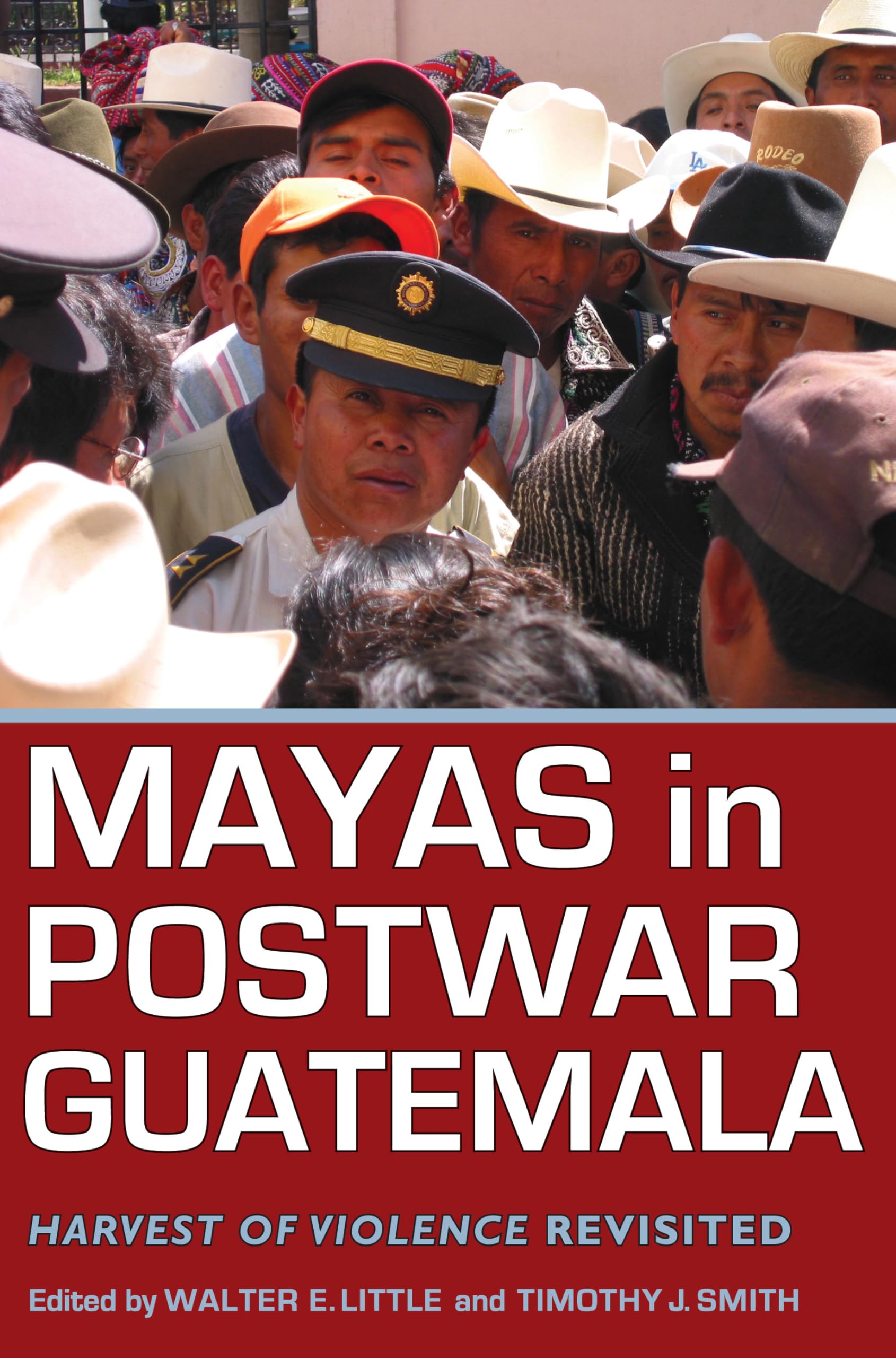
Mayas in Postwar Guatemala: Harvest of Violence Revisited (Contemporary American Indian Studies),Used
Sold by Ergodebooks, an authorized reseller.
Returns accepted within 30 days | support@ergodebooks.com
Shipping Information
- Free Standard Shipping — United States only
- Processing Time: 3–5 business days
- Estimated Delivery: 6–10 business days after dispatch
- Double-boxed, fully insured & discreetly packaged
- Tracking number sent via email once dispatched
Returns & Refund
Returns accepted within 30 days of delivery.
Damaged or Defective Item
Free return shipping + replacement or full refund
Wrong Item Received
Free return shipping + replacement or full refund
Change of Mind
Return shipping at customer's expense · 25% restocking fee applies
Payment Option

Like the original Harvest of Violence, published in 1988, this volume reveals how the contemporary Mayas contend with crime, political violence, internal community power struggles, and the broader impact of transnational economic and political policies in Guatemala. However, this work, informed by longterm ethnographic fieldwork in Mayan communities and commitment to conducting research in Mayan languages, places current anthropological analyses in relation to Mayan political activism and key Mayan intellectuals research and criticism. Illustrating specifically how Mayas in this postwar period conceive of their social and political place in Guatemala, Mayas working in factories, fields, and markets, and participating in local, communitylevel politics provide critiques of the government, the Maya movement, and the general state of insecurity and social and political violence that they continue to face on a daily basis. Their critical assessments and efforts to improve political, social, and economic conditions illustrate their resiliency and positive, nonviolent solutions to Guatemalas ongoing problems that deserve serious consideration by Guatemalan and US policy makers, international nongovernment organizations, peace activists, and even academics studying politics, social agency, and the survival of indigenous people.CONTRIBUTORSAbigail E. Adams / Jos Oscar Barrera Nuez / Peter Benson / Barbara Bocek / Jennifer L. Burrell / Robert M. Carmack / Monica DeHart / Edward F. Fischer / Liliana Goldn / Walter E. Little / Judith M. Maxwell / J. Jailey PhilpotMunson / Brenda Rosenbaum / Timothy J. Smith / David Stoll
⚠️ WARNING (California Proposition 65):
This product may contain chemicals known to the State of California to cause cancer, birth defects, or other reproductive harm.
For more information, please visit www.P65Warnings.ca.gov.
- Q: What is the main focus of 'Mayas in Postwar Guatemala: Harvest of Violence Revisited'? A: The book examines how contemporary Mayas in Guatemala navigate issues such as crime, political violence, and social struggles while also highlighting their activism and resilience in facing ongoing challenges.
- Q: Who is the author of this book? A: The author of 'Mayas in Postwar Guatemala: Harvest of Violence Revisited' is Walter E. Little.
- Q: What type of binding does this book have? A: This book is available in paperback binding.
- Q: How many pages are in this book? A: The book contains 264 pages.
- Q: When was 'Mayas in Postwar Guatemala: Harvest of Violence Revisited' published? A: The book was published on May 17, 2009.
- Q: What condition is the book in? A: The book is listed as 'Used Book in Good Condition'.
- Q: What topics are covered in the book? A: The book covers topics such as contemporary Mayan political activism, community power struggles, and the impact of transnational economic policies on Mayan communities.
- Q: Is this book suitable for academic research? A: Yes, the book provides valuable insights for academics studying politics, social agency, and the survival of indigenous people.
- Q: What edition of the book is available? A: This is the First Edition of the book.
- Q: Who are some contributors to this book? A: Contributors include Abigail E. Adams, José Oscar Barrera Nuñez, Peter Benson, and several others who provide diverse perspectives on the issues discussed.