If you have any questions, you are always welcome to contact us. We'll get back to you as soon as possible, withing 24 hours on weekdays.
Customer service
All questions about your order, return and delivery must be sent to our customer service team by e-mail at yourstore@yourdomain.com
Sale & Press
If you are interested in selling our products, need more information about our brand or wish to make a collaboration, please contact us at press@yourdomain.com
Help
If you have any questions, you are always welcome to contact us. We'll get back to you as soon as possible, withing 24 hours on weekdays.
Customer service
All questions about your order, return and delivery must be sent to our customer service team by e-mail at yourstore@yourdomain.com
Sale & Press
If you are interested in selling our products, need more information about our brand or wish to make a collaboration, please contact us at press@yourdomain.com
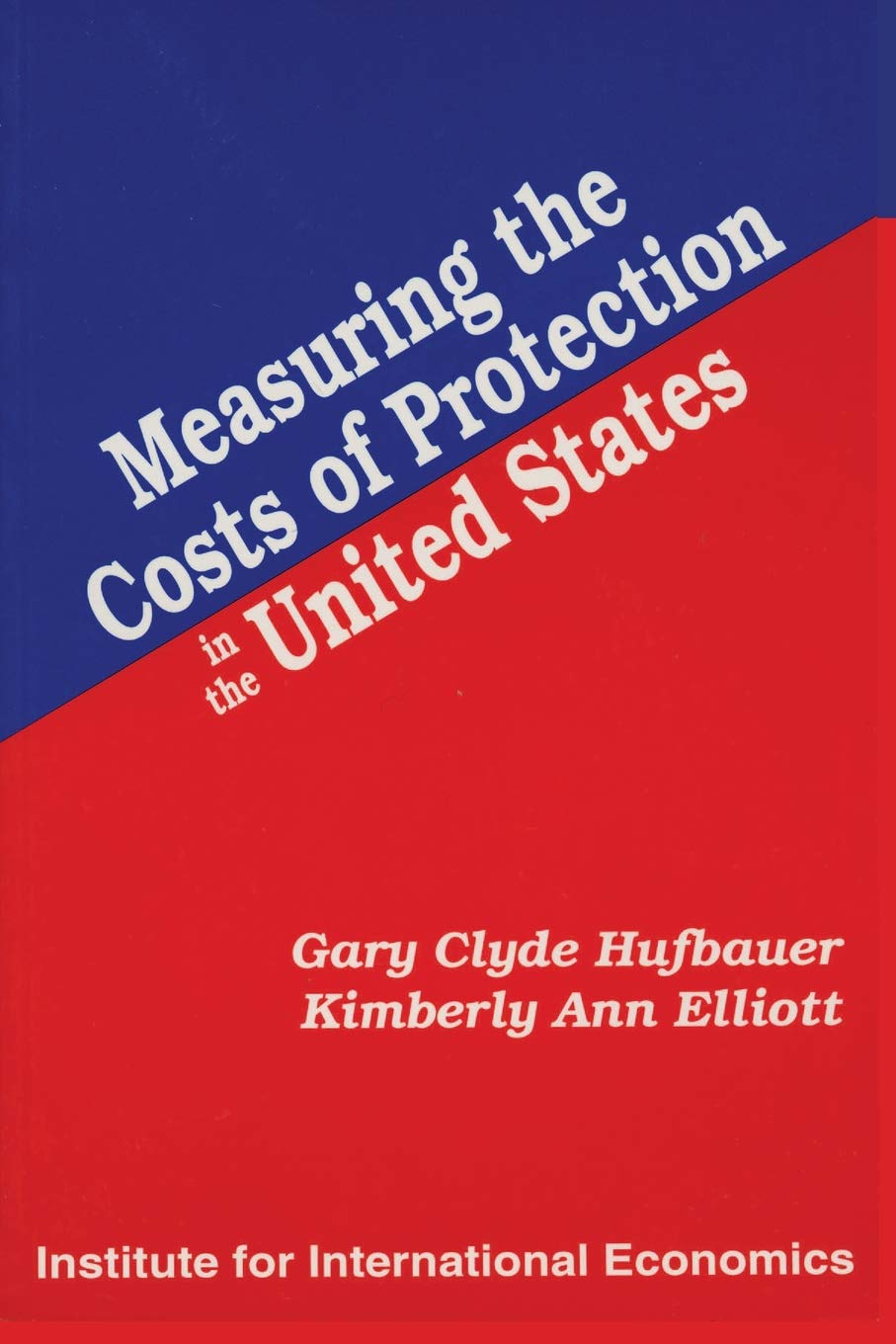
This comprehensive study finds that tariffs and quantitative import restrictions in place in 1990 cost American consumers about $70 billion, more than 1 percent of GDP. The net national welfare loss, after deducting tariff revenues and transfers to domestic producers, was $11 billion, of which perhaps 70 percent was captured by foreign producers as quota rents. Nearly half of the consumer costs are accounted for by 21 highly protected sectors, and more than a third, $24 billion, are attributable to textiles and apparel alone. The cost to consumers of 'special' protection aside from textiles and apparel dropped sharply in the 1980s, from $15 billion in 1984 to $6 billion in 1990. If it is ratified, the Uruguay Round will result in a further large reduction in these costs, particularly in textiles and apparel. Still, the annual consumer costs per American job 'saved' by 'special' protection range from $100,000 to over $1 million and average $170,000. Consumers thus pay over six times the average annual compensation of manufacturing workers to preserve each job. In terms of net national welfare, the cost per protected job is about $54,000. This figure far exceeds the cost per worker of the most generous adjustment program entailing income support, retraining, and relocation. This study will be indispensable to public and private sector decision makers and analysts concerned about the very high costs and small benefits of US import barriers. Teachers will find this book an engrossing way to introduce students to the cost of protection calculations that government economists and trade negotiators frequently make.
⚠️ WARNING (California Proposition 65):
This product may contain chemicals known to the State of California to cause cancer,
birth defects, or other reproductive harm.
For MAP (Minimum Advertised Price) violations and Intellectual Property (IP) or Trademark concerns, please contact:
support@ergodebooks.com
⚠️ California Proposition 65 Warning: Some products sold on this website may expose you to chemicals known to the State of California to cause cancer, birth defects, or other reproductive harm. For more information, visit www.P65Warnings.ca.gov.