
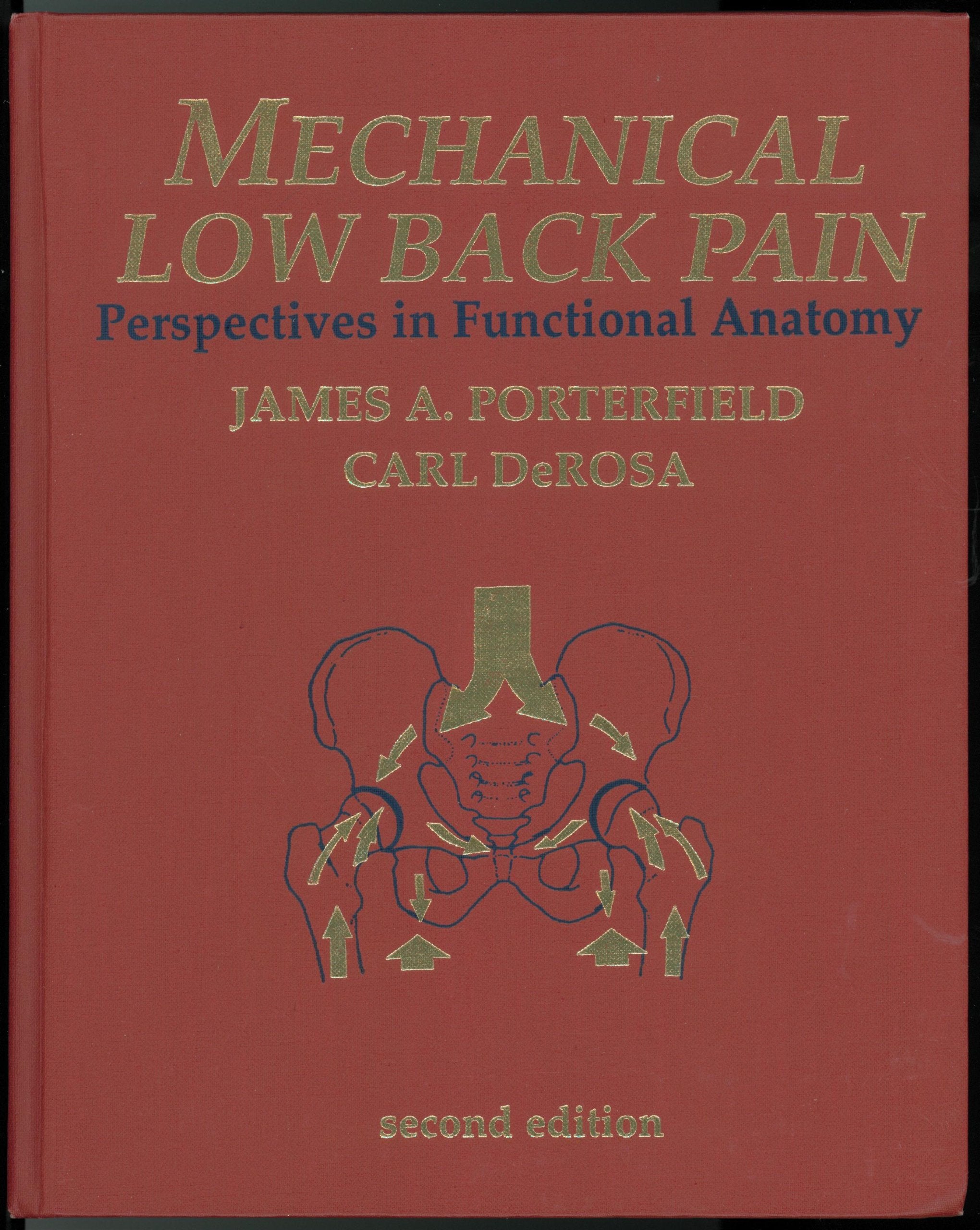
Title
Mechanical Low Back Pain: Perspectives in Functional Anatomy,Used
Sold by Ergodebooks, an authorized reseller.
Returns accepted within 30 days | support@ergodebooks.com
Shipping Information
- Free Standard Shipping — United States only
- Processing Time: 3–5 business days
- Estimated Delivery: 6–10 business days after dispatch
- Double-boxed, fully insured & discreetly packaged
- Tracking number sent via email once dispatched
Returns & Refund
Returns accepted within 30 days of delivery.
Damaged or Defective Item
Free return shipping + replacement or full refund
Wrong Item Received
Free return shipping + replacement or full refund
Change of Mind
Return shipping at customer's expense · 25% restocking fee applies
Payment Option

Here's the New Edition of the first book to integrate kinesiology, biomechanics, and anatomy to help readers provide safe, effective therapies for low back pain. Completely revised and updated, the 2nd Edition features a more clinical focus, reflects new scientific information regarding anatomy and mechanics of the lower back, and provides new strategies for rehabilitating patients.Reviews of the Last Edition:'An important addition to the professional literature...valuable.'Physical Therapy'A very worthwhile contribution to our understanding of the lumbar spine and the principles of its treatment...A useful text for all who treat low back pain.'The Journal of Orthopaedic & Sports Physical Therapy Expanded coverage of treatment strategies includes specific methods to train abdominal and trunk extensor mechanisms, and a new section on teaching the patient selfmanagement techniques. New information is given on the influence of psychosocial and workplace factors on the perception of pain, as well as on the relevance of specialized connective tissues to the low back pain process. The latest knowledge is presented on posture and epidural pressures, nerve root pathology, disc disease, musculature of the lumbopelvic region, loadbearing ability of joints and the influence of shear, and much more. A new algorithm of care guides readers along a proposed treatment process. FEATURES: An abundant useof illustrations, including new cadaver photos and matching drawings, help clarify and reinforce important content. A detailed dissection of the lower back provides a 3D appreciation of lumbopelvic anatomy and spatial relationships.
⚠️ WARNING (California Proposition 65):
This product may contain chemicals known to the State of California to cause cancer, birth defects, or other reproductive harm.
For more information, please visit www.P65Warnings.ca.gov.
- Q: What is the primary focus of 'Mechanical Low Back Pain: Perspectives in Functional Anatomy'? A: The book focuses on integrating kinesiology, biomechanics, and anatomy to provide effective therapies for low back pain.
- Q: Who is the author of this book? A: The author of 'Mechanical Low Back Pain' is James A. Porterfield, who holds degrees in Physical Therapy and Athletic Training.
- Q: What new features are included in the 2nd edition? A: The 2nd edition includes expanded treatment strategies, new illustrations, and updated scientific information regarding anatomy and mechanics of the lower back.
- Q: How many pages does this book have? A: The book contains a total of 287 pages.
- Q: Is this book suitable for professionals in physical therapy? A: Yes, the book is a valuable resource for professionals in physical therapy, as it provides insights into treatment principles for low back pain.
- Q: What type of binding does this book have? A: The book is bound in hardcover, which provides durability and a professional appearance.
- Q: What is the condition of the used book? A: The used book is listed in very good condition, indicating it has been well maintained.
- Q: When was the book published? A: The book was published on January 19, 1998.
- Q: Does the book include illustrations? A: Yes, the book features an abundant use of illustrations, including new cadaver photos and matching drawings to clarify important content.
- Q: What are some treatment strategies discussed in the book? A: The book discusses specific methods to train abdominal and trunk extensor mechanisms, and includes a new section on patient self-management techniques.