
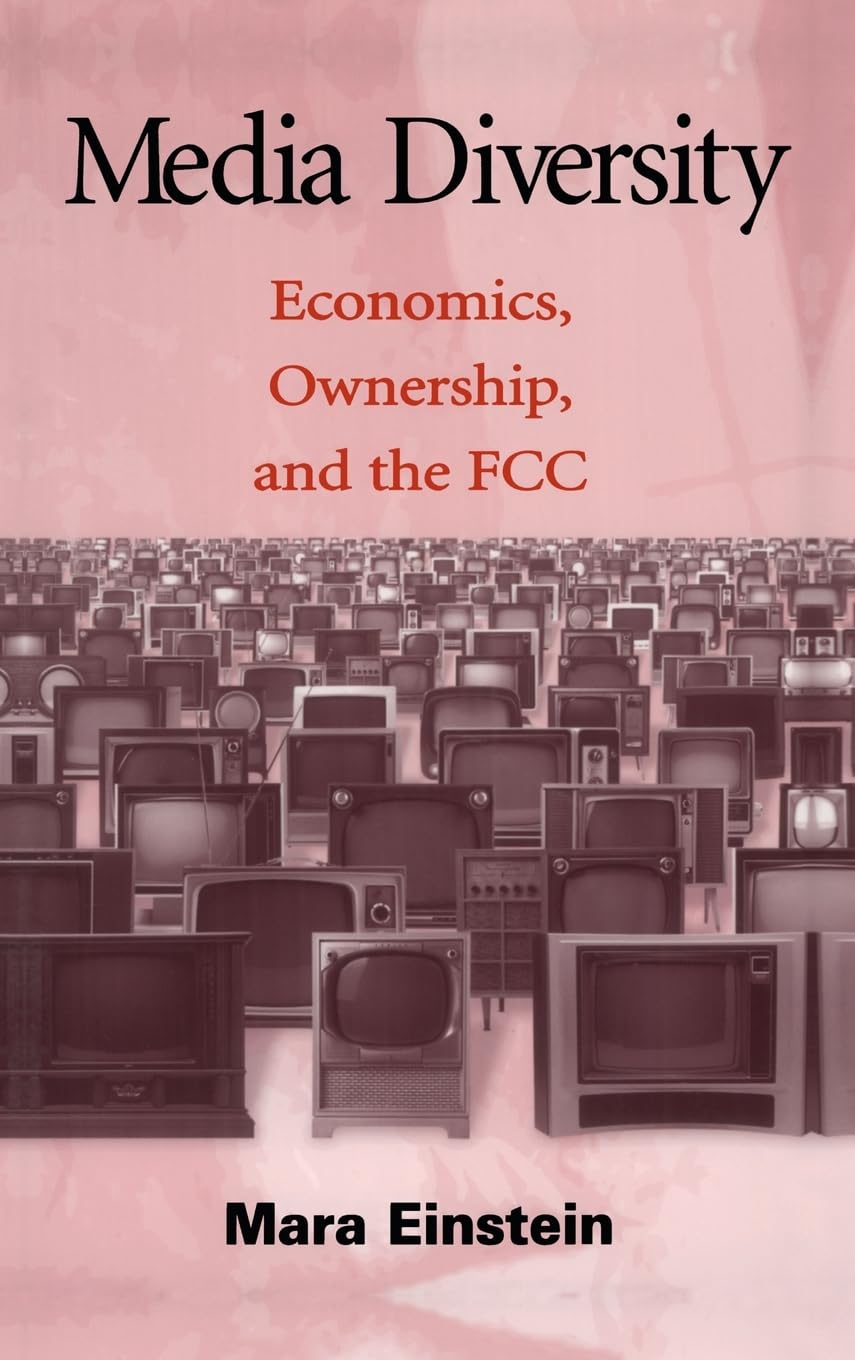
Title
Media Diversity: Economics, Ownership, And The Fcc (Routledge Communication Series),Used
Sold by Ergodebooks, an authorized reseller.
Returns accepted within 30 days | support@ergodebooks.com
Shipping Information
- Free Standard Shipping — United States only
- Processing Time: 3–5 business days
- Estimated Delivery: 6–10 business days after dispatch
- Double-boxed, fully insured & discreetly packaged
- Tracking number sent via email once dispatched
Returns & Refund
Returns accepted within 30 days of delivery.
Damaged or Defective Item
Free return shipping + replacement or full refund
Wrong Item Received
Free return shipping + replacement or full refund
Change of Mind
Return shipping at customer's expense · 25% restocking fee applies
Payment Option

Media Diversity: Economics, Ownership, And The Fcc Provides A Detailed Analysis Of The Regulation Of Diversity And Its Impact On The Structure And Practices Within The Broadcast Television Industry. As Deregulation Is Quickly Changing The Media Landscape, This Volume Puts The Changing Structure Of The Industry Into Perspective Through The Use Of An Insider'S Point Of View To Examine How Policy And Programming Get Made.Author Mara Einstein Blends Her Industry Experience And Academic Expertise To Examine Diversity As A Media Policy, Suggesting That It Has Been Ineffective And Is Potentially Outdated, As Study After Study Has Found Diversity Regulations To Be Wanting. In Addition To Reviewing Diversity Research On The Impact Of Minority Ownership, Regulation Of Cable And Dbs, Duopolies, Ownership Of Multiple Networks And Cross Ownership Of Media On Program Content, Einstein Considers The Financial Interest And Syndication Rules As A Case Study, Due To Their Profound Effects On The Structure Of The Television Industry. She Also Poses Questions From An Economic Perspective On Why The Fcc Regulates Structure Rather Than Content. Through The Presentation Of Her Research Results, She Argues Persuasively That The Consolidation Of The Media Industry Does Not Affect The Diversity Of Entertainment Programming, A Conclusion With Broad Ramifications For All Media And For Future Research About Media Monopolies.This Volume Serves As A Defining Work In Its Examination Of The Intersection Of Regulation And Economics With Media Content. It Is Appropriate As A Supplemental Text In Courses On Communication Policy, Broadcast Economic And Media Management, Broadcast Programming, Political Economy Of The Mass Media, And Media Criticism At The Advanced And Graduate Level. It Is Also Likely To Interest Broadcast Professionals, Media Policymakers, Communication Lawyers, And Academics. It Is A Mustread For All Who Are Interested In The Media Monopoly Debate.
⚠️ WARNING (California Proposition 65):
This product may contain chemicals known to the State of California to cause cancer, birth defects, or other reproductive harm.
For more information, please visit www.P65Warnings.ca.gov.
- Q: How many pages are in the book? A: This book contains two hundred sixty pages. It provides an in-depth analysis of media diversity and its implications.
- Q: What are the dimensions of the book? A: The book measures six point three four inches in length, zero point eight seven inches in width, and nine point one three inches in height. These dimensions make it a suitable size for both reading and reference.
- Q: What type of binding does the book have? A: The book is bound in hardcover. This durable binding enhances its longevity and makes it ideal for repeated use.
- Q: Who is the author of the book? A: The author of the book is Mara Einstein. She combines her industry experience with academic insights on media diversity.
- Q: What is the book's primary focus? A: The primary focus is on the regulation of media diversity and its effects on the broadcast television industry. It examines policy and programming from an insider's perspective.
- Q: Is this book suitable for academic use? A: Yes, this book is appropriate as a supplemental text for advanced and graduate-level courses. It covers communication policy and media management topics.
- Q: How does the author approach the topic of media diversity? A: The author argues that current diversity regulations are outdated and often ineffective. She presents research findings that challenge traditional views on media ownership.
- Q: What audiences would benefit from reading this book? A: Broadcast professionals, media policymakers, communication lawyers, and academics would all benefit from this book. It addresses critical issues in the media monopoly debate.
- Q: Does the book include case studies? A: Yes, the book includes case studies, particularly on financial interest and syndication rules. These case studies illustrate the impact of regulations on media structure.
- Q: What themes are explored in the book? A: The book explores themes of media regulation, ownership, and economic perspectives on broadcasting. It critically analyzes the intersection of these elements.
- Q: What should I do to keep the book in good condition? A: To keep the book in good condition, store it upright on a shelf and avoid exposure to direct sunlight. This helps preserve the binding and pages.
- Q: Is the book available in other formats? A: There is currently no indication that this book is available in formats other than hardcover. Check with retailers for specific availability.
- Q: Can I return the book if I am not satisfied? A: Return policies vary by seller, but most allow returns within a specified period. Check the retailer's return policy for specific details.
- Q: What if the book arrives damaged? A: If the book arrives damaged, you should contact the seller immediately. Most retailers will provide a replacement or refund for damaged items.
- Q: How do I find additional resources on the book's topic? A: You can find additional resources through academic journals, media studies websites, or by exploring references cited in the book. These resources will deepen your understanding.
- Q: Is this book appropriate for beginners in media studies? A: While the book is suitable for advanced readers, beginners may find some concepts challenging. It's recommended for those with a foundational understanding of media policy.