If you have any questions, you are always welcome to contact us. We'll get back to you as soon as possible, withing 24 hours on weekdays.
Customer service
All questions about your order, return and delivery must be sent to our customer service team by e-mail at yourstore@yourdomain.com
Sale & Press
If you are interested in selling our products, need more information about our brand or wish to make a collaboration, please contact us at press@yourdomain.com
Help
If you have any questions, you are always welcome to contact us. We'll get back to you as soon as possible, withing 24 hours on weekdays.
Customer service
All questions about your order, return and delivery must be sent to our customer service team by e-mail at yourstore@yourdomain.com
Sale & Press
If you are interested in selling our products, need more information about our brand or wish to make a collaboration, please contact us at press@yourdomain.com
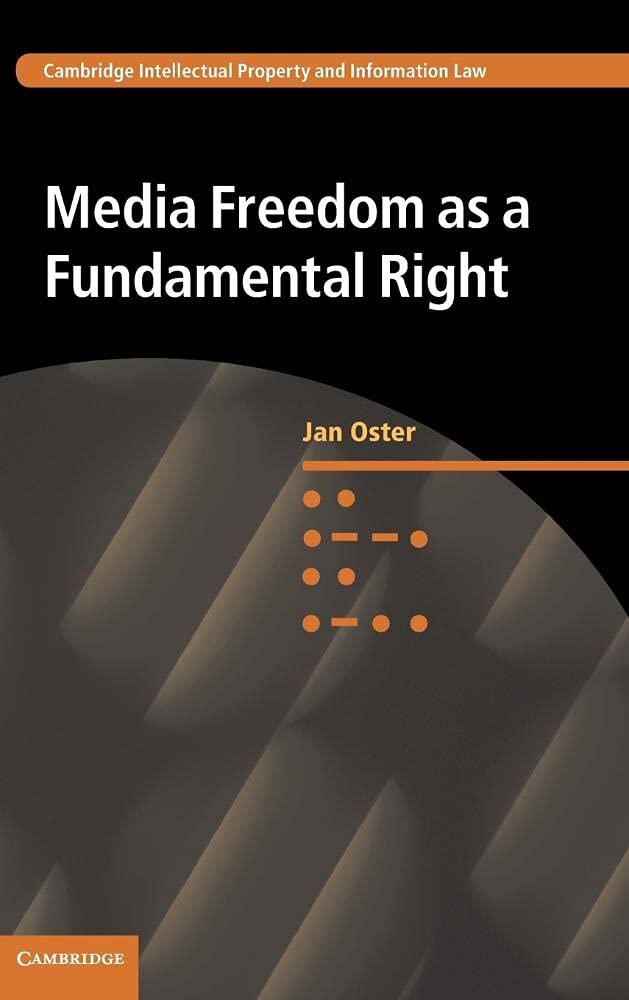
Domestic constitutions and courts applying international human rights conventions acknowledge the significance of the mass media for a democratic society, not only by granting special privileges but also by imposing enhanced duties and responsibilities to journalists and media companies. However, the challenges of media convergence, media ownership concentration and the internet have led to legal uncertainty. Should media privileges be maintained, and, if so, how is 'the media' to be defined? To what extent does media freedom as a legal concept also encompass bloggers who have not undertaken journalistic education? And how can a legal distinction be drawn between investigative journalism on the one hand and reporting on purely private matters on the other? To answer these questions, Jan Oster combines doctrinal and conceptual comparative analysis with descriptive and normative theory, and argues in favour of a media freedom principle based on the significance of the media for public discourse.
⚠️ WARNING (California Proposition 65):
This product may contain chemicals known to the State of California to cause cancer,
birth defects, or other reproductive harm.
For MAP (Minimum Advertised Price) violations and Intellectual Property (IP) or Trademark concerns, please contact:
support@ergodebooks.com
⚠️ California Proposition 65 Warning: Some products sold on this website may expose you to chemicals known to the State of California to cause cancer, birth defects, or other reproductive harm. For more information, visit www.P65Warnings.ca.gov.