
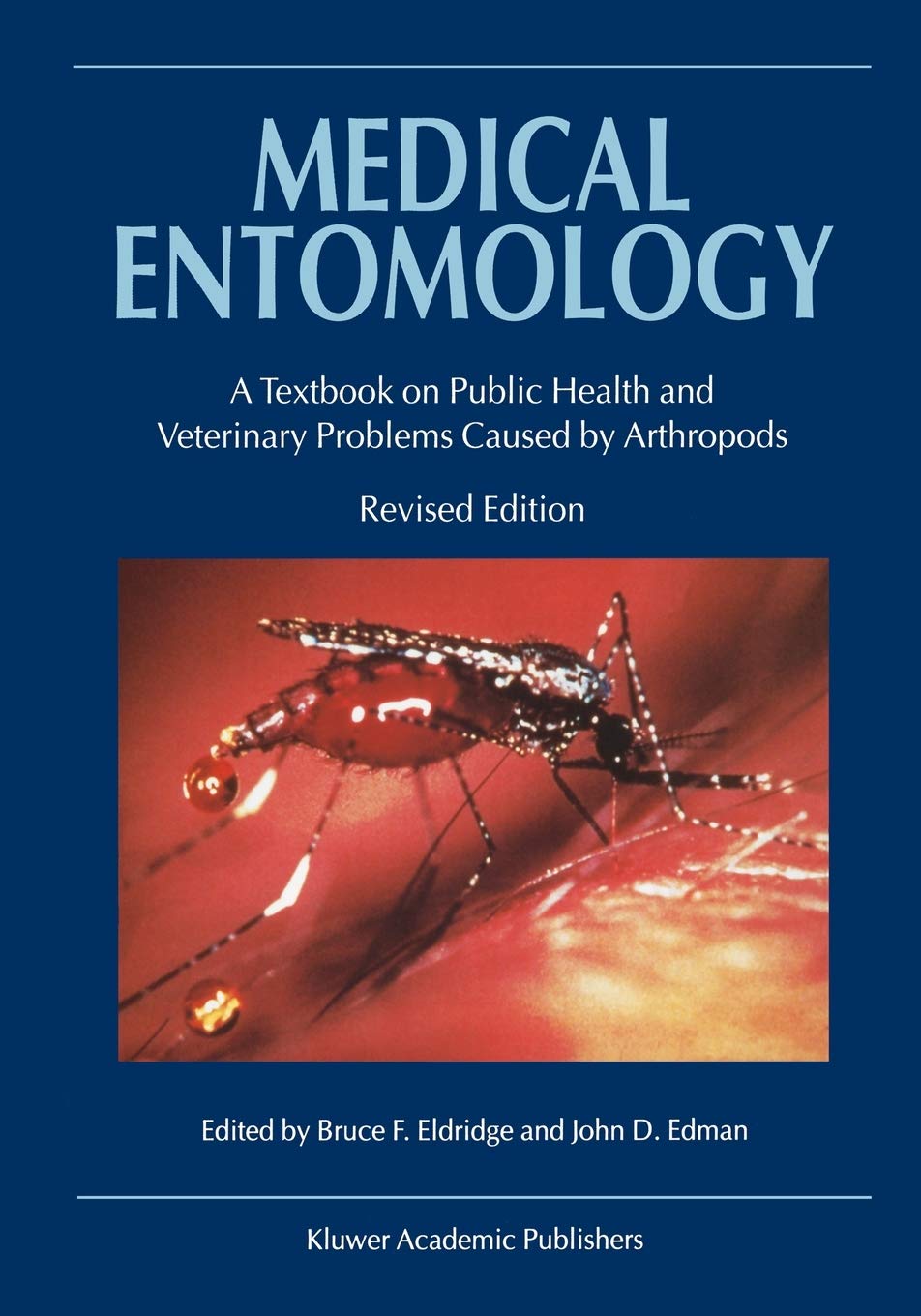
Title
Medical Entomology: A Textbook on Public Health and Veterinary Problems Caused by Arthropods,Used
Sold by Ergodebooks, an authorized reseller.
Returns accepted within 30 days | support@ergodebooks.com
Shipping Information
- Free Standard Shipping — United States only
- Processing Time: 3–5 business days
- Estimated Delivery: 6–10 business days after dispatch
- Double-boxed, fully insured & discreetly packaged
- Tracking number sent via email once dispatched
Returns & Refund
Returns accepted within 30 days of delivery.
Damaged or Defective Item
Free return shipping + replacement or full refund
Wrong Item Received
Free return shipping + replacement or full refund
Change of Mind
Return shipping at customer's expense · 25% restocking fee applies
Payment Option

The subject of medical entomology contin factors such as insecticide susceptibility, vec ues to be of great importance. Arthropodborne tor competence, host preference and similar im diseases such as malaria, yellow fever, dengue portant phenomena. Now, a variety of new and filariasis continue to cause considerable methods are available to study genes, and to human suffering and death. Problems in ani genetically alter important characteristics in mal production, wildlife and pets of humans vectors as a potential means of controlling hu caused by arthropods still exact a large eco man and animal diseases. nomic toll. In the past 2 decades, the invasion Many of the traditional tasks of medical en of exotic pests and pathogens has presented tomologists continue to be important. Arthro new problems in several countries, including pod systematics is important because the need the USA. For example, the year 1999 saw the for accurate identification of arthropods is vital invasion of the eastern USA by Aedes japonicus, to an understanding of natural disease cycles. an Asian mosquito, and West Nile virus, a mos Systematics has been made even more challeng quitotransmitted African arbovirus related to ing because of the current appreciation of the St. Louis encephalitis virus. number of groups of sibling species among vec At the same time old and new health prob tors of important disease pathogens. New mo lems with arthropods occur, the traditional ap lecular tools are assisting in separating these proaches to arthropod control have become forms.
⚠️ WARNING (California Proposition 65):
This product may contain chemicals known to the State of California to cause cancer, birth defects, or other reproductive harm.
For more information, please visit www.P65Warnings.ca.gov.
- Q: How many pages does the book have? A: This book has six hundred sixty-nine pages. It offers comprehensive coverage of medical entomology topics.
- Q: What is the binding type of this book? A: This book is paperback bound. The paperback format makes it lightweight and portable for readers.
- Q: What are the dimensions of the book? A: The dimensions are seven point zero one inches by one point five four inches by ten inches. These measurements make it easy to store or carry.
- Q: Who is the author of this book? A: The author is B.F. Eldridge. He is recognized for his expertise in medical entomology.
- Q: What is the main subject of the book? A: The book focuses on public health and veterinary problems caused by arthropods. It addresses critical issues like insect vector competence.
- Q: Is this book suitable for beginners in medical entomology? A: Yes, this book is suitable for both beginners and advanced readers. It covers foundational concepts while also delving into advanced topics.
- Q: How can I use this book for my studies? A: You can use this book as a reference for understanding medical entomology. It is ideal for academic courses or personal research.
- Q: Is this book appropriate for veterinary students? A: Yes, veterinary students will find this book relevant. It discusses veterinary problems caused by arthropods in detail.
- Q: Does this book provide practical applications for pest control? A: Yes, the book discusses various methods for controlling arthropod vectors. It includes both traditional and modern approaches.
- Q: What should I consider when storing this book? A: Store this book in a cool, dry place to prevent damage. Keeping it away from direct sunlight will help preserve the cover and pages.
- Q: How do I clean this book if it gets dirty? A: To clean the book, gently wipe the cover with a soft, dry cloth. Avoid using liquids that could damage the pages.
- Q: Is this book safe for young readers? A: This book is not specifically targeted at young readers. Its content may be complex for children.
- Q: What if the book arrives damaged? A: If the book arrives damaged, you should contact the seller for a replacement or refund. Most sellers provide clear return policies.
- Q: Can I find this book in libraries? A: Yes, many academic libraries may carry this book. It's advisable to check your local library's catalog.
- Q: Does this book discuss modern methods for studying genes? A: Yes, it discusses modern methods for studying genes in arthropods. This includes genetic alteration techniques.
- Q: What specific problems does this book address regarding arthropods? A: The book addresses issues like insecticide susceptibility and host preference among arthropods. These topics are crucial for disease control.