
Title

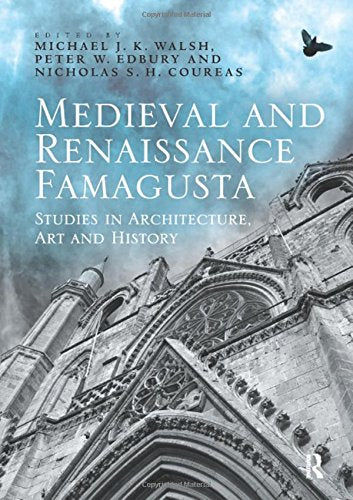
Medieval and Renaissance Famagusta: Studies in Architecture, Art and History,Used
Sold by Ergodebooks, an authorized reseller.
Returns accepted within 30 days | support@ergodebooks.com
Shipping Information
- Free Standard Shipping — United States only
- Processing Time: 3–5 business days
- Estimated Delivery: 6–10 business days after dispatch
- Double-boxed, fully insured & discreetly packaged
- Tracking number sent via email once dispatched
Returns & Refund
Returns accepted within 30 days of delivery.
Damaged or Defective Item
Free return shipping + replacement or full refund
Wrong Item Received
Free return shipping + replacement or full refund
Change of Mind
Return shipping at customer's expense · 25% restocking fee applies
Payment Option

There was a time seven centuries ago when Famagusta's wealth and renown could be compared to that of Venice or Constantinople. The Cathedral of St Nicholas in the main square of Famagusta, serving as the coronation place for the Crusader Kings of Jerusalem after the fall of Acre in 1291, symbolised both the sophistication and permanence of the French society that built it. From the port radiated impressive commercial activity with the major Mediterranean trade centres, generating legendary wealth, cosmopolitanism, and hedonism, unsurpassed in the Levant. These halcyon days were not to last, however, and a 15th century observer noted that, following the Genoese occupation of the city, 'a malignant devil has become jealous of Famagusta'. When Venice inherited the city, it reconstructed the defences and had some success in revitalising the city's economy. But the end for Venetian Famagusta came in dramatic fashion in 1571, following a year long siege by the Ottomans. Three centuries of neglect followed which, combined with earthquakes, plague and flooding, left the city in ruins. The essays collected in this book represent a major contribution to the study of Medieval and Renaissance Famagusta and its surviving art and architecture and also propose a series of strategies for preserving the city's heritage in the future. They will be of particular interest to students and scholars of Gothic, Byzantine and Renaissance art and architecture, and to those of the Crusades and the Latin East, as well as the Military Orders. After an introductory chapter surveying the history of Famagusta and its position in the cultural mosaic that is the Eastern Mediterranean, the opening section provides a series of insights into the history and historiography of the city. There follow chapters on the churches and their decoration, as well as the military architecture, while the final section looks at the history of conservation efforts and assesses the work that now needs to be done.
⚠️ WARNING (California Proposition 65):
This product may contain chemicals known to the State of California to cause cancer, birth defects, or other reproductive harm.
For more information, please visit www.P65Warnings.ca.gov.