
Title
Medieval Boundaries: Rethinking Difference In Old French Literature (The Middle Ages Series),Used
Sold by Ergodebooks, an authorized reseller.
Returns accepted within 30 days | support@ergodebooks.com
Shipping Information
- Free Standard Shipping — United States only
- Processing Time: 3–5 business days
- Estimated Delivery: 6–10 business days after dispatch
- Double-boxed, fully insured & discreetly packaged
- Tracking number sent via email once dispatched
Returns & Refund
Returns accepted within 30 days of delivery.
Damaged or Defective Item
Free return shipping + replacement or full refund
Wrong Item Received
Free return shipping + replacement or full refund
Change of Mind
Return shipping at customer's expense · 25% restocking fee applies
Payment Option

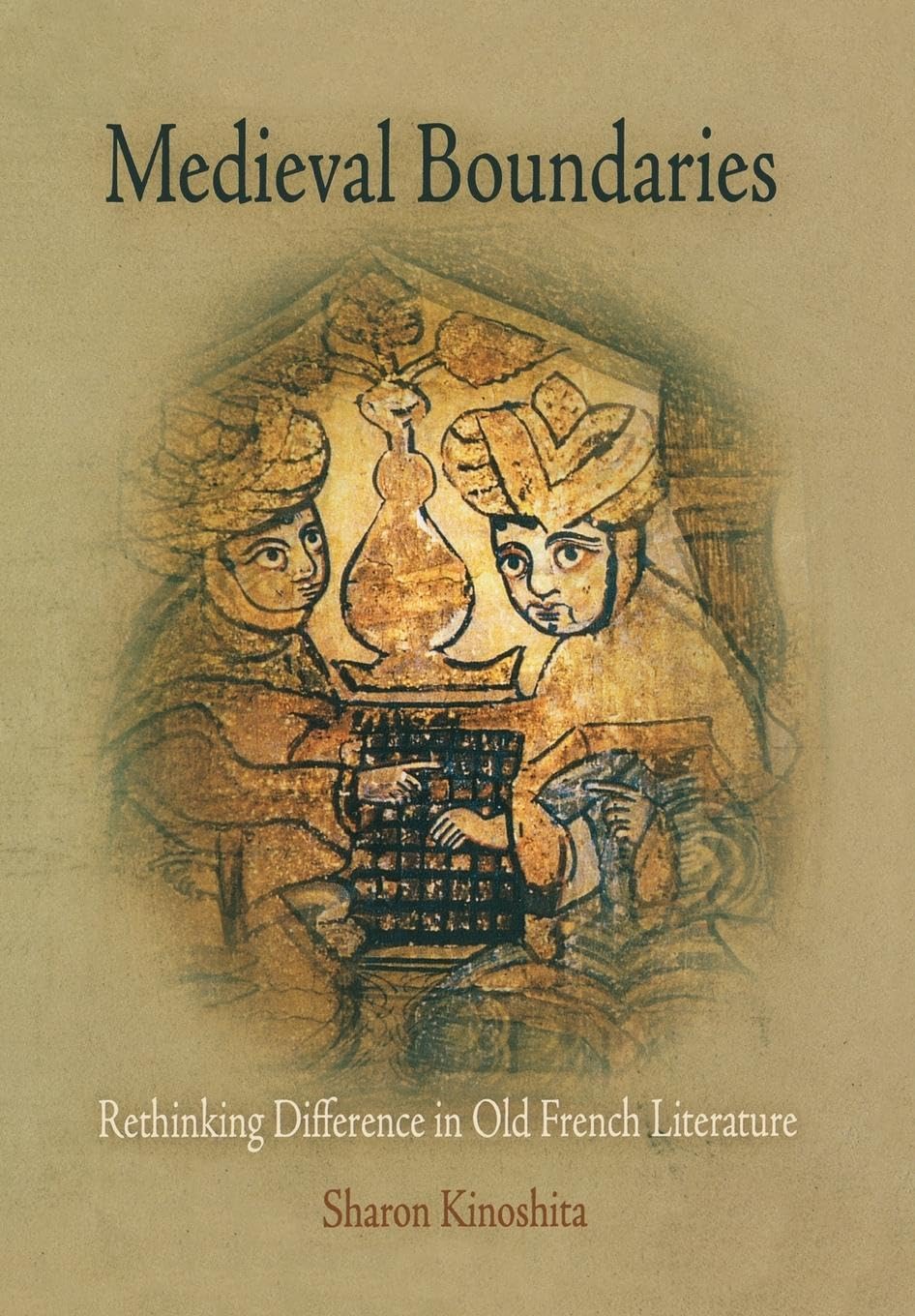
In Medieval Boundaries, Sharon Kinoshita examines the role of crosscultural contact in twelfth and early thirteenthcentury French literature. Starting from the observation that many of the earliest and bestknown works of the French literary tradition are set on or beyond the borders of the Frenchspeaking world, she reads the Chanson de Roland, the lais of Marie de France, and a variety of other texts in an expanded geographical frame that includes the Iberian peninsula, the Welsh marches, and the eastern Mediterranean. In Kinoshita's reconceptualization of the geographical and cultural boundaries of the medieval West, such places become significant not only as sites of conflict but also as spaces of intense political, economic, and cultural negotiation.An important contribution to the emerging field of medieval postcolonialism, Kinoshita's work explores the limitations of reading the literature of the French Middle Ages as an inevitable link in the historical construction of modern discourses of Orientalism, colonialism, race, and ChristianMuslim conflict. Rather, drawing on recent historical and art historical scholarship, Kinoshita uncovers a vernacular culture at odds with official discourses of crusade and conquest. Situating each work in its specific context, she brings to light the lived experiences of the knights and nobles for whom this literature was first composed andin a series of close readings informed by postcolonial and feminist theorydemonstrates that literary representations of cultural encounters often provided the pretext for questioning the most basic categories of medieval identity.Awarded honorable mention for the 2007 Modern Language Association Aldo and Jeanne Scaglione Prize for French and Francophone Studies
⚠️ WARNING (California Proposition 65):
This product may contain chemicals known to the State of California to cause cancer, birth defects, or other reproductive harm.
For more information, please visit www.P65Warnings.ca.gov.