
Title

Medieval Literature, Style, and Culture: Essays,Used
Sold by Ergodebooks, an authorized reseller.
Returns accepted within 30 days | support@ergodebooks.com
Shipping Information
- Free Standard Shipping — United States only
- Processing Time: 3–5 business days
- Estimated Delivery: 6–10 business days after dispatch
- Double-boxed, fully insured & discreetly packaged
- Tracking number sent via email once dispatched
Returns & Refund
Returns accepted within 30 days of delivery.
Damaged or Defective Item
Free return shipping + replacement or full refund
Wrong Item Received
Free return shipping + replacement or full refund
Change of Mind
Return shipping at customer's expense · 25% restocking fee applies
Payment Option

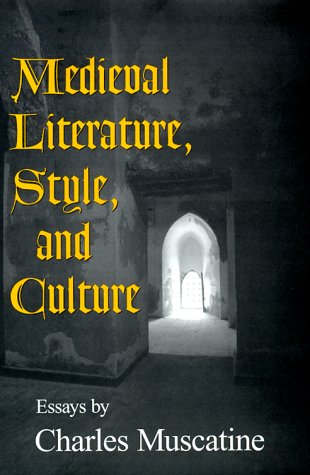
Fourteen essays by a preeminent scholar of Chaucerian and medieval literatureMedieval Literature, Style, and Culture brings together in one volume fourteen essays by the noted medievalist Charles Muscatine, author of Chaucer and the French Tradition and The Old French Fabliaux. In this collection Muscatine focuses on style, meaning, and culture in Chaucer, his English contemporaries, and French fabliaux and romance.The book begins with a key essay entitled "The Canterbury Tales: Style of the Man and Style of the Work" in which Muscatine defines one of the earliest and most persistent themes of his criticismthe nexus between style and meaning. In this essay Muscatine attempts to distinguish between the style most naturally congenial to Chaucer and the style that Chaucer the artist used to support the meaning of his bestknown work.The three following essays concentrate on the politics of Chaucer criticism. They include a dissident piece on the modern reception of Chaucer's religion. The next essay, "Locus of Action in Medieval Narrative," expands the notion of literary style to include spatial form and then applies this idea to the meaning of Piers Plowman.Muscatine's classic work, Poetry and Crisis in the Age of Chaucer, four essays originally presented at the University of Notre Dame as the WardsPhillips Lectures in English language and literature, turns to the second major theme of his criticism: literary style as evidence for cultural history. These essays show how the very different styles of the Pearl poet, Langland, and Chaucer demonstrate "three kinds of relatedness between poetic art and a culture in crisis."Several pieces that follow discuss the Old French fabliaux. In "The Fabliaux, Courtly Culture, and the (Re)Invention of Vulgarity," he argues that medieval French culture had long taken unembarrassed pleasure in matters that the advent of courtliness was making newly obscene.The collection concludes with implicit tributes to two master scholars: an essay on C. S. Lewis's study of medieval allegory and a review article on Erich Auerbach's Mimesis.
⚠️ WARNING (California Proposition 65):
This product may contain chemicals known to the State of California to cause cancer, birth defects, or other reproductive harm.
For more information, please visit www.P65Warnings.ca.gov.