
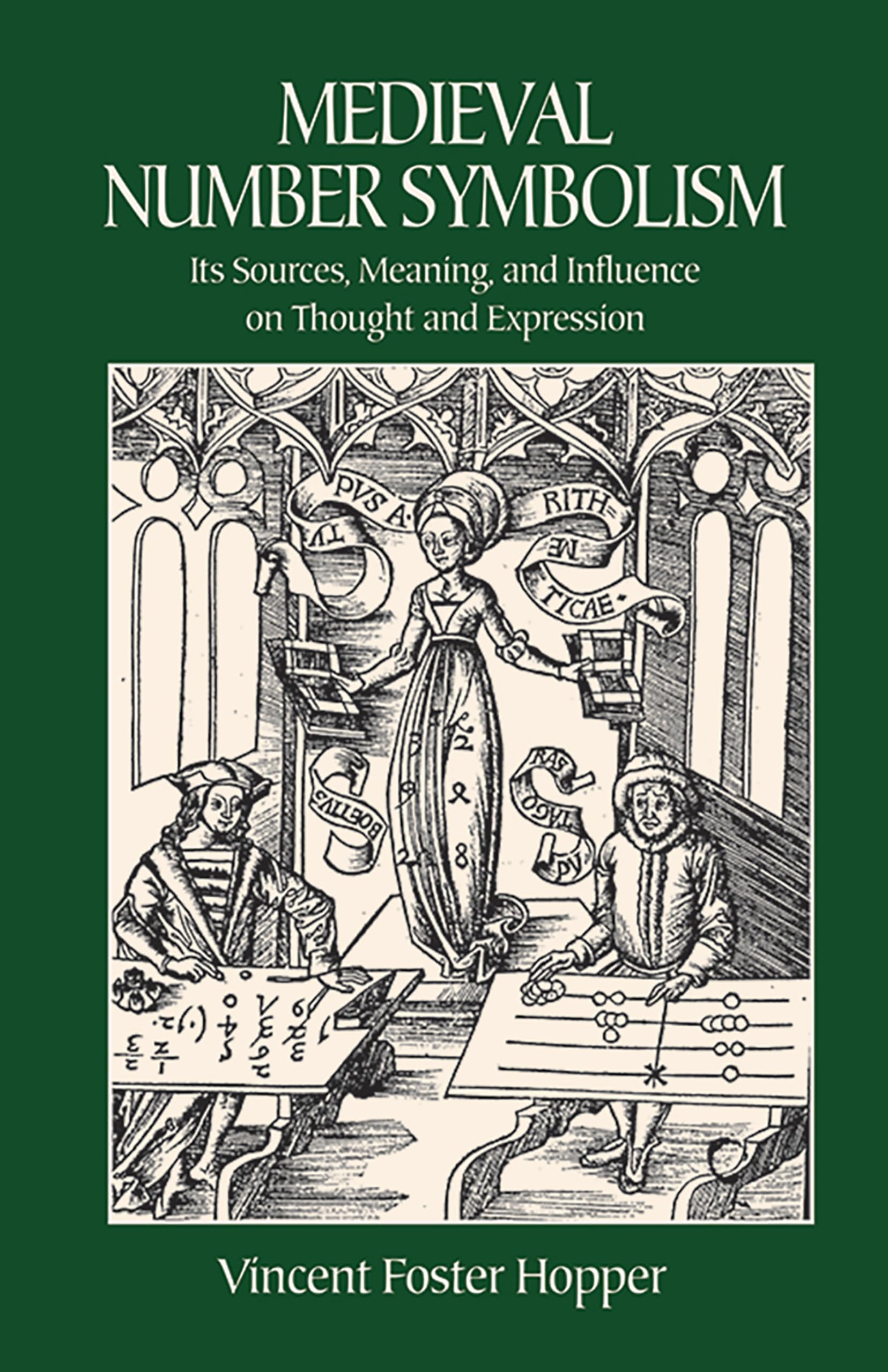
Title
Medieval Number Symbolism: Its Sources, Meaning, and Influence on Thought and Expression (Dover Occult),Used
Sold by Ergodebooks, an authorized reseller.
Returns accepted within 30 days | support@ergodebooks.com
Shipping Information
- Free Standard Shipping — United States only
- Processing Time: 3–5 business days
- Estimated Delivery: 6–10 business days after dispatch
- Double-boxed, fully insured & discreetly packaged
- Tracking number sent via email once dispatched
Returns & Refund
Returns accepted within 30 days of delivery.
Damaged or Defective Item
Free return shipping + replacement or full refund
Wrong Item Received
Free return shipping + replacement or full refund
Change of Mind
Return shipping at customer's expense · 25% restocking fee applies
Payment Option

For Dante and other people in the Middle Ages, numbers had a different set of connotations than they do for moderns. The symbolism of numbers was both widespread and profoundly ingrained in the culture. In this classic study, a noted scholar reveals how deeply rooted in medieval thought was the consciousness of numbers, not as mathematical tools, nor yet as the counters in a game, but as fundamental realities, alive with memories and eloquent with meaning.For example, the number three linked to the Trinity was of special significance, and endowed every repetition of the number three with a richness of meaning which can be but dimly grasped by the modern reader. Numbers derived from constellations, planets, stellar revolutions, and other astronomical phenomena were also thought to have divine associations. These and many other aspects of the topic are illuminated here. In the first three chapters, the author examines the three main sources of number symbolism; basic, elementary symbols derived from mans struggles to count and identify such natural groupings as fingers and toes; the ancient Babylonian science of astrology; and Pythagorean number theory, which fixed the relationship of the numbers to one another. The fourth and fifth chapters deal with the Gnostics elaborate combination of these elements, and the adoption and elaboration of number philosophy by the early Church Fathers. The last two sections examine medieval number philosophy and Dantes use of number symbolism, particularly in The Divine Comedy.Of special interest to medievalists, numerologists, and students of literature, this volume will also fascinate anyone interested in symbology or cultural aspects of the Middle Ages.
⚠️ WARNING (California Proposition 65):
This product may contain chemicals known to the State of California to cause cancer, birth defects, or other reproductive harm.
For more information, please visit www.P65Warnings.ca.gov.
- Q: How many pages does this book have? A: This book has two hundred seventy-two pages. It provides an in-depth exploration of medieval number symbolism.
- Q: What is the binding type of this book? A: The binding type is paperback. This makes it lightweight and easy to handle for reading.
- Q: What are the dimensions of the book? A: The dimensions are five point thirty-five inches in length, zero point seventy-five inches in width, and eight point thirty-nine inches in height. These dimensions make it a compact read.
- Q: Who is the author of this book? A: The author is Vincent Foster Hopper. He is a noted scholar on the subject of medieval symbolism.
- Q: What genre does this book belong to? A: This book belongs to the genre of occult studies. It focuses on the significance of numbers in medieval thought.
- Q: Is this book suitable for beginners in numerology? A: Yes, this book is suitable for beginners. It provides foundational concepts of number symbolism that are accessible to new readers.
- Q: Can I read this book if I have no background in history? A: Yes, you can read this book without a history background. It is designed to be engaging for all readers interested in the topic.
- Q: How should I care for this paperback book? A: To care for this paperback book, keep it in a dry place and avoid exposing it to direct sunlight. This helps prevent wear and fading.
- Q: Is this book safe for children? A: No, this book is not specifically aimed at children. It discusses complex themes that may not be suitable for younger audiences.
- Q: What if the book arrives damaged? A: If the book arrives damaged, you should contact customer support for return or replacement options. They will guide you through the process.
- Q: Can I return this book if I don't like it? A: Yes, you can return the book if you do not like it, subject to the retailer's return policy. Check their guidelines for specifics.
- Q: Is there a warranty for this book? A: No, there is typically no warranty for books. However, you can rely on standard return policies for any issues.
- Q: How does this book compare to other books on numerology? A: This book provides a historical perspective on number symbolism, unlike many modern numerology books that focus more on practical applications.
- Q: Is this book appropriate for academic use? A: Yes, this book is appropriate for academic use. It is well-researched and offers valuable insights into medieval thought.
- Q: What themes are explored in this book? A: The book explores themes such as the religious significance of numbers, their cultural meanings, and their philosophical implications in medieval society.