If you have any questions, you are always welcome to contact us. We'll get back to you as soon as possible, withing 24 hours on weekdays.
Customer service
All questions about your order, return and delivery must be sent to our customer service team by e-mail at yourstore@yourdomain.com
Sale & Press
If you are interested in selling our products, need more information about our brand or wish to make a collaboration, please contact us at press@yourdomain.com
Help
If you have any questions, you are always welcome to contact us. We'll get back to you as soon as possible, withing 24 hours on weekdays.
Customer service
All questions about your order, return and delivery must be sent to our customer service team by e-mail at yourstore@yourdomain.com
Sale & Press
If you are interested in selling our products, need more information about our brand or wish to make a collaboration, please contact us at press@yourdomain.com
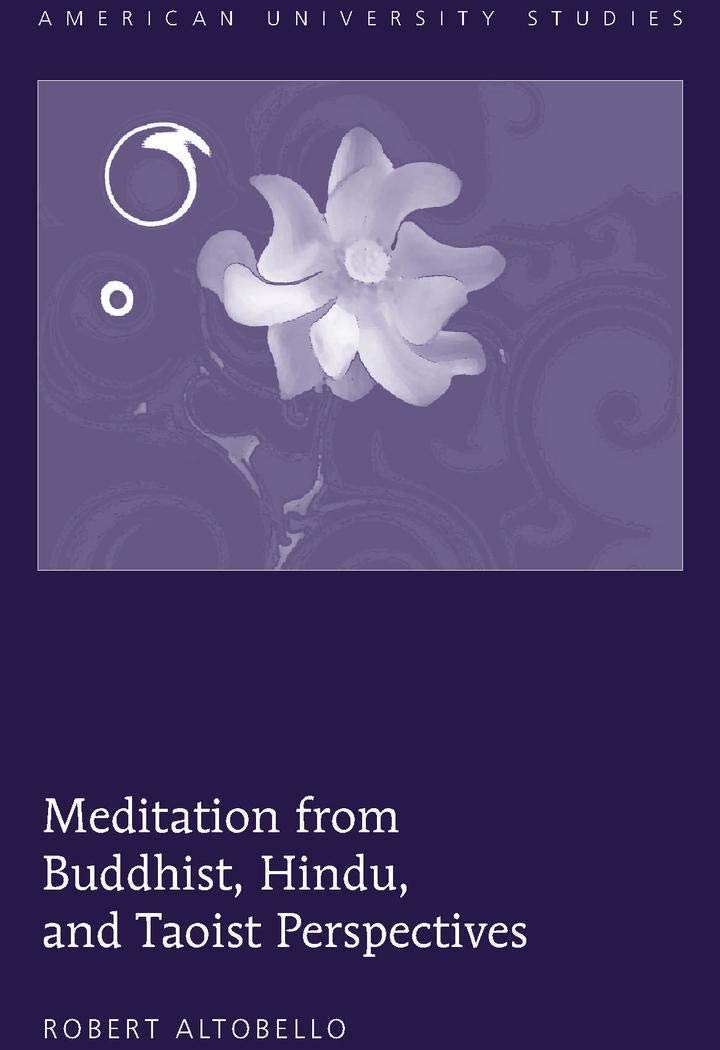
Meditation from Buddhist, Hindu, and Taoist Perspectives engages readers with its original philosophical and pragmatic analysis of traditional Asian religions, philosophy, meditation practice, and the supreme spiritual ideals associated with the Hindu, Buddhist, and Taoist traditions. The text boldly bridges the theory/practice distinction. A central underpinning of Meditation from Buddhist, Hindu, and Taoist Perspectives rests on the assumption that meditation practice without theory is groundless and that theory without practice is useless. Robert Altobello identifies and analyzes common elements found across traditions in which the practice of meditation plays a central role in human development, and readers will find a wealth of detailed reflection on the relationship between spiritual growth and meditation practice from the Hindu, Buddhist, and Taoist perspectives. In the spirit of these traditions, the exploration of meditation practice requires examination of the principal elements that sustain the core worldviews as well as the metaphysical, epistemological, and ethical presumptions that animate these traditions. Throughout the text, the author demonstrates why these philosophies are all best understood as psychologies of happiness and/or contentment and that by viewing them as such, practitioners can reap the great promises of all these traditions without the need to accept any compromising metaphysical assumptions.
⚠️ WARNING (California Proposition 65):
This product may contain chemicals known to the State of California to cause cancer,
birth defects, or other reproductive harm.
For MAP (Minimum Advertised Price) violations and Intellectual Property (IP) or Trademark concerns, please contact:
support@ergodebooks.com
⚠️ California Proposition 65 Warning: Some products sold on this website may expose you to chemicals known to the State of California to cause cancer, birth defects, or other reproductive harm. For more information, visit www.P65Warnings.ca.gov.