
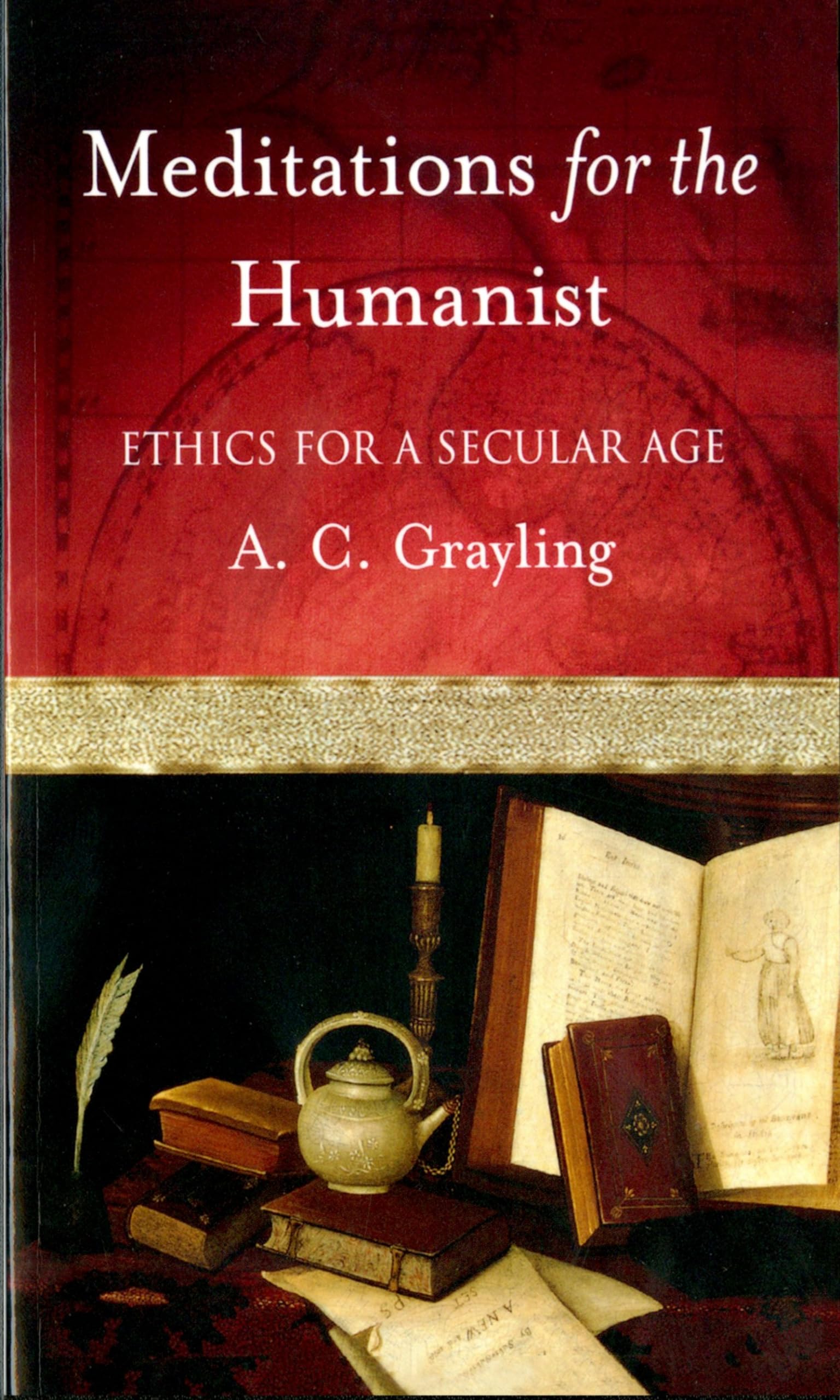
Title
Meditations For The Humanist: Ethics For A Secular Age
Sold by Ergodebooks, an authorized reseller.
Returns accepted within 30 days | support@ergodebooks.com
Shipping Information
- Free Standard Shipping — United States only
- Processing Time: 3–5 business days
- Estimated Delivery: 6–10 business days after dispatch
- Double-boxed, fully insured & discreetly packaged
- Tracking number sent via email once dispatched
Returns & Refund
Returns accepted within 30 days of delivery.
Damaged or Defective Item
Free return shipping + replacement or full refund
Wrong Item Received
Free return shipping + replacement or full refund
Change of Mind
Return shipping at customer's expense · 25% restocking fee applies
Payment Option

Magnanimity Is In Short Supply, Writes A. C. Grayling Is This Wonderfully Incisive Book, But It Is The Main Ingredient In Everything That Makes The World A Better Place And Indeed Meditations For The Humanist: Ethics For A Secular Age Is Itself A Generous, Insightful, Wideranging, Magnanimous Inquiry Into The Philosophical And Ethical Questions That Bear Most Strongly On The Human Condition.Containing Nearly Fifty Linked Commentaries On Topics Ranging From Love, Lying, Perseverance, Revenge, Racism, Religion, History, Loyalty, Health, And Leisure, Meditations For The Humanist Does Not Offer Definitive Statements But Rather Prompts To Reflection. These Brief Essays Serve As Springboards To The Kind Of Thoughtful Examination Without Which, As Socrates Famously Claimed, Life Is Not Worth Living. As Graying Notes In His Introduction, It Is Not Necessary To Arrive At Polished Theories On All These Subjects, But It Is Necessary To Give Them At Least A Modicum Of Thought If One'S Life Is To Have Some Degree Of Shape And Direction. The Book Is Divided Into Three Sectionsvirtues And Attributes, Foes And Fallacies, And Amenities And Goodsand Within These Sections Essays Are Grouped Into Related Clusters. But Each Piece Can Be Read Alone And Each Is Characterized By Brevity, Wit, And A Liveliness Of Mind That Recalls The Best Of Montaigne And Samuel Johnson. Grayling'S Own Perspective On These Subjects Is Broadened And Deepened By Liberal Quotations From Sophocles And Shakespeare To Byron, Twain, Proust, Simone De Beauvoir, Martin Luther King, Jr., And Many Others.For Those Wishing To Explore Ethical Issues Outside The Framework Of Organized Religious Belief, Meditations For The Humanist Offers An Inviting Map To The Country Of Philosophical Reflection.
⚠️ WARNING (California Proposition 65):
This product may contain chemicals known to the State of California to cause cancer, birth defects, or other reproductive harm.
For more information, please visit www.P65Warnings.ca.gov.
- Q: What is the main theme of 'Meditations for the Humanist'? A: The main theme of 'Meditations for the Humanist' is the exploration of ethical and philosophical questions relevant to the human condition, focusing on topics like love, lying, and morality without relying on religious frameworks.
- Q: Who is the author of 'Meditations for the Humanist'? A: The author of 'Meditations for the Humanist' is A. C. Grayling, a prominent philosopher and writer known for his insights on ethics and humanism.
- Q: How is the book structured? A: The book is divided into three sections: Virtues and Attributes, Foes and Fallacies, and Amenities and Goods, with essays grouped into related clusters while remaining standalone.
- Q: What topics are covered in the book? A: The book covers a variety of topics, including love, perseverance, racism, religion, and ethical dilemmas, encouraging readers to reflect thoughtfully on these issues.
- Q: Is 'Meditations for the Humanist' suitable for someone without a religious background? A: Yes, 'Meditations for the Humanist' is particularly suitable for those exploring ethical issues outside organized religion, offering insights into secular humanist perspectives.
- Q: What is the page count of the book? A: The book contains 208 pages.
- Q: What is the binding type of this book? A: The book is available in a paperback binding.
- Q: When was 'Meditations for the Humanist' published? A: The book was published on December 18, 2003.
- Q: Does the book include quotations from other authors? A: Yes, the book includes liberal quotations from various authors, including Sophocles, Shakespeare, and Martin Luther King, Jr., which enrich the discussions.
- Q: What can readers expect from the writing style of A. C. Grayling? A: Readers can expect a writing style characterized by brevity, wit, and a lively exploration of ideas, reminiscent of classical essayists like Montaigne and Samuel Johnson.