
Title
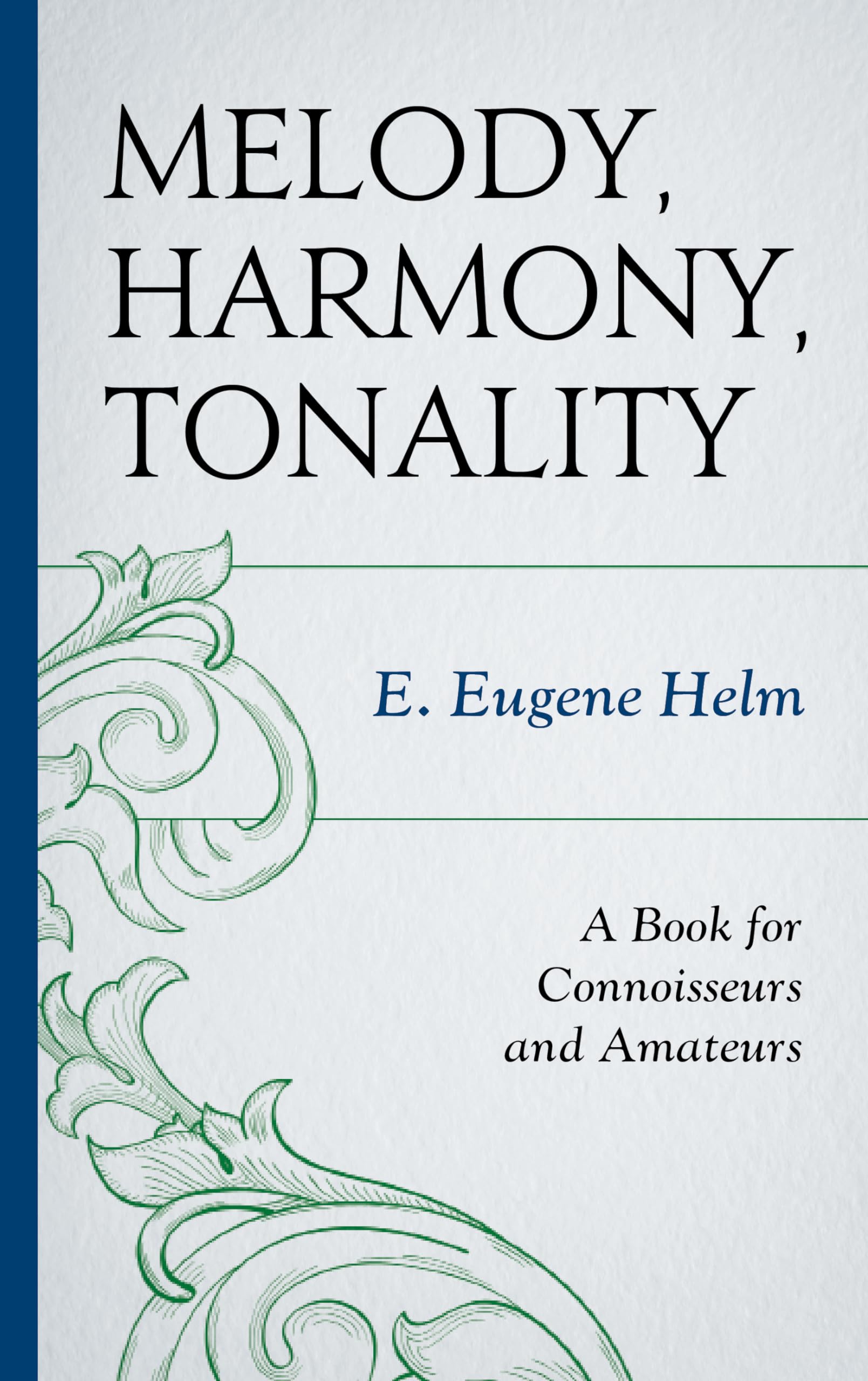
Melody, Harmony, Tonality: A Book for Connoisseurs and Amateurs,Used
Sold by Ergodebooks, an authorized reseller.
Returns accepted within 30 days | support@ergodebooks.com
Shipping Information
- Free Standard Shipping — United States only
- Processing Time: 3–5 business days
- Estimated Delivery: 6–10 business days after dispatch
- Double-boxed, fully insured & discreetly packaged
- Tracking number sent via email once dispatched
Returns & Refund
Returns accepted within 30 days of delivery.
Damaged or Defective Item
Free return shipping + replacement or full refund
Wrong Item Received
Free return shipping + replacement or full refund
Change of Mind
Return shipping at customer's expense · 25% restocking fee applies
Payment Option

Where did the major scale come from? Why does most traditional nonWestern music not share Western principles of harmony? What does the inner structure of a canon have to do with religious belief? Why, in historical terms, is J.S. Bachs music regarded as a perfect combination of melody and harmony? Why do clocks in church towers strike dominanttonicdominanttonic? What do cathedrals have to do with monochords? How can the harmonic series be demonstrated with a rope tied to a doorknob, and how can it be heard by standing next to an electric fan? Why are the free ocean waves in Debussys La Mer, the turbulent river waves in Smetanas Moldau, and the fountain ripples in Ravels Jeux dEau pushed at times into fourbar phrases? Why is the metric system inherently unsuitable for organizing music and poetry? In what way does Platos Timaeus resemble the prelude to Wagners Das Rheingold? Just how does Beethovens work perfectly illustrate fully functional tonality, and why were longrange works based on this type of tonality impossible before the introduction of equal temperament? In this new century, what promising materials are available to composers in the wake of harmonic experimentation and, some would argue, exhaustion?The answers to these seemingly complicated questions are not the sole province of music professors or orchestra conductors. In fact, as E. Eugene Helm demonstrates, they can just as easily be explained to amateurs, and their answers are important if we are to understand how Western music works. The full range of Western music is explored through 21 concise chapters on such topics as melody, harmony, counterpoint, texture, melody types, improvisation, music notation, free imitation, canon and fugue, vibration and its relation to harmony, tonality, and the place of music in architecture and astronomy. Intended for amateurs and professionals, concertgoers and conductors, Helm offers in downtoearth language an explanation of the foundations of our Western music heritage, deepening our understanding and the listening experience of it for all.
⚠️ WARNING (California Proposition 65):
This product may contain chemicals known to the State of California to cause cancer, birth defects, or other reproductive harm.
For more information, please visit www.P65Warnings.ca.gov.