If you have any questions, you are always welcome to contact us. We'll get back to you as soon as possible, withing 24 hours on weekdays.
Customer service
All questions about your order, return and delivery must be sent to our customer service team by e-mail at yourstore@yourdomain.com
Sale & Press
If you are interested in selling our products, need more information about our brand or wish to make a collaboration, please contact us at press@yourdomain.com
Help
If you have any questions, you are always welcome to contact us. We'll get back to you as soon as possible, withing 24 hours on weekdays.
Customer service
All questions about your order, return and delivery must be sent to our customer service team by e-mail at yourstore@yourdomain.com
Sale & Press
If you are interested in selling our products, need more information about our brand or wish to make a collaboration, please contact us at press@yourdomain.com
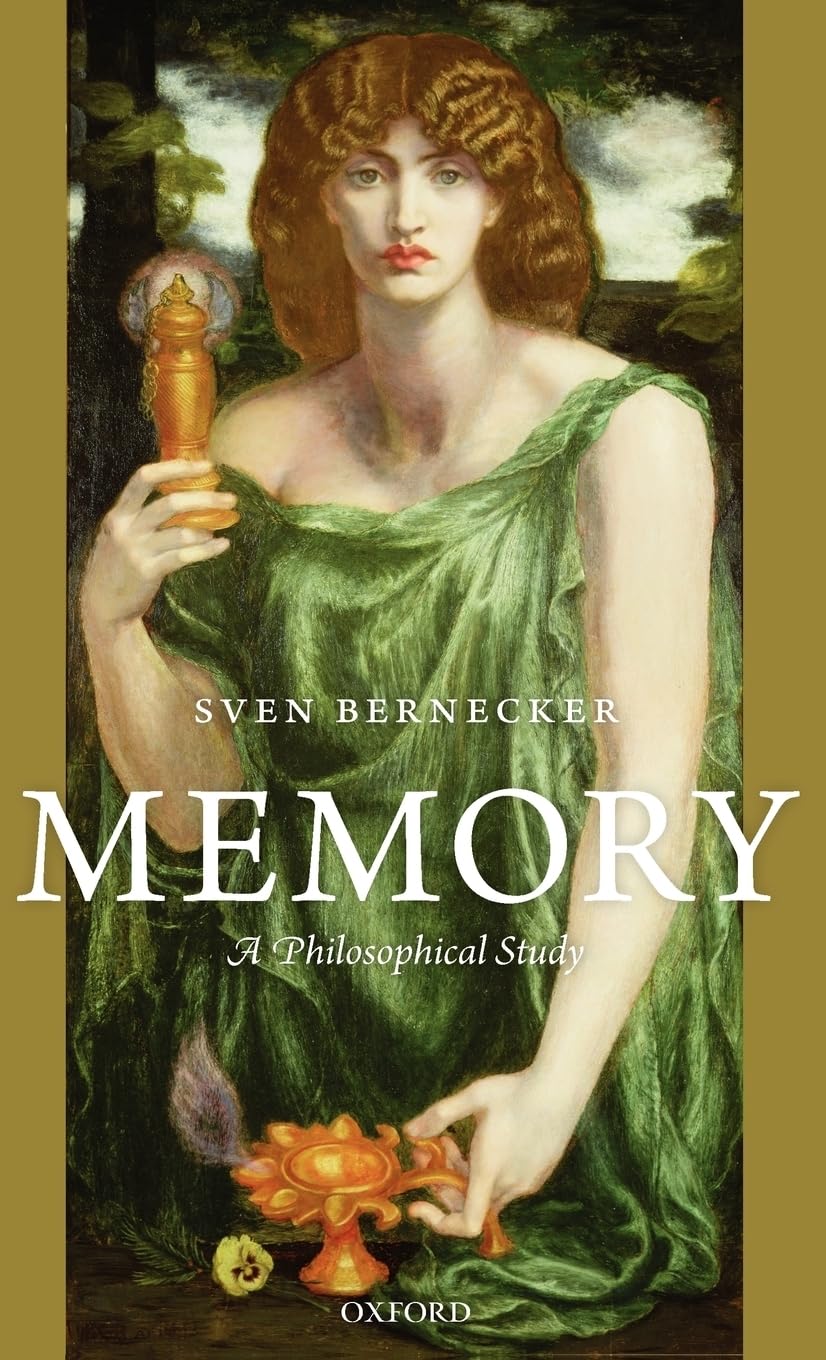
Sven Bernecker presents an analysis of the concept of propositional (or factual) memory, and examines a number of metaphysical and epistemological issues crucial to the understanding of memory.Bernecker argues that memory, unlike knowledge, implies neither belief nor justification. There are instances where memory, though hitting the mark of truth, succeeds in an epistemically defective way. This book shows that, contrary to received wisdom in epistemology, memory not only preserves epistemic features generated by other epistemic sources but also functions as a source of justification and knowledge.According to the causal theory of memory argued for in this book, the dependence of memory states on past representations supports counterfactuals of the form: if the subject hadn't represented a given proposition in the past he wouldn't represent it in the present. The book argues for a version of content externalism whereupon the individuation of memory contents depends on relations the subject bears to his past physical or social environment. Moreover, Bernecker shows that memory doesn't require identity, but only similarity, of past and present attitudes and contents. The notion of content similarity is explicated in terms of the entailment relation.
⚠️ WARNING (California Proposition 65):
This product may contain chemicals known to the State of California to cause cancer,
birth defects, or other reproductive harm.
For MAP (Minimum Advertised Price) violations and Intellectual Property (IP) or Trademark concerns, please contact:
support@ergodebooks.com
⚠️ California Proposition 65 Warning: Some products sold on this website may expose you to chemicals known to the State of California to cause cancer, birth defects, or other reproductive harm. For more information, visit www.P65Warnings.ca.gov.