
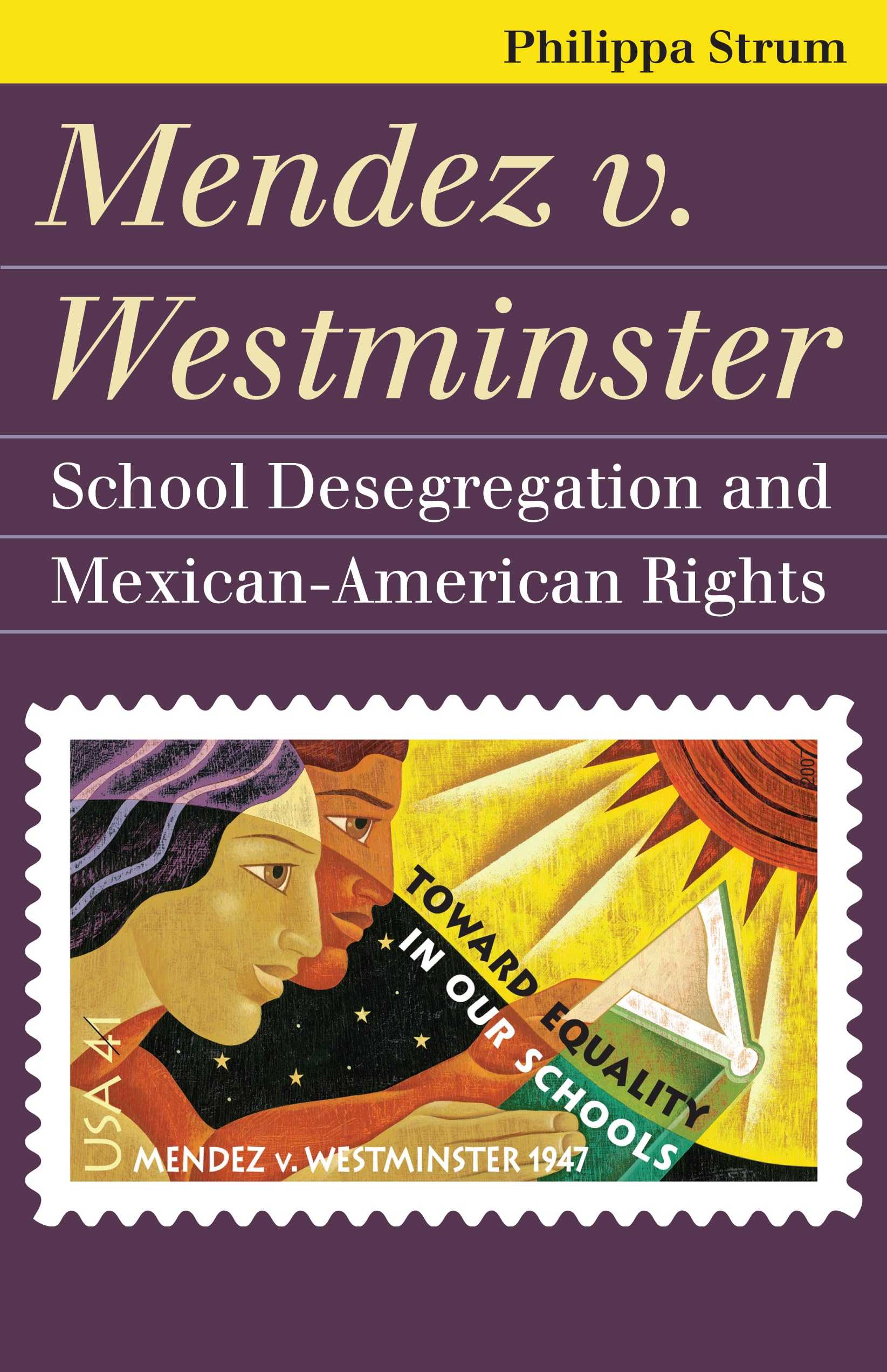
Title
Mendez V. Westminster: School Desegregation And Mexicanamerican Rights,Used
Sold by Ergodebooks, an authorized reseller.
Returns accepted within 30 days | support@ergodebooks.com
Shipping Information
- Free Standard Shipping — United States only
- Processing Time: 3–5 business days
- Estimated Delivery: 6–10 business days after dispatch
- Double-boxed, fully insured & discreetly packaged
- Tracking number sent via email once dispatched
Returns & Refund
Returns accepted within 30 days of delivery.
Damaged or Defective Item
Free return shipping + replacement or full refund
Wrong Item Received
Free return shipping + replacement or full refund
Change of Mind
Return shipping at customer's expense · 25% restocking fee applies
Payment Option

While Brown V. Board Of Education Remains Much More Famous, Mendez V. Westminster School District (1947) Was Actually The First Case In Which Segregation In Education Was Successfully Challenged In Federal Court. Finally Giving Mendez Its Due, Philippa Strum Provides A Concise And Compelling Account Of Its Legal Issues And Legacy, While Retaining Its Essential Human Face: That Of Mexican Americans Unwilling To Accept Secondclass Citizenship. 1945 Gonzalo And Felcitas Mendez, California Farmers, Sent Their Children Off To The Local School, Only To Be Told That The Youngsters Would Have To Attend A Separate Facility Reserved For Mexican Americans. In Response The Mndezes And Other Aggrieved Parents From Nearby School Districts Went To Federal Court To Challenge The Segregation. Uniquely, They Did Not Claim Racial Discrimination, Since Mexicans Were Legally Considered White, But Rather Discrimination Based On Ancestry And Supposed 'Language Deficiency' That Denied Their Children Their Fourteenth Amendment Rights To Equal Protection Under The Law.In 1945 Gonzalo And Felicitas Mendez, California Farmers, Sent Their Children Off To The Local School, Only To Be Told That The Youngsters Would Have To Attend A Separate Facility Reserved For Mexican Americans. In Response The Mendezes And Other Aggrieved Parents From Nearby School Districts Went To Federal Court To Challenge The Segregation. Uniquely, They Did Not Claim Racial Discrimination, Since Mexicans Were Legally Considered White, But Rather Discrimination Based On Ancestry And Supposed 'Language Deficiency' That Denied Their Children Their Fourteenth Amendment Rights To Equal Protection Under The Law.Strum Tells How, Thanks To Attorney David Marcus'S Carefully Crafted Arguments, Federal District Court Judge Paul Mccormick Came To Support The Plaintiffs On The Grounds That The Social, Psychological, And Pedagogical Costs Of Segregated Education Were Damaging To Mexicanamerican Children. The School Districts Claimed That Federal Courts Had No Jurisdiction Over Education, But The Ninth Circuit Upheld Mccormick'S Decision, Ruling That The Schools' Actions Violated California Law. The Appeal To The Ninth Circuit Was Supported By Amicus Briefs From Leading Civil Liberties Organizations, Including The Naacp, Which A Few Years Later Would Adapt The Arguments Of Mendez In Representing The Plaintiffs In Brown.Strum Effectively Weaves Together Narrative And Analysis With Personality Portraits To Create A Highly Readable And Accessible Story, Allowing Us To Hear The Voices Of All The Protagonists. She Also Presents The Issues Evenhandedly, Effectively Balancing Her Presentation Of Arguments By Both The Plaintiffs And The Schools That Sought To Continue The Segregation Of Mexicanamerican Students.Ultimately, Mendez Highlights How Mexican Americans Took The Lead To Secure Their Civil Rights And Demonstrates How Organization, Courage, And Persistence In The Mexicanamerican Communities Could Overcome The Racism Of The School Boards. Their Inspiring Example Is Particularly Timely Given The Current Controversies Over Immigration And The Growing National Interest In Latino Life.
⚠️ WARNING (California Proposition 65):
This product may contain chemicals known to the State of California to cause cancer, birth defects, or other reproductive harm.
For more information, please visit www.P65Warnings.ca.gov.
- Q: How many pages does the book have? A: This book has two hundred pages. It provides a detailed exploration of the Mendez v. Westminster case and its significance.
- Q: What is the book's binding type? A: The book is a paperback edition. This makes it lightweight and easy to handle for readers.
- Q: Who is the author of this book? A: The author is Philippa Strum. She offers a compelling narrative about the historical significance of the case.
- Q: Is this book suitable for young readers? A: Yes, the book is suitable for young readers with an interest in civil rights history. It presents complex themes in an accessible manner.
- Q: What age group is this book appropriate for? A: This book is appropriate for ages twelve and up. It discusses legal issues and historical context that may require some maturity.
- Q: How do I read this book effectively? A: To read this book effectively, consider taking notes on key arguments and themes. Engaging with the material through discussion can enhance understanding.
- Q: How should I store this book to keep it in good condition? A: Store the book upright on a shelf to prevent warping. Keep it away from direct sunlight to avoid fading the cover and pages.
- Q: Can I clean the book if it gets dirty? A: Yes, you can clean the book gently with a soft, dry cloth. Avoid using water or cleaning solutions that could damage the pages.
- Q: What if the book arrives damaged? A: If the book arrives damaged, contact the seller for a return or exchange. Most sellers have a return policy for damaged items.
- Q: Is this book a good choice for academic study? A: Yes, this book is an excellent choice for academic study. It provides insights into important legal precedents and civil rights history.
- Q: How does this book compare to other civil rights books? A: This book offers a unique perspective on the early civil rights movement, focusing on a specific case that predates Brown v. Board of Education.
- Q: What themes are explored in this book? A: The book explores themes of segregation, civil rights, and the fight against discrimination in education. It highlights the struggles of Mexican Americans.
- Q: Does the book include any illustrations or photos? A: No, the book does not include illustrations or photos. It focuses on narrative and analysis to convey its message.
- Q: What is the main argument of the book? A: The main argument of the book is that Mendez v. Westminster was a pivotal case that laid the groundwork for future civil rights litigation.
- Q: Is there a bibliography included in the book? A: Yes, the book includes a bibliography. This allows readers to explore further readings and references related to the topics discussed.