
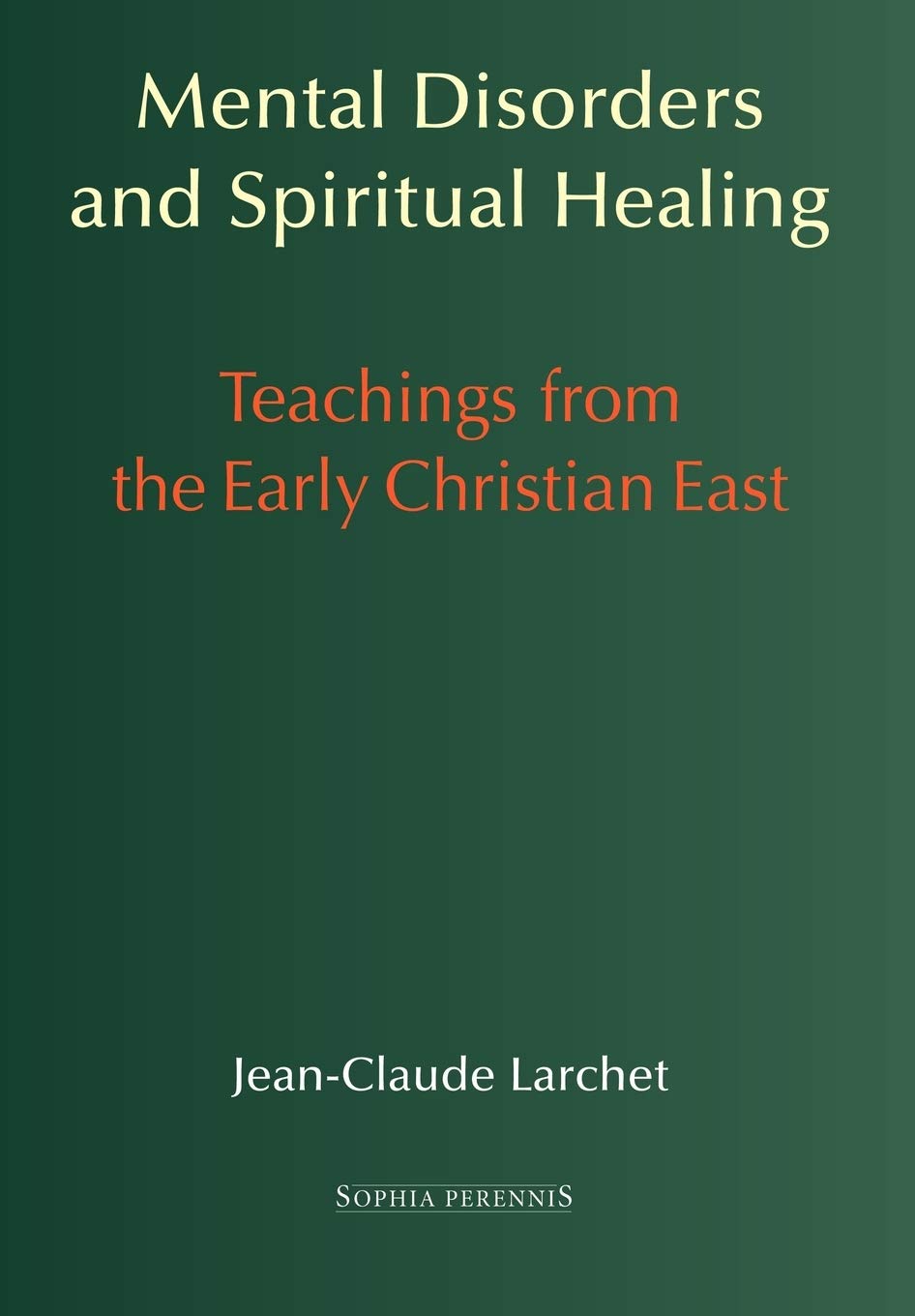
Title
Mental Disorders and Spiritual Healing: Teachings from the Early Christian East,New
Sold by Ergodebooks, an authorized reseller.
Returns accepted within 30 days | support@ergodebooks.com
Shipping Information
- Free Standard Shipping — United States only
- Processing Time: 3–5 business days
- Estimated Delivery: 6–10 business days after dispatch
- Double-boxed, fully insured & discreetly packaged
- Tracking number sent via email once dispatched
Returns & Refund
Returns accepted within 30 days of delivery.
Damaged or Defective Item
Free return shipping + replacement or full refund
Wrong Item Received
Free return shipping + replacement or full refund
Change of Mind
Return shipping at customer's expense · 25% restocking fee applies
Payment Option

This work, the third panel of a triptych dedicated by the author to the notion of illness derived from the patristic and hagiographic texts of the Christian East from the first to the fourteenth centuries, makes an essential contribution to the history of mental illnesses and their therapies in a domain very little studied until now. Confronted by the numerous problems still posed today in understanding these illnesses, their treatment, and their relationship to those who are sick, he shows the importance offered for reflection and current practice by early Christian thought and experience. After indicating how the Fathers understood the psyche and its relationship with body and spirit, the author gives a detailed analysis of the different causes they attribute to mental illness and the various treatments recommended. At the same time he shows how, relying on fundamental Christian values, they manifest a constant solicitude and respect for the sick, and how they are at pains to integrate them into community life and have them participate in their own healing, foreshadowing in this way the needs and aspirations of our own time. The last part discloses the deep significance of one of the strangest and most fascinating forms of asceticism the Christian East has known: 'folly for the sake of Christ', a madness feigned with the goal of attaining a high degree of humility, but also a way wellsuited, through a close experience of their condition, to help those who are often among, today as in the past, the most destitute. JeanClaude Larchet is docteur ds lettres et sciences humaines, docteur en thologie, and docteur d'tat en philosophie. The author of Thrapeutique des maladies spirituelles (Paris: Editions de l'Ancre, 1991) and The Theology of Illness (Crestwood, New York: St Vladimir's Seminary Press, 2002), he is a specialist in questions of health, sickness, and healing. He is today one of the foremost St Maximus the Confessor specialists.
⚠️ WARNING (California Proposition 65):
This product may contain chemicals known to the State of California to cause cancer, birth defects, or other reproductive harm.
For more information, please visit www.P65Warnings.ca.gov.
- Q: What is the page count of this book? A: This book has one hundred eighty pages. It provides an in-depth examination of mental disorders through early Christian teachings.
- Q: What are the dimensions of this book? A: The book measures six inches in length, zero point fifty-six inches in width, and nine point zero two inches in height. Its compact size makes it easy to handle.
- Q: What type of binding does this book have? A: This book is bound in hardcover. Hardcover bindings are known for their durability and long-lasting quality.
- Q: Who is the author of this book? A: The author is Jean-Claude Larchet. He is a recognized specialist in health, illness, and healing.
- Q: What is the primary subject of this book? A: The primary subject is the intersection of mental disorders and spiritual healing in early Christian thought. It explores historical treatments of mental illness.
- Q: How do I approach reading this book? A: You can read this book at your own pace, as it is designed for both casual readers and scholars interested in counseling and spirituality. It is suitable for anyone interested in mental health.
- Q: Is this book suitable for professionals in counseling? A: Yes, this book is suitable for counseling professionals. It offers valuable insights into historical perspectives on mental illnesses and treatments.
- Q: Can this book help me understand modern mental health issues? A: Yes, it provides reflections that can inform modern practices. The author connects early Christian understandings of mental illness to contemporary experiences.
- Q: How should I store this book to keep it in good condition? A: Store this book in a cool, dry place and keep it upright on a shelf. Avoid exposing it to direct sunlight to prevent fading.
- Q: Is there any special care needed for this hardcover book? A: No special care is required beyond standard book care. Just handle it gently and keep it away from moisture.
- Q: What if the book arrives damaged? A: If the book arrives damaged, you should contact the retailer for a replacement or refund. Most retailers have a return policy in place.
- Q: Can I return this book if I don't like it? A: Yes, you can return this book, but be sure to check the specific return policy of the retailer. Many offer a satisfaction guarantee.
- Q: Does this book include any references or citations? A: Yes, the book includes references to patristic and hagiographic texts. These citations support the author's analysis of mental illness.
- Q: Is there a glossary or index in this book? A: No, this book does not include a glossary or index. However, the chapters are structured to flow logically for easier navigation.
- Q: What makes this book unique in its field? A: This book is unique for its focus on early Christian perspectives on mental health, a largely underexplored area in both theology and psychology.
- Q: Is this book appropriate for those interested in spirituality? A: Yes, it is appropriate for readers interested in spirituality, as it integrates spiritual healing concepts with mental health discussions.