
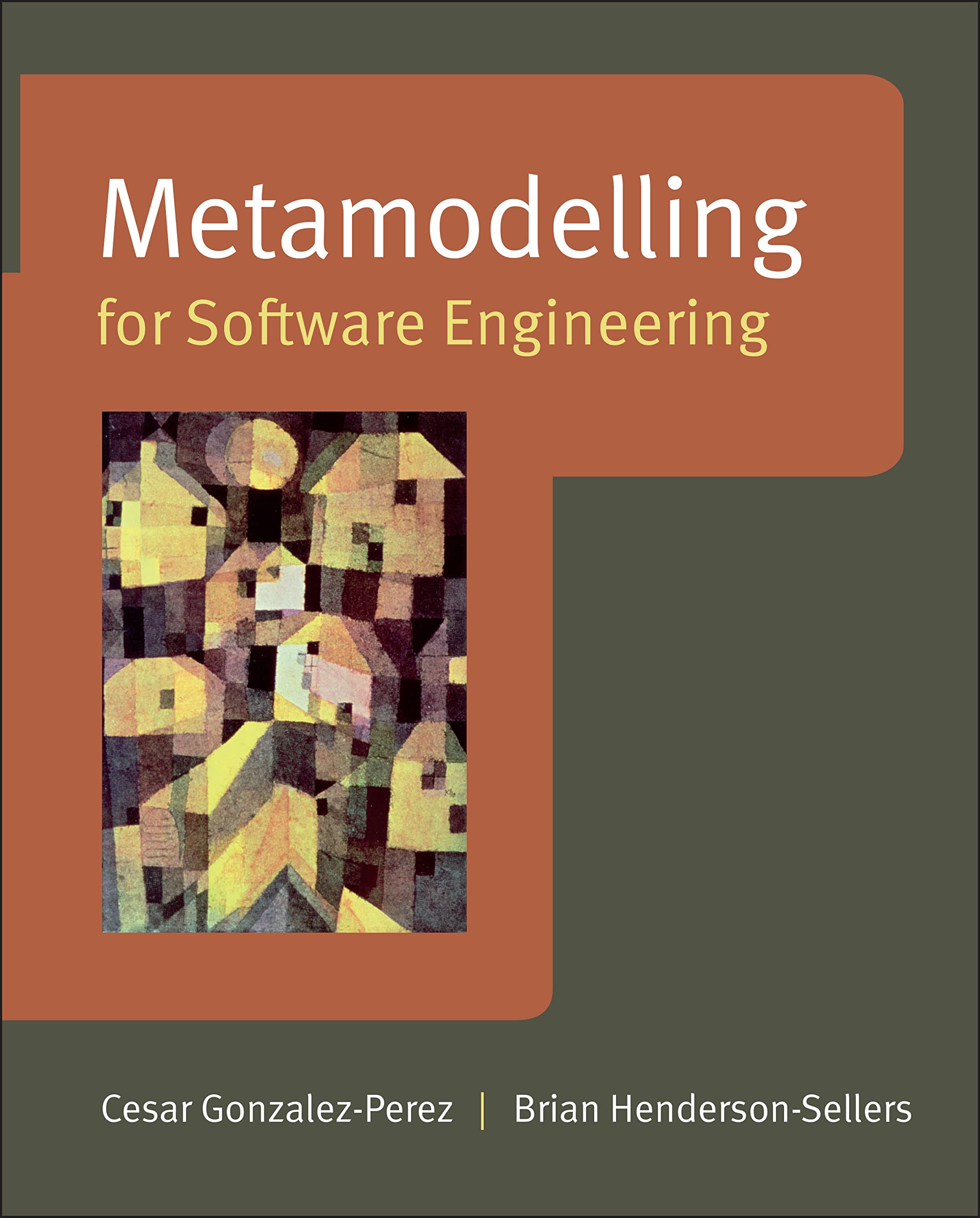
Title
Metamodelling for Software Engineering,Used
Sold by Ergodebooks, an authorized reseller.
Returns accepted within 30 days | support@ergodebooks.com
Shipping Information
- Free Standard Shipping — United States only
- Processing Time: 3–5 business days
- Estimated Delivery: 6–10 business days after dispatch
- Double-boxed, fully insured & discreetly packaged
- Tracking number sent via email once dispatched
Returns & Refund
Returns accepted within 30 days of delivery.
Damaged or Defective Item
Free return shipping + replacement or full refund
Wrong Item Received
Free return shipping + replacement or full refund
Change of Mind
Return shipping at customer's expense · 25% restocking fee applies
Payment Option

This book focuses on metamodelling as a discipline, exploring its foundations, techniques and results. It presents a comprehensive metamodel that covers process, product and quality issues under a common framework.Issues covered include: An explanation of what metamodelling is and why it is necessary in the context of software engineering. Basic concepts and principles of traditional metamodelling, and some existing results of this approach. Problems associated with traditional approaches to Metamodelling are discussed, alongside an exploration of possible solutions and alternative approaches. Advanced topics such as the extension of the objectoriented paradigm for metamodelling purposes or the foundations of powertypebased tool development will be studied. Finally, a comprehensive case study is introduced and developed, showing how to use many of the concepts explained in the previous chapters.This book provides a comprehensive conceptual framework for metamodelling and includes case studies and exercises which will demonstrate practical uses of metamodelling. For lecturers and educators, the book provides a layered repository of contents, starting from the basics of metamodelling in the first chapters, through specific issues such as translayer control or nonstrict approaches, up to advanced topics such as universal powertyping or extensions to the objectoriented paradigm. The book also serves as an indepth reference guide to features and technologies to consider when developing inhouse software development methods or customising and adopting offtheshelf ones. Software tool developers and vendors can benefit from the book by finding in it a comprehensive guide to the implementation of frameworks and toolsets for computeraided software modelling and development.
⚠️ WARNING (California Proposition 65):
This product may contain chemicals known to the State of California to cause cancer, birth defects, or other reproductive harm.
For more information, please visit www.P65Warnings.ca.gov.