If you have any questions, you are always welcome to contact us. We'll get back to you as soon as possible, withing 24 hours on weekdays.
Customer service
All questions about your order, return and delivery must be sent to our customer service team by e-mail at yourstore@yourdomain.com
Sale & Press
If you are interested in selling our products, need more information about our brand or wish to make a collaboration, please contact us at press@yourdomain.com
Help
If you have any questions, you are always welcome to contact us. We'll get back to you as soon as possible, withing 24 hours on weekdays.
Customer service
All questions about your order, return and delivery must be sent to our customer service team by e-mail at yourstore@yourdomain.com
Sale & Press
If you are interested in selling our products, need more information about our brand or wish to make a collaboration, please contact us at press@yourdomain.com
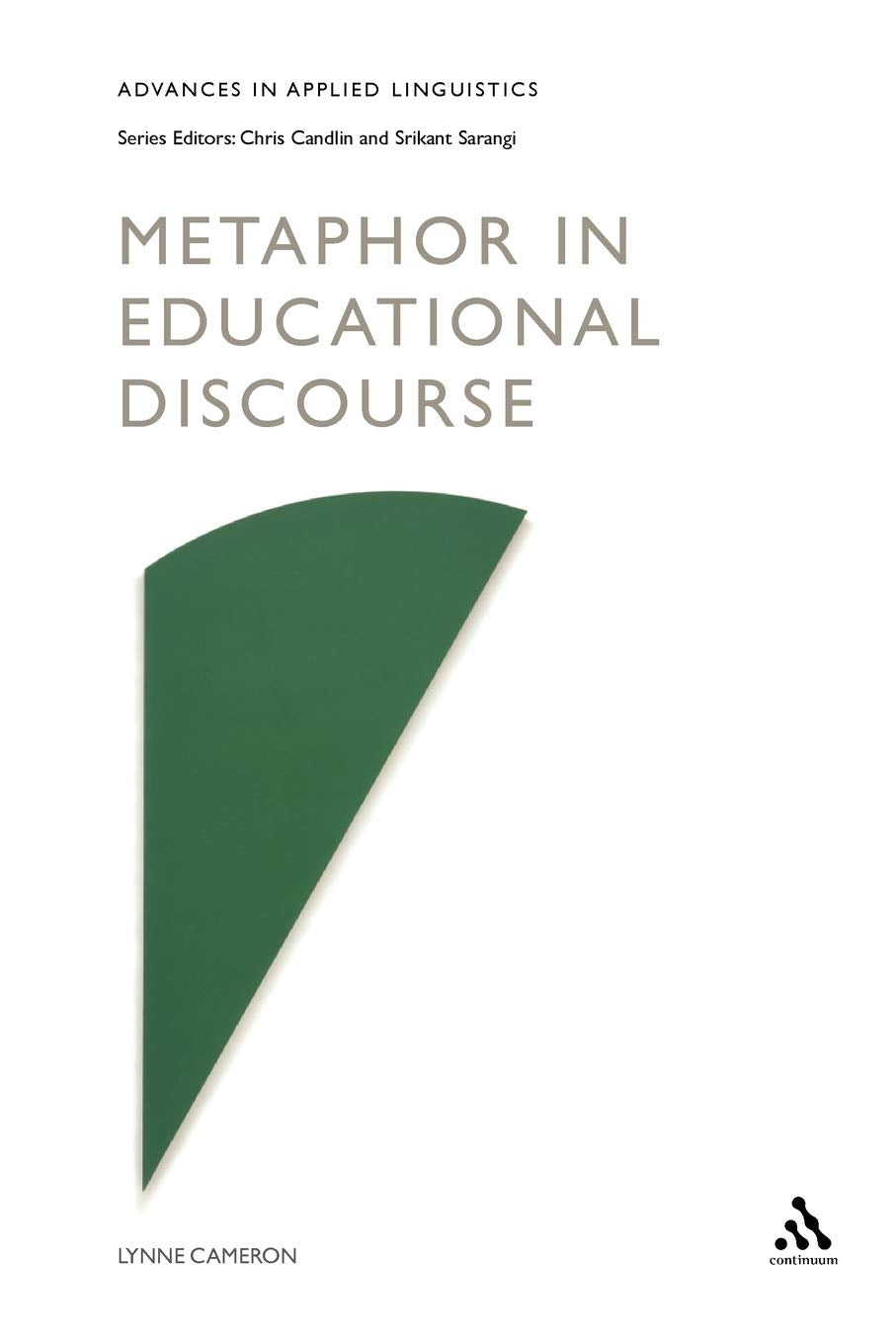
'Metaphor in Educational Discourse is a superb piece of applied linguistics research that integrates Vygotsky's theory of concepts with current work on metaphor into a coherent framework for investigating how teachers and learners negotiate figurative language in order to promote development in the classroom setting. In what is likely to become the standard for future studies in this area, Lynne Cameron meticulously demonstrates the central role of linguistic metaphors in classroom learning designed to lead learners to a deeper understanding of complex mathematical and scientific concepts.'James P. Lantolf, Professor of Applied Linguistics, The Pennsylvania State University.This book reports research into metaphor in use with school students. The setting for the research is a UK school and the participants are around ten years old, with their first language well established but still developing concepts and understandings. Close examination of a corpus of classroom spoken discourse reveals how metaphor is employed by their teachers, not just in explaining ideas, but, in managing and mediating the activity of the classroom and the learning of the students. Particular issues discussed include: the problems of identifying metaphors in spoken discourse, the conventionalism of metaphors in the discourse of sociocultural groups, and how a sociocultural approach can account for systematicity in metaphor use.
⚠️ WARNING (California Proposition 65):
This product may contain chemicals known to the State of California to cause cancer,
birth defects, or other reproductive harm.
For MAP (Minimum Advertised Price) violations and Intellectual Property (IP) or Trademark concerns, please contact:
support@ergodebooks.com
⚠️ California Proposition 65 Warning: Some products sold on this website may expose you to chemicals known to the State of California to cause cancer, birth defects, or other reproductive harm. For more information, visit www.P65Warnings.ca.gov.