
Title
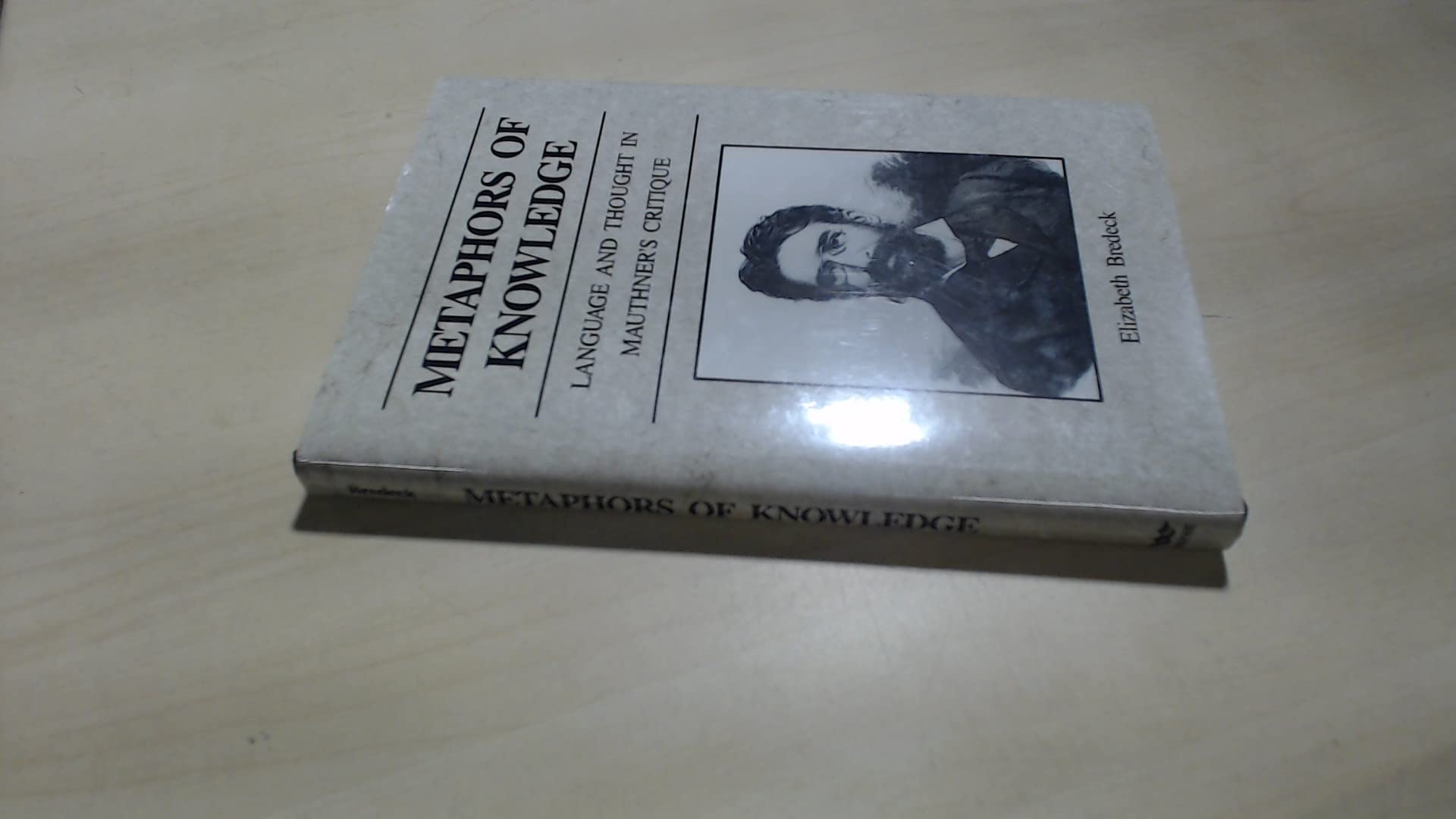
Metaphors Of Knowledge: Language And Thought In Mauthner'S Critique (Kritik : German Literary Theory And Cultural Studies Series,Used
Sold by Ergodebooks, an authorized reseller.
Returns accepted within 30 days | support@ergodebooks.com
Shipping Information
- Free Standard Shipping — United States only
- Processing Time: 3–5 business days
- Estimated Delivery: 6–10 business days after dispatch
- Double-boxed, fully insured & discreetly packaged
- Tracking number sent via email once dispatched
Returns & Refund
Returns accepted within 30 days of delivery.
Damaged or Defective Item
Free return shipping + replacement or full refund
Wrong Item Received
Free return shipping + replacement or full refund
Change of Mind
Return shipping at customer's expense · 25% restocking fee applies
Payment Option

Metaphors of Knowledge examines the work of philosopher and critic Fritz Mauthner, who influenced much of the discussion on language and literature in turnofthecentury Austria and Germany.This monograph provides an indepth analysis of Mauthner's Beitrage zu einer Kritik der Sprache, written in 190102, at the time of the 'linguistic turn' in the history of philosophy. Bredeck analyzes Mauthner's views of language and knowledge, then considers their implications for his understanding of philosophy as language critique. Noting historical parallels between Mauthner and his contemporaries, the author also draws on recent philosophers and theorists including Richard Rorty and Jacques Derrida, who have reexamined critical commonplaces about philosophical discourse in particular and language in a very general sense.This study considers Mauthner's views on language and thought as 'metaphorical,' then traces the consequences of those views in his discussion of language origin, history, and the problems of distinguishing between both individual disciplines and types of disciplines. Bredeck gives an overview of Mauthner's critique, but also does more, since a reconstruction of key arguments reveals some troubling inconsistencies. To account for these discrepancies rather than simply identify them, she looks at both what Mauthner says and how he says it.Though Bredeck's emphasis on rhetorical aspects of Mauthner's writing reflects the influence of contemporary trends in interpretation, it is Mauthner's own practice that invites, and even necessitates, such an approach. To view Mauthner in light of current theoretical debates not only helps explain some obvious, fundamental discrepancies in Mauthner's arguments, it also represents an inquiry into the historical background of those presentday discussions. Thus, Mauthner serves as a lens through which we can get a new perspective on issues in contemporary theory, while contemporary theory helps shed new light on the complexities of Mauthner's own thought.
⚠️ WARNING (California Proposition 65):
This product may contain chemicals known to the State of California to cause cancer, birth defects, or other reproductive harm.
For more information, please visit www.P65Warnings.ca.gov.