
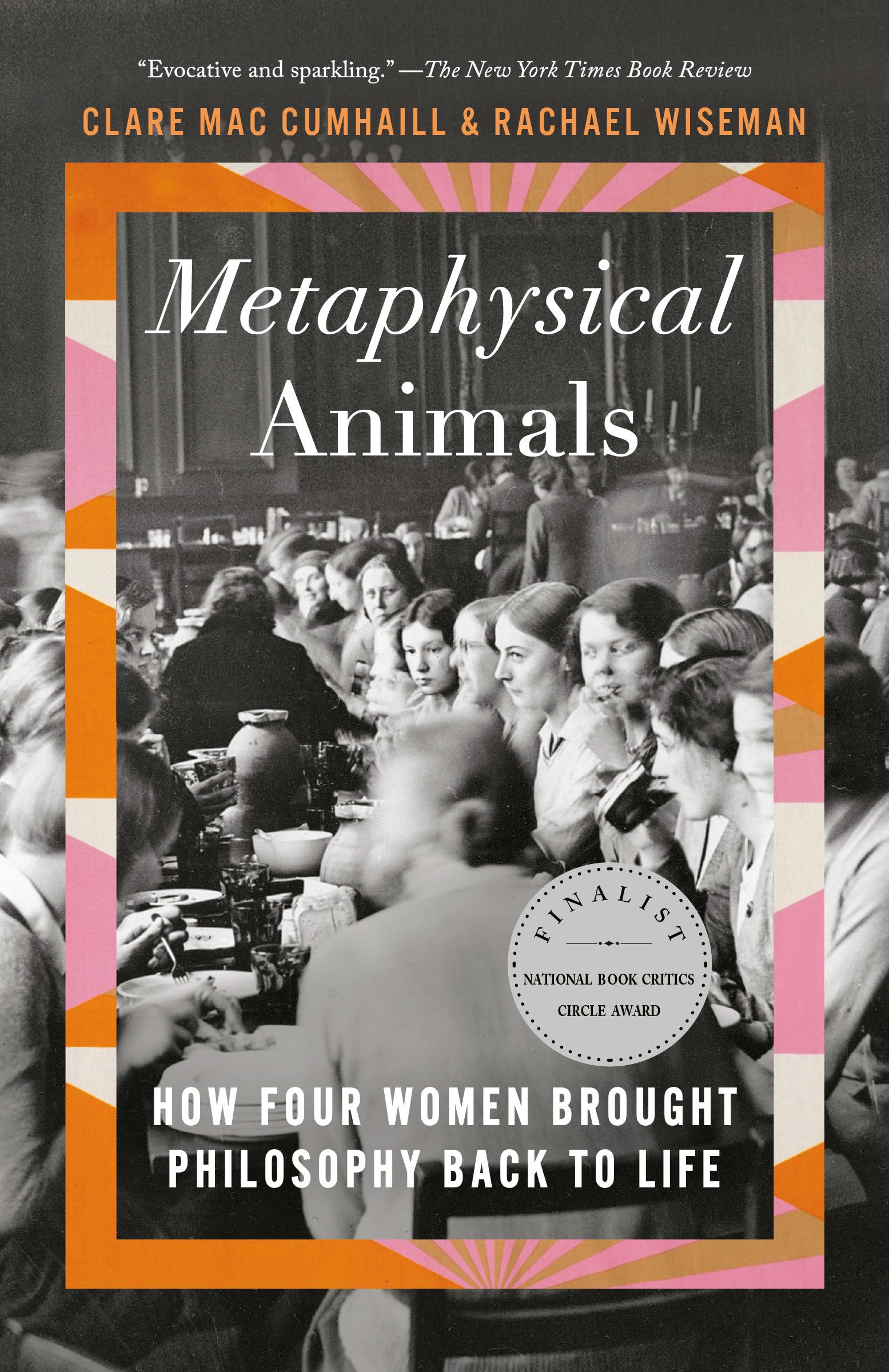
Title
Metaphysical Animals: How Four Women Brought Philosophy Back To Life
Sold by Ergodebooks, an authorized reseller.
Returns accepted within 30 days | support@ergodebooks.com
Shipping Information
- Free Standard Shipping — United States only
- Processing Time: 3–5 business days
- Estimated Delivery: 6–10 business days after dispatch
- Double-boxed, fully insured & discreetly packaged
- Tracking number sent via email once dispatched
Returns & Refund
Returns accepted within 30 days of delivery.
Damaged or Defective Item
Free return shipping + replacement or full refund
Wrong Item Received
Free return shipping + replacement or full refund
Change of Mind
Return shipping at customer's expense · 25% restocking fee applies
Payment Option

A Best Book Of The Year: The New York Times Book Review And The New Yorker A Vibrant Portrait Of Four College Friendsiris Murdoch, Philippa Foot, Elizabeth Anscombe, And Mary Midgleywho Formed A New Philosophical Tradition While Oxford'S Men Were Away Fighting World War Ii.The History Of European Philosophy Is Usually Constructed From The Work Of Men. In Metaphysical Animals, A Pioneering Group Biography, Clare Mac Cumhaill And Rachael Wiseman Offer A Compelling Alternative. In The Midtwentieth Century Elizabeth Anscombe, Mary Midgley, Philippa Foot, And Iris Murdoch Were Philosophy Students At Oxford When Most Male Undergraduates And Many Tutors Were Conscripted Away To Fight In The Second World War. Together, These Young Women, All Friends, Developed A Philosophy That Could Respond To The Wars Darkest Revelations.Neither The Great Enlightenment Thinkers Of The Past, The Logical Innovators Of The Early Twentieth Century, Or The New Existentialist Philosophy Trickling Across The Channel, Could Make Sense Of This New Human Reality Of Limitless Depravity And Destructive Power, The Women Felt. Their Answer Was To Bring Philosophy Back To Life. We Are Metaphysical Animals, They Realized, Creatures That Can Question Their Very Being. Who Am I? What Is Freedom? What Is Human Goodness? The Answers We Give, They Believed, Shape What We Will Become.Written With Expertise And Flair, Metaphysical Animals Is A Lively Portrait Of Women Who Shared Ideas, But Also Apartments, Clothes And Even Lovers. Mac Cumhaill And Wiseman Show How From The Disorder And Despair Of The War, Four Brilliant Friends Created A Way Of Ethical Thinking That Is There For Us Today.
⚠️ WARNING (California Proposition 65):
This product may contain chemicals known to the State of California to cause cancer, birth defects, or other reproductive harm.
For more information, please visit www.P65Warnings.ca.gov.
- Q: How many pages does the book 'Metaphysical Animals' have? A: The book has four hundred sixteen pages. This length allows for an in-depth exploration of the lives and philosophies of four influential women.
- Q: What are the dimensions of 'Metaphysical Animals'? A: The dimensions are five point sixteen inches in length, zero point eighty-seven inches in width, and seven point ninety-nine inches in height. These measurements make it a convenient size for reading.
- Q: What type of binding does 'Metaphysical Animals' use? A: The book is available in paperback binding. This format is lightweight and easy to handle, ideal for readers who enjoy taking their books on the go.
- Q: Who is the author of 'Metaphysical Animals'? A: The author is Clare Mac Cumhaill, along with her co-author Rachael Wiseman. They provide a captivating narrative about the lives of four women philosophers.
- Q: What genre does 'Metaphysical Animals' belong to? A: The book falls under the category of Criticism and Theory. It explores philosophical ideas and historical contexts through the lives of its subjects.
- Q: Is 'Metaphysical Animals' suitable for young adults? A: Yes, the book is suitable for young adults and older readers. It delves into complex philosophical themes but presents them in a relatable manner.
- Q: How can I get the most out of reading 'Metaphysical Animals'? A: To get the most from this book, consider discussing its themes with friends or in a book club. Engaging with the material helps deepen understanding of its philosophical insights.
- Q: Is there a recommended reading level for 'Metaphysical Animals'? A: The recommended reading level is for high school students and above. The book addresses advanced philosophical concepts that may be challenging for younger readers.
- Q: How should I store 'Metaphysical Animals' to keep it in good condition? A: Store the book in a dry, cool place away from direct sunlight. Keeping it on a shelf upright will help prevent any wear and tear on its spine.
- Q: Can I loan 'Metaphysical Animals' to a friend? A: Yes, you can loan the book to a friend. Just ensure they handle it carefully to maintain its condition.
- Q: What if 'Metaphysical Animals' arrives damaged? A: If the book arrives damaged, contact the seller immediately for a return or replacement. Most retailers have policies to address such issues.
- Q: Is 'Metaphysical Animals' a good choice for someone new to philosophy? A: Yes, it is a good choice for newcomers. The authors present the philosophical discussions in an engaging and accessible manner, making it easier to understand.
- Q: How does 'Metaphysical Animals' compare to other philosophy books? A: Unlike many philosophy books that focus on male philosophers, 'Metaphysical Animals' centers on the contributions of women. This unique perspective enriches the philosophical discourse.
- Q: What themes are explored in 'Metaphysical Animals'? A: The book explores themes of identity, freedom, and human goodness. It highlights how philosophical inquiry can arise from personal and historical contexts.
- Q: Is there any adult content in 'Metaphysical Animals'? A: No, there is no explicit adult content in the book. It is suitable for a general audience interested in philosophy and history.