
Title
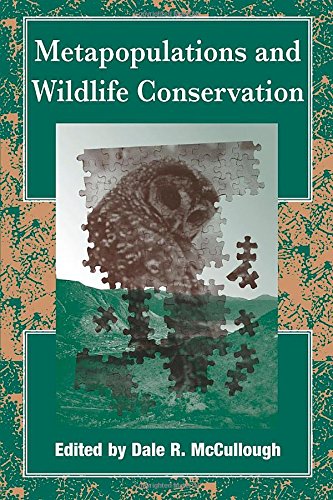
Metapopulations and Wildlife Conservation,Used
Sold by Ergodebooks, an authorized reseller.
Returns accepted within 30 days | support@ergodebooks.com
Shipping Information
- Free Standard Shipping — United States only
- Processing Time: 3–5 business days
- Estimated Delivery: 6–10 business days after dispatch
- Double-boxed, fully insured & discreetly packaged
- Tracking number sent via email once dispatched
Returns & Refund
Returns accepted within 30 days of delivery.
Damaged or Defective Item
Free return shipping + replacement or full refund
Wrong Item Received
Free return shipping + replacement or full refund
Change of Mind
Return shipping at customer's expense · 25% restocking fee applies
Payment Option

Development of rural landscapes is converting oncevast expanses of open space into pockets of habitat where wildlife populations exist in isolation from other members of their species. The central concept of metapopulation dynamics that a constellation of partially isolated patches can yield overall stability to a system that is chaotic at the level of the individual patch offers an important new way of thinking about the conservation and management of populations dispersed among small habitat fragments. This approach is proving to be a rich resource for biologists hoping to arrest the current catastrophic loss of biodiversity.An understanding of metapopulation theory and analysis is critical to the modern practice of wildlife conservation and management. This volume provides a comprehensive overview of the subject, addressing the needs of an applied professional audience for comprehensible information to integrate into their practices. Leading conservation biologists, ecologists, wildlife managers, and other experts consider the emergence and development of metapopulation theory and explore its applicability and usefulness to realworld conservation programs.Introductory chapters provide background information on basic concepts such as models, genetics, landscape configuraton, and edges and corridors. Subsequent chapters present detailed methods of analyzing metapopulation structure. Case studies of an array of vertebrate species, including the Swedish pool frog, the northern spotted owl, Stephens' kangaroo rat, Florida scrub jay, Mediterranean monk seal, Steller sea lion, tule elk, and others, illustrate nuances of metapopulation theory analysis and its practical applications.Contributors describe what metapopulation approaches bring to wildlife conservation and management, present models of how metapopulation thinking has been applied in specific situations, and suggest the analysis required in given cases. Metapopulations and Wildlife Conservation is essential reading for anyone working in the field of wildlife conservation and managment.
⚠️ WARNING (California Proposition 65):
This product may contain chemicals known to the State of California to cause cancer, birth defects, or other reproductive harm.
For more information, please visit www.P65Warnings.ca.gov.