
Title
Meteors That Enlighten the Earth: Napoleon and the Cult of Great Men,New
Sold by Ergodebooks, an authorized reseller.
Returns accepted within 30 days | support@ergodebooks.com
Shipping Information
- Free Standard Shipping — United States only
- Processing Time: 3–5 business days
- Estimated Delivery: 6–10 business days after dispatch
- Double-boxed, fully insured & discreetly packaged
- Tracking number sent via email once dispatched
Returns & Refund
Returns accepted within 30 days of delivery.
Damaged or Defective Item
Free return shipping + replacement or full refund
Wrong Item Received
Free return shipping + replacement or full refund
Change of Mind
Return shipping at customer's expense · 25% restocking fee applies
Payment Option

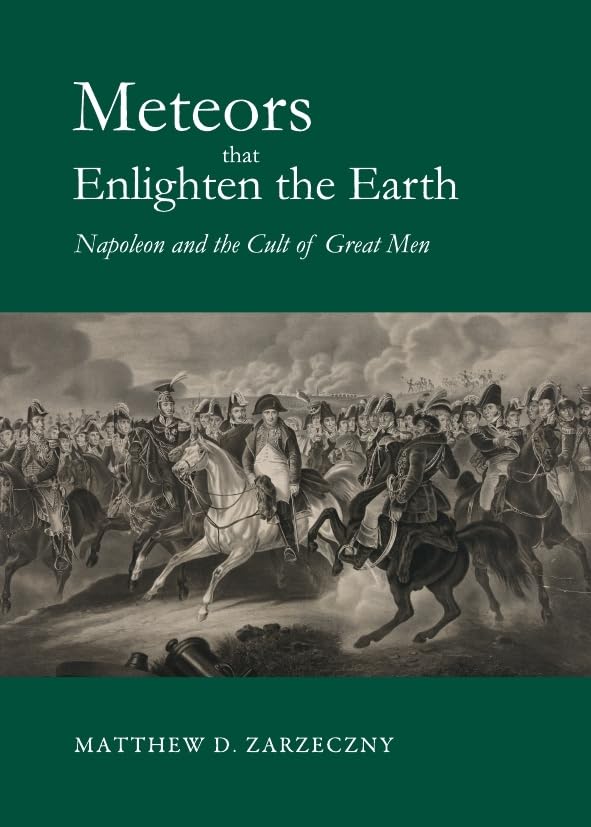
Napoleon promoted and honored great men throughout his reign. In addition to comparing himself to various great men, he famously established a Legion of Honor on 19 May 1802 to honor both civilians and soldiers, including nonethnically French men. Napoleon not only created an Irish Legion in 1803 and later awarded William Lawless and John Tennent the Legion of Honour. Napoleon also gave them an Eagle with the inscription L'Independence d'Irlande.& He awarded twentysix of his generals the marshal's baton from 1804 through 1815 and in 1806, he further memorialized his soldiers by deciding to erect a Temple to the Glory of the Great Army modeled on Ancient designs. From 1806 through 1815, Napoleon had more men interred in the Pantheon in Paris than any other French leader before or after him. In works of art depicting himself, Napoleon had his artists allude to Caesar, Charlemagne, and even Moses. Although the Romans had their legions, Pantheon, and temples in Ancient times and the French monarchy had their marshals since at least 1190, Napoleon blended both Roman and French traditions to compare himself to great men who lived in ancient and medieval times and to recognize the achievements of those who lived alongside him in the nineteenth century. Analyzing Napoleon's everchanging personal cult of great men, and his recognition of contemporary great men who contributed to European or even human civilization and not just French civilization, is original. While work does exist on the French cults of GrecoRoman antiquity and of great men prior to 1800, Napoleon appears only fleetingly in other discussions of the cult of great men. None of the bourgeoning historiography adequately takes Napoleon's place in the story of this cult into perspective. This book serves as a further exploration of the cult of great men, including its place in Napoleonic and European history and the alleged efforts of its members to enlighten the earth.
⚠️ WARNING (California Proposition 65):
This product may contain chemicals known to the State of California to cause cancer, birth defects, or other reproductive harm.
For more information, please visit www.P65Warnings.ca.gov.