
Title
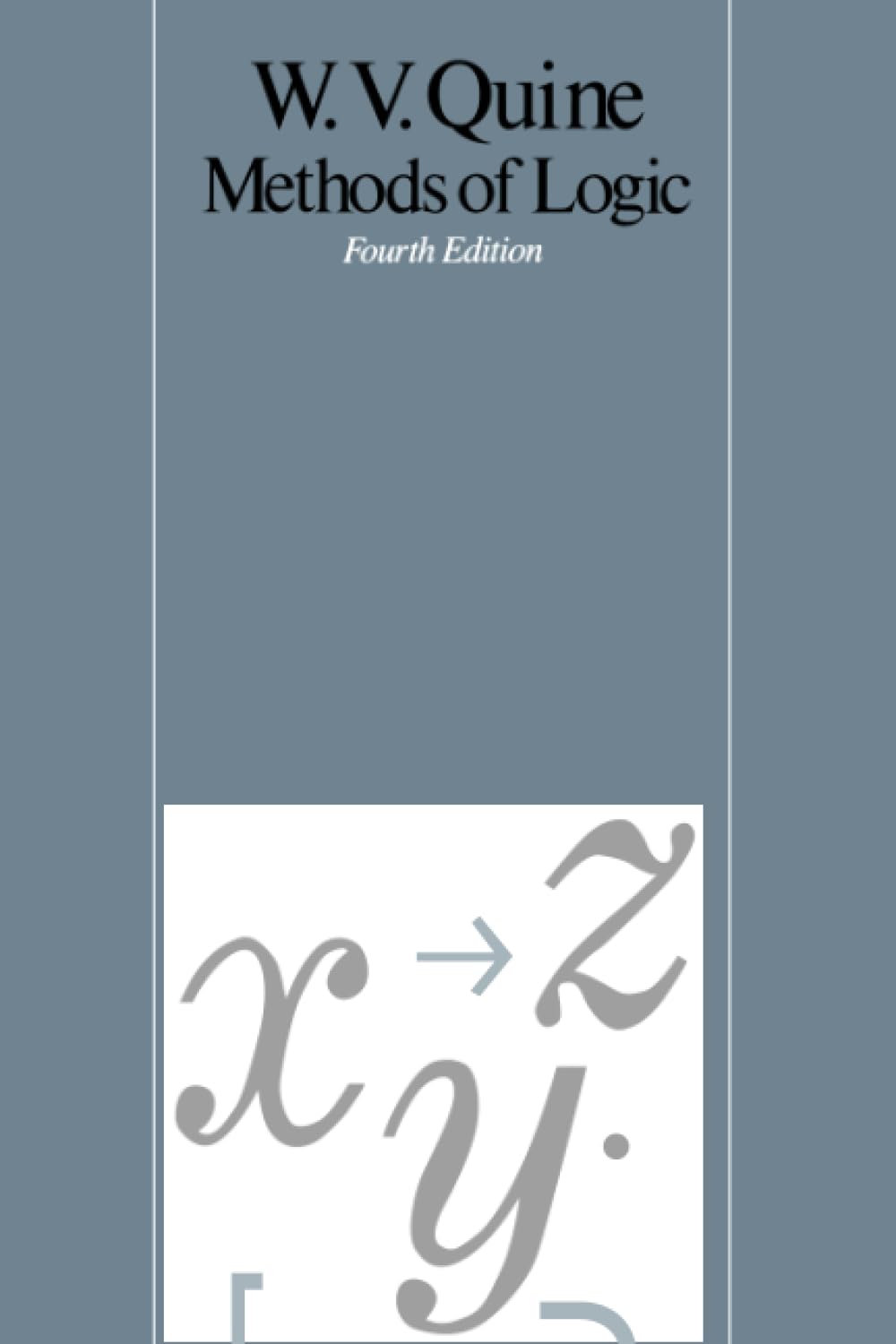
Methods Of Logic,New
Sold by Ergodebooks, an authorized reseller.
Returns accepted within 30 days | support@ergodebooks.com
Shipping Information
- Free Standard Shipping — United States only
- Processing Time: 3–5 business days
- Estimated Delivery: 6–10 business days after dispatch
- Double-boxed, fully insured & discreetly packaged
- Tracking number sent via email once dispatched
Returns & Refund
Returns accepted within 30 days of delivery.
Damaged or Defective Item
Free return shipping + replacement or full refund
Wrong Item Received
Free return shipping + replacement or full refund
Change of Mind
Return shipping at customer's expense · 25% restocking fee applies
Payment Option

This Widely Used Textbook Of Modern Formal Logic Now Offers A Number Of New Features. Incorporating Updated Notations, Selective Answers To Exercises, Expanded Treatment Of Natural Deduction, And New Discussions Of Predicatefunctor Logic And The Affinities Between Higher Set Theory And The Elementary Logic Of Terms, W. V. Quines New Edition Will Serve Admirably For Both Classroom And Independent Use.
⚠️ WARNING (California Proposition 65):
This product may contain chemicals known to the State of California to cause cancer, birth defects, or other reproductive harm.
For more information, please visit www.P65Warnings.ca.gov.
- Q: What is the page count of 'Methods of Logic'? A: The book contains three hundred forty-four pages. It offers a comprehensive exploration of modern formal logic.
- Q: What are the dimensions of 'Methods of Logic'? A: The book measures six inches in length, zero point eight seven inches in width, and nine point zero two inches in height.
- Q: What type of binding does 'Methods of Logic' have? A: The book is available in paperback binding. This makes it flexible and easy to handle.
- Q: Who is the author of 'Methods of Logic'? A: The author is Willard Van Orman Quine. He is a renowned philosopher and logician.
- Q: What category does 'Methods of Logic' fall under? A: It is categorized under Logic & Language. This positions it within academic texts on formal logic.
- Q: What features does 'Methods of Logic' include? A: It includes updated notations and selective answers to exercises. There is also expanded treatment of natural deduction.
- Q: How do I utilize 'Methods of Logic' for study? A: You can use it as a textbook for classroom instruction or for independent study. The updated features enhance learning.
- Q: Is 'Methods of Logic' suitable for beginners? A: Yes, it is suitable for beginners as well as advanced students. The text is designed to accommodate a range of learning levels.
- Q: Can 'Methods of Logic' be used for self-study? A: Yes, it is ideal for independent study. The new discussions enhance understanding of complex topics.
- Q: How should I care for my copy of 'Methods of Logic'? A: Keep it in a dry place to prevent damage. Avoid exposing it to extreme temperatures or moisture.
- Q: Is 'Methods of Logic' safe for children? A: Yes, it is appropriate for older children and teenagers interested in logic. However, parental guidance may be beneficial.
- Q: What if my copy of 'Methods of Logic' arrives damaged? A: You should contact the seller for a return or replacement. Most sellers have policies for damaged items.
- Q: Does 'Methods of Logic' come with a warranty? A: No, typical book purchases do not include a warranty. However, check with the seller for their specific return policy.
- Q: What makes 'Methods of Logic' stand out from other logic books? A: It features expanded discussions on predicate-functor logic and higher set theory. This depth sets it apart from basic texts.
- Q: Is there a companion website or resources for 'Methods of Logic'? A: No specific companion website is mentioned. However, supplementary materials may be available through educational institutions.
- Q: How can I find additional resources to complement 'Methods of Logic'? A: You can search for additional academic papers or textbooks on formal logic. Online databases often have relevant materials.