
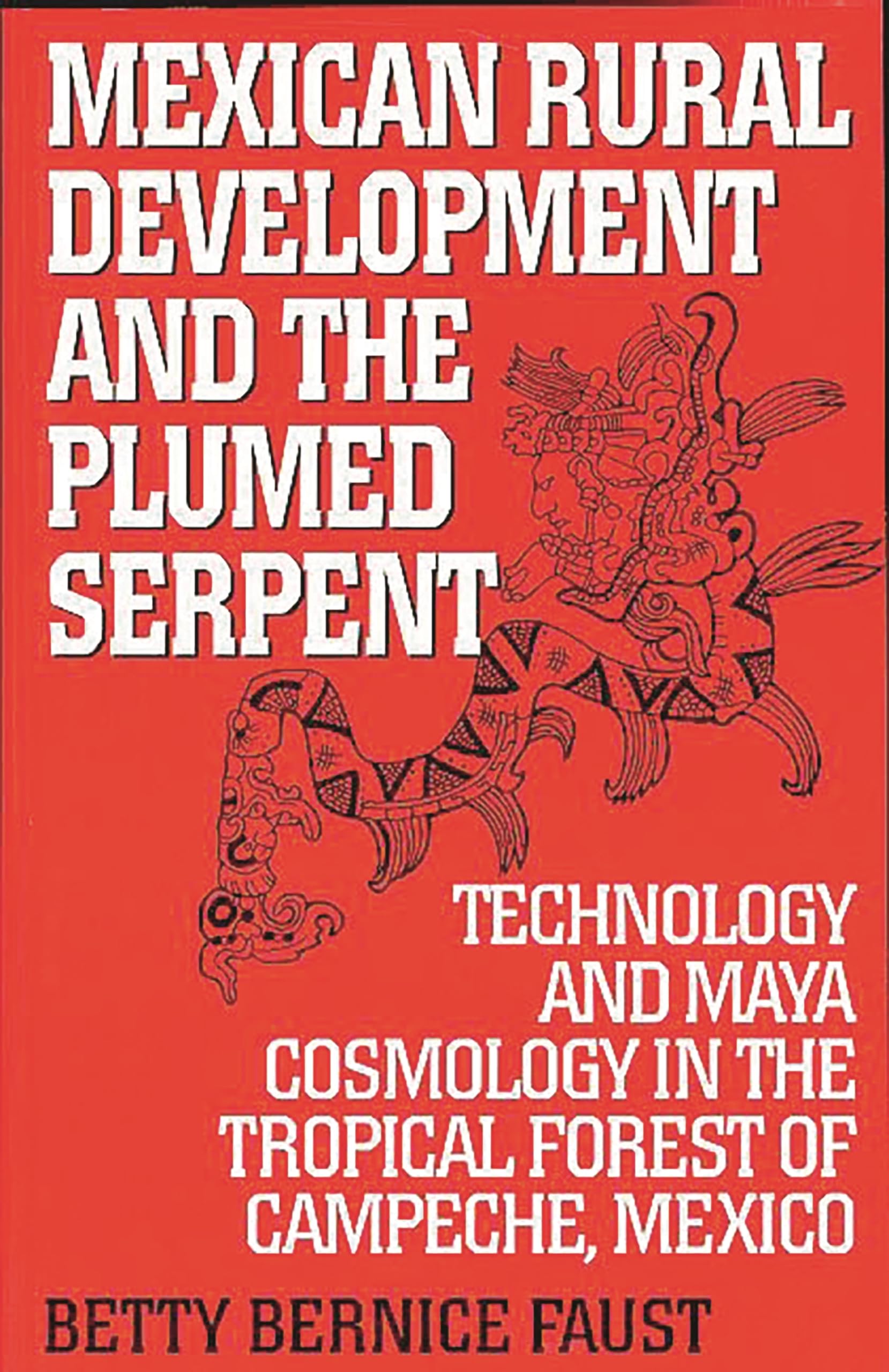
Title
Mexican Rural Development and the Plumed Serpent,New
Sold by Ergodebooks, an authorized reseller.
Returns accepted within 30 days | support@ergodebooks.com
Shipping Information
- Free Standard Shipping — United States only
- Processing Time: 3–5 business days
- Estimated Delivery: 6–10 business days after dispatch
- Double-boxed, fully insured & discreetly packaged
- Tracking number sent via email once dispatched
Returns & Refund
Returns accepted within 30 days of delivery.
Damaged or Defective Item
Free return shipping + replacement or full refund
Wrong Item Received
Free return shipping + replacement or full refund
Change of Mind
Return shipping at customer's expense · 25% restocking fee applies
Payment Option

This is the first ethnography to be written about a Campeche Maya community. It examines the surviving Maya traditional technologies and sacred cosmologies and discusses the potential for combining these with modern knowledge and technologies to form an efficient new system that will not only provide for ecologically responsible development but will also make possible the cultural survival of this threatened indigenous population.
⚠️ WARNING (California Proposition 65):
This product may contain chemicals known to the State of California to cause cancer, birth defects, or other reproductive harm.
For more information, please visit www.P65Warnings.ca.gov.
- Q: How many pages is the book? A: The book has two hundred forty pages. This length allows for an in-depth exploration of the Campeche Maya community.
- Q: What is the binding type of this book? A: This book is paperback bound. Paperback bindings are known for being lightweight and flexible, making them easy to carry.
- Q: What are the dimensions of the book? A: The book measures six inches in length, zero point five one inches in width, and nine point zero two inches in height. These dimensions make it a convenient size for reading.
- Q: Who is the author of the book? A: The author is Betty Bernice Faust. She provides a unique perspective on Maya traditional technologies and cosmologies.
- Q: What is the main topic of the book? A: The book examines the surviving traditional technologies and sacred cosmologies of the Campeche Maya community. It discusses integrating these with modern knowledge for sustainable development.
- Q: What category does this book fall under? A: This book is categorized under Science & Math. It offers insights into ethnography and cultural studies.
- Q: Is this book suitable for academic study? A: Yes, it is suitable for academic study. The ethnographic approach provides valuable insights into indigenous cultures.
- Q: Can I read this book if I am not familiar with Maya culture? A: Yes, you can read this book without prior knowledge of Maya culture. It is written to be accessible to a general audience.
- Q: Is the book appropriate for students? A: Yes, the book is appropriate for students interested in anthropology or social sciences. It provides a comprehensive overview of the subject matter.
- Q: How should I store this book? A: Store the book in a cool, dry place away from direct sunlight. This will help preserve its condition and prevent fading.
- Q: What care does the paperback binding require? A: The paperback does not require special care, but it is advisable to handle it gently to avoid creasing. Keep it on a bookshelf for optimal preservation.
- Q: What if the book arrives damaged? A: If the book arrives damaged, contact the seller for return or replacement options. Most sellers have policies to address such issues.
- Q: Can I return the book if I don’t like it? A: Yes, you can typically return the book if you follow the seller's return policy. Be sure to check the specific terms for returns.
- Q: How does this book compare to other ethnographies? A: This book offers a unique focus on the Campeche Maya community, distinguishing it from other ethnographies that may cover broader topics or different cultures.
- Q: Is this book useful for understanding ecological development? A: Yes, the book discusses ecological responsible development in the context of the Maya community. It explores how traditional practices can inform modern sustainability.