If you have any questions, you are always welcome to contact us. We'll get back to you as soon as possible, withing 24 hours on weekdays.
Customer service
All questions about your order, return and delivery must be sent to our customer service team by e-mail at yourstore@yourdomain.com
Sale & Press
If you are interested in selling our products, need more information about our brand or wish to make a collaboration, please contact us at press@yourdomain.com
Help
If you have any questions, you are always welcome to contact us. We'll get back to you as soon as possible, withing 24 hours on weekdays.
Customer service
All questions about your order, return and delivery must be sent to our customer service team by e-mail at yourstore@yourdomain.com
Sale & Press
If you are interested in selling our products, need more information about our brand or wish to make a collaboration, please contact us at press@yourdomain.com
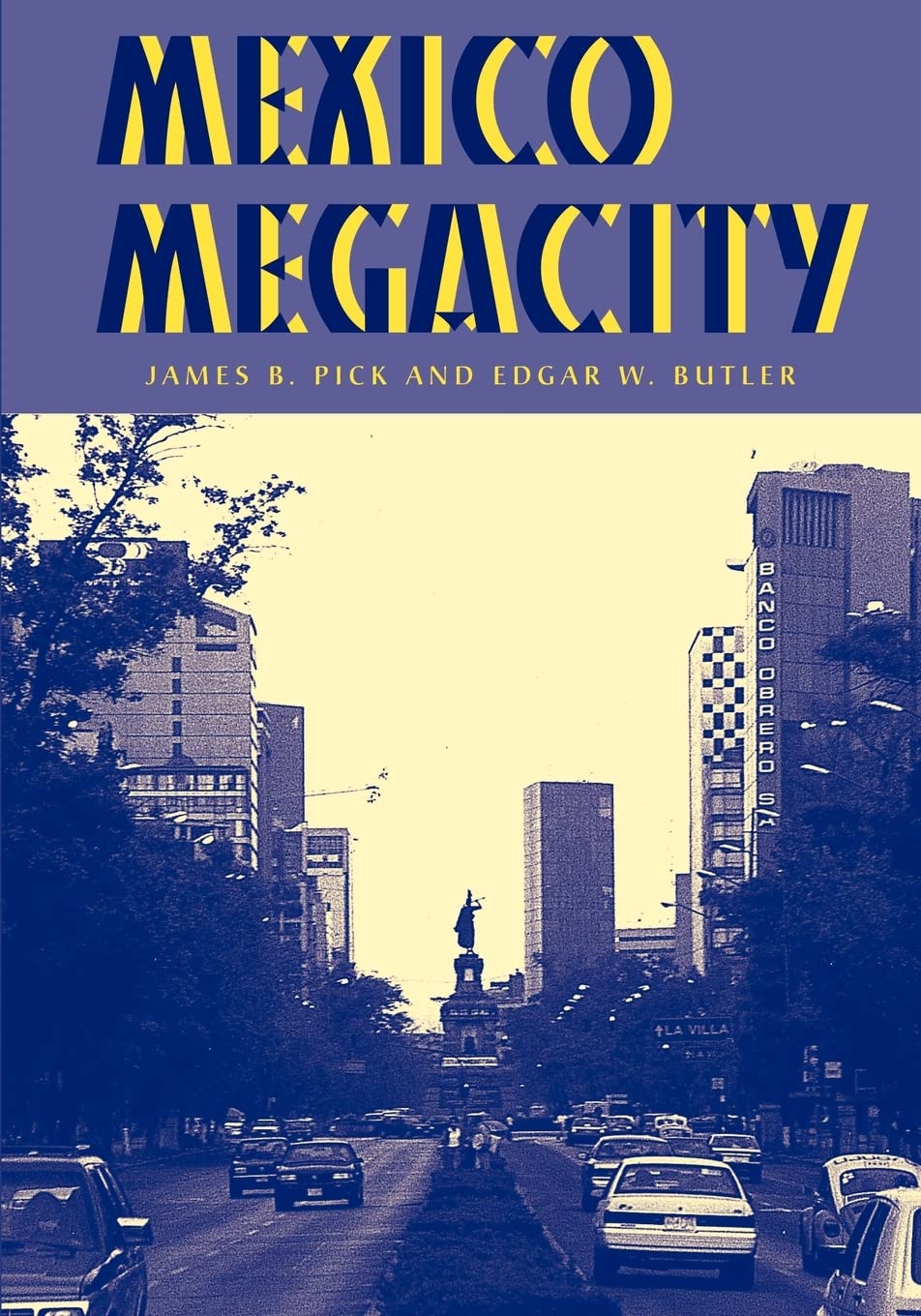
With a population of 15 million persons in 1990, Mexico City is one of the world's largest cities. It is a famous center of civilizations and culture and one of the economic capitals of the Americas, but it also has serious social and economic problems, including large impoverished zones, severe environmental degradation, crime, and overpopulation.This book describes and analyzes growth, change, and spatial patterns in Mexico City, looking at urbanization, population, marriage and fertility, health and mortality, migration, environment and housing, social characteristics, the economy, labor force, and corporate structure. Applying modern techniques of geographic information systems and spatial analysis, the authors reveal many previously unknown or unrecognized trends and patterns. In a capstone chapter, they summarize the spatial patterns in a series of cluster analyses that identify distinctive zones within the metropolis?a prosperous core, surrounding complex ring patterns, an impoverished zone, and semirural arms. They also compare the pattern of Mexico City's cluster zones to the classical and developmental literature on cities. In closing, the authors suggest government policies that would foster optimal future development of an even larger metropolis.This book addresses a topic of growing importance. The United Nations predicts the emergence of many more giant cities worldwide over the next quarter century, most of which will appear in the developing world. Mexico Megacity is a milestone work that increases our knowledge about one developing world megacity while offering analytical tools for studying others.
⚠️ WARNING (California Proposition 65):
This product may contain chemicals known to the State of California to cause cancer,
birth defects, or other reproductive harm.
For MAP (Minimum Advertised Price) violations and Intellectual Property (IP) or Trademark concerns, please contact:
support@ergodebooks.com
⚠️ California Proposition 65 Warning: Some products sold on this website may expose you to chemicals known to the State of California to cause cancer, birth defects, or other reproductive harm. For more information, visit www.P65Warnings.ca.gov.