If you have any questions, you are always welcome to contact us. We'll get back to you as soon as possible, withing 24 hours on weekdays.
Customer service
All questions about your order, return and delivery must be sent to our customer service team by e-mail at yourstore@yourdomain.com
Sale & Press
If you are interested in selling our products, need more information about our brand or wish to make a collaboration, please contact us at press@yourdomain.com
Help
If you have any questions, you are always welcome to contact us. We'll get back to you as soon as possible, withing 24 hours on weekdays.
Customer service
All questions about your order, return and delivery must be sent to our customer service team by e-mail at yourstore@yourdomain.com
Sale & Press
If you are interested in selling our products, need more information about our brand or wish to make a collaboration, please contact us at press@yourdomain.com
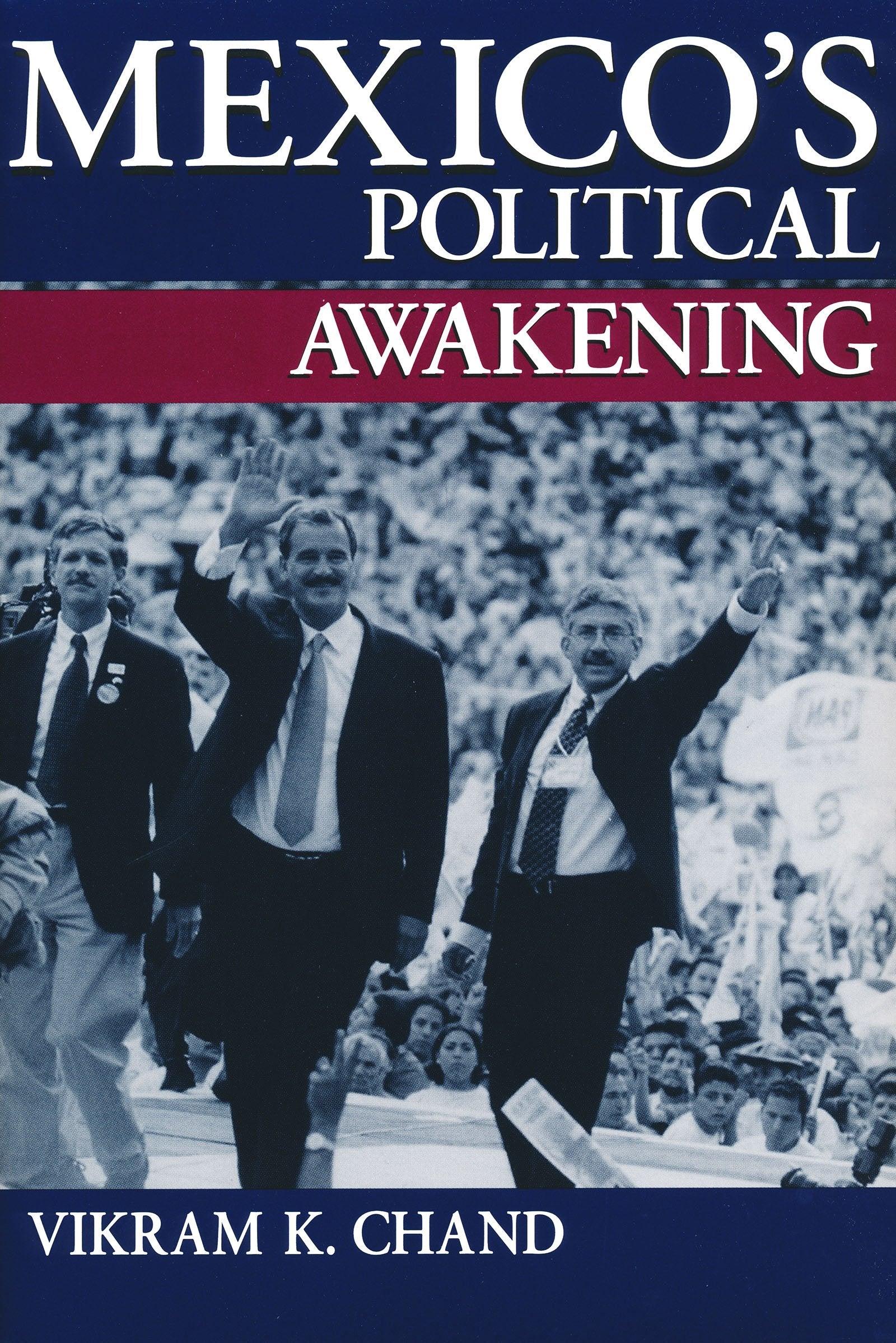
True democracy has been long in coming to Mexico, but citizen rebellion and the work of social leaders helped bring about dramatic changes at the end of the twentieth century. The traditional dominance of the oneparty state has yielded to a more democratic structure marked by growing decentralization and the adoption of fairer election rules and procedures. Vikram Chand examines the role of major institutions in fostering democratization in Mexico during the 1980s and 1990s, offering an understanding of how these changes came about and why they are likely to last. He focuses on three important factors that fostered this transition: the growing participation of the Catholic Church and its lay organizations in politics, the proliferation of nongovernmental civic associations dedicated to promoting clean elections, and the emergence of vibrant opposition parties. He particularly highlights the conservative National Action Party, about which little has been written in English. Chand tells how the rise of a more politicallyaware citizenry and the growing power of nonstate institutions pressured the ruling Institutional Revolutionary Party into adopting electoral reforms, resulting in the first open primary for gubernatorial elections in 1998. Using the state of Chihuahua as a case study, he draws on primary researchincluding 250 interviews with key figures in the political processto demonstrate how the mutual interaction of national and regional politics has helped bring about these democratic transitions. Mexicos Political Awakening is a "bottomup" perspective on democratization, correcting analyses which view that process in Mexico as flowing down from the President. It challenges existing theories of democratization by emphasizing the importance of strong social institutions for the development of democracy, and it demonstrates that increases in political participation play a vital role in strengthening those institutions.
⚠️ WARNING (California Proposition 65):
This product may contain chemicals known to the State of California to cause cancer,
birth defects, or other reproductive harm.
For MAP (Minimum Advertised Price) violations and Intellectual Property (IP) or Trademark concerns, please contact:
support@ergodebooks.com
⚠️ California Proposition 65 Warning: Some products sold on this website may expose you to chemicals known to the State of California to cause cancer, birth defects, or other reproductive harm. For more information, visit www.P65Warnings.ca.gov.