
Title
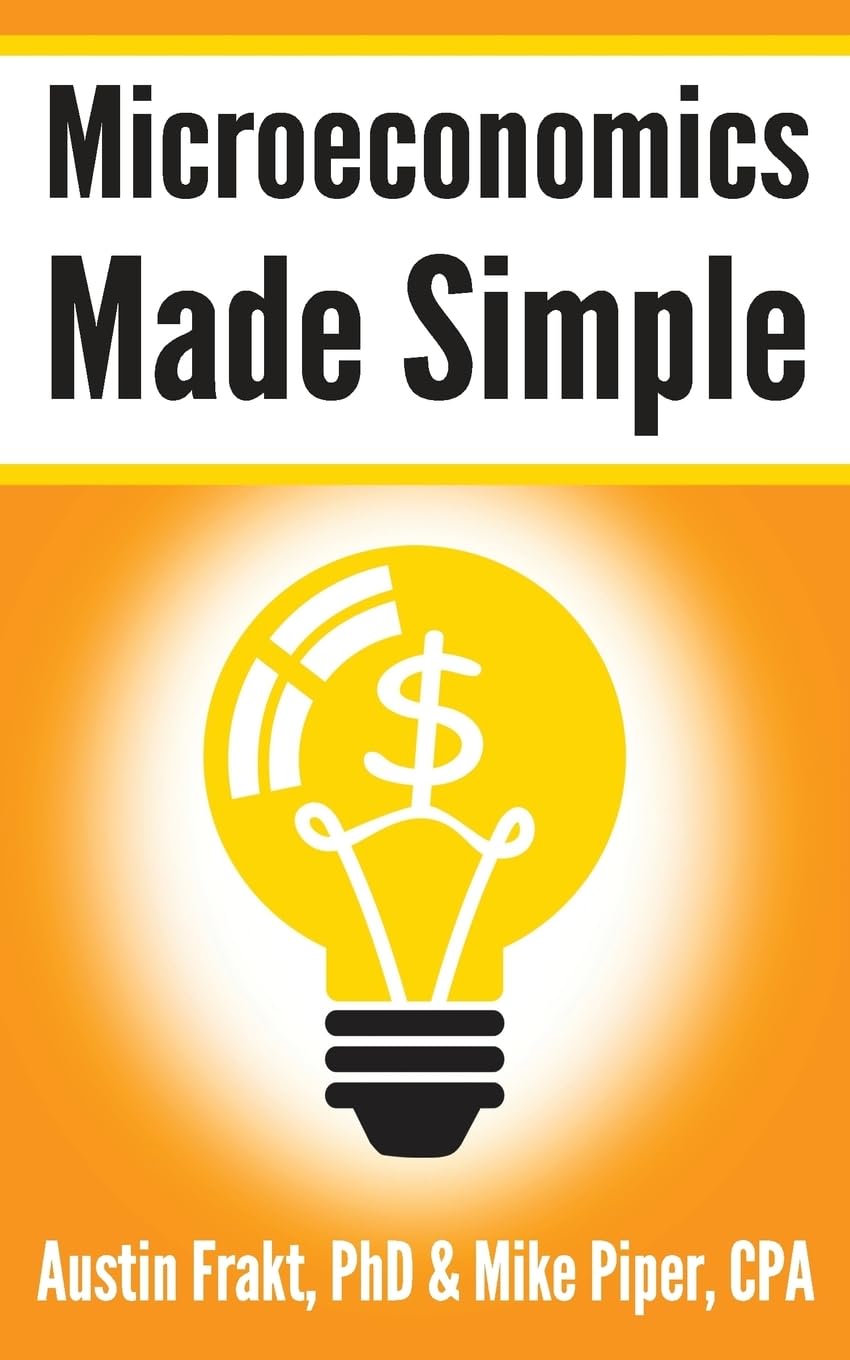
Microeconomics Made Simple: Basic Microeconomic Principles Explained in 100 Pages or Less (Financial Topics in 100 Pages or Less,New
Sold by Ergodebooks, an authorized reseller.
Returns accepted within 30 days | support@ergodebooks.com
Shipping Information
- Free Standard Shipping — United States only
- Processing Time: 3–5 business days
- Estimated Delivery: 6–10 business days after dispatch
- Double-boxed, fully insured & discreetly packaged
- Tracking number sent via email once dispatched
Returns & Refund
Returns accepted within 30 days of delivery.
Damaged or Defective Item
Free return shipping + replacement or full refund
Wrong Item Received
Free return shipping + replacement or full refund
Change of Mind
Return shipping at customer's expense · 25% restocking fee applies
Payment Option

Find all of the following topics, explained in plainEnglish:Introduction:What is Economics? Not a Perfect Model Microeconomics vs. Macroeconomics1. Maximizing UtilityDecreasing Marginal Utility Opportunity Costs2. Evaluating Production PossibilitiesProduction Possibilities Frontiers Absolute and Comparative Advantage3. DemandDeterminants of Demand Elasticity of Demand Change in Demand vs. Change in Quantity Demanded4. SupplyDeterminants of Supply Elasticity of Supply Change in Supply vs. Change in Quantity Supplied5. Market EquilibriumHow Market Equilibrium is Reached The Effect of Changes in Supply and Demand6. Government InterventionPrice Ceilings and Price Floors Taxes and Subsidies7. Costs of ProductionMarginal Cost of Production Fixed vs. Variable Costs Short Run vs. Long Run Sunk Costs Economic Costs vs. Accounting Costs8. Perfect CompetitionFirms Are Price Takers Making Decisions at the Margin Consumer and Producer Surplus9. MonopolyMarket Power Deadweight Loss with a Monopoly Monopolies and Government10. OligopolyCollusion Cheating the Cartel Government Intervention in Oligopolies11. Monopolistic CompetitionCompeting via Product Differentiation Loss of Surplus with Monopolistic CompetitionConclusion: The Insights and Limitations of Economics
⚠️ WARNING (California Proposition 65):
This product may contain chemicals known to the State of California to cause cancer, birth defects, or other reproductive harm.
For more information, please visit www.P65Warnings.ca.gov.
- Q: What is the primary focus of 'Microeconomics Made Simple'? A: 'Microeconomics Made Simple' focuses on explaining basic microeconomic principles in a straightforward manner, covering essential topics such as utility maximization, supply and demand, market equilibrium, and various market structures.
- Q: How many pages does the book contain? A: The book contains 134 pages, making it a concise resource for understanding microeconomic concepts.
- Q: Who is the author of this book? A: The author of 'Microeconomics Made Simple' is Austin Frakt, PhD, who provides insights into microeconomic principles.
- Q: What topics are covered in the introduction of the book? A: The introduction covers fundamental concepts such as what economics is, the differences between microeconomics and macroeconomics, and the limitations of economic models.
- Q: Is the book suitable for beginners in economics? A: Yes, the book is designed for beginners, as it presents complex microeconomic principles in plain English, making them accessible to readers with little to no background in economics.
- Q: What is the binding type of this book? A: 'Microeconomics Made Simple' is available in paperback binding, providing a durable and portable option for readers.
- Q: When was this book published? A: The book was published on May 16, 2014.
- Q: Does the book include information on government intervention in markets? A: Yes, the book discusses government intervention, including price ceilings, price floors, taxes, and subsidies, which are important concepts in microeconomics.
- Q: Can I find examples of real-world applications in the book? A: Yes, the book includes examples that illustrate how microeconomic principles apply to real-world scenarios, helping readers understand the practical implications of these concepts.
- Q: Is 'Microeconomics Made Simple' appropriate for academic use? A: While the book is a great introductory resource, it may not cover all academic requirements for advanced economics courses. It is best suited for those looking to grasp basic concepts rather than in-depth academic study.